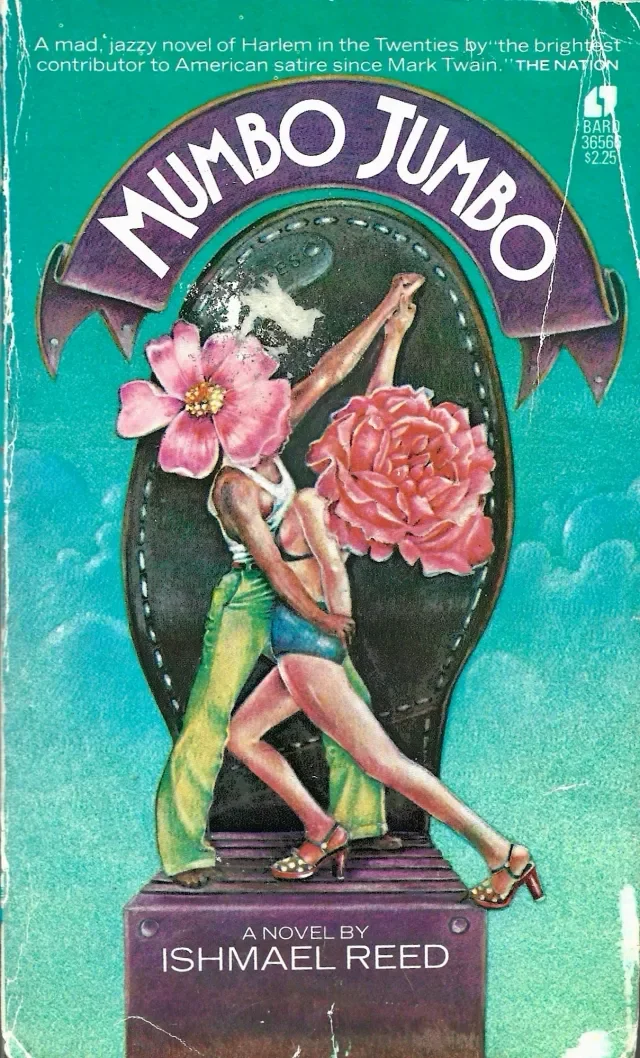
Catch the Fever: On Ishmael Reed’s Mumbo Jumbo
Written by Charlotte Lewis
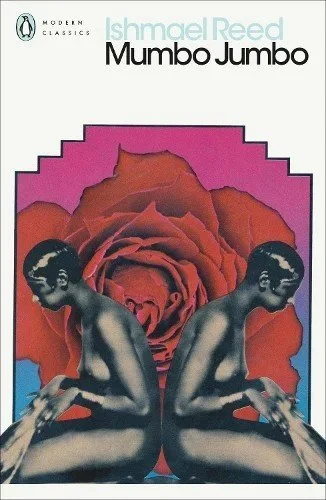
I’m not really sure how to begin reviewing Mumbo Jumbo, mainly because I’m not entirely sure I’ve finished processing it. It is one of those books where you can understand what Reed is doing without necessarily understanding everything he is doing. There are so many historical references, characters, myths, political ideas and conspiracies packed into it that I often felt like I was reading one story while simultaneously being given five others.
Set in 1920s Harlem, the novel follows Papa LaBas, a Voodoo practitioner, as he investigates the mysterious spread of “Jes Grew”; a supposed virus causing people to dance, listen to jazz and embrace African-American culture. The people attempting to stop it see Jes Grew as something dangerous that needs to be contained. But the joke, and really the central idea of the novel, is that Jes Grew isn't a disease at all. It is creativity. It is music, movement, freedom and self-expression.
And what could be more threatening to a system built around control than people deciding to express themselves? That idea feels surprisingly relevant now.
Reed's version of Jes Grew spreads almost organically. People don't need to be convinced to catch it; they want to. It moves through jazz, dance and culture, crossing boundaries and refusing to stay where it has been told it belongs. Reading it now, I couldn't help but think about the way culture spreads through the internet, music, fashion and social media. A style or sound can emerge from a particular community and suddenly become everywhere, often without the history of where it came from travelling with it. That is where Mumbo Jumbo becomes particularly interesting as a book about Black empowerment. Reed isn't simply celebrating Black culture; he is questioning what happens when Black creativity is embraced while Black people themselves continue to be marginalised. The novel is obsessed with cultural ownership. Who gets to create? Who gets credit? Who gets to tell history? And who gets to decide which version of history becomes the official one?
Those questions feel particularly relevant now. Reed takes real historical figures and events and places them alongside fictional characters, Voodoo mythology, ancient Egypt, secret societies and completely absurd conspiracy theories. The result is deliberately difficult to categorise. It doesn't read like a conventional historical novel, because Reed isn't interested in presenting history as something neat or objective. Instead, he seems to be showing how strange history already is — and how easily the “official” version can leave people and cultures out.
I found this especially interesting in relation to the novel's ideas around stolen African artefacts and their return to Africa. Reading this now, it is difficult not to think about the much more prominent conversations around museums, colonial collections, repatriation and restitution. Reed was engaging with these questions decades ago, but they still haven't gone away. There is something very fashion-like about this too.
Fashion is constantly borrowing, remixing and repackaging culture. Something can begin within a particular community or subculture and eventually appear on a runway or in a campaign completely removed from its original context. The aesthetic remains, while the history behind it becomes less visible. Mumbo Jumbo is interested in a similar process happening with Black culture: the wider culture consumes the music, dance and creativity while systems of power continue trying to control the people producing it.
The novel's form makes all of this even more interesting. Reed uses newspaper clippings, photographs, footnotes, advertisements and fragments of different kinds of text alongside the main narrative. It feels almost like opening an archive and finding that someone has deliberately mixed everything up.
At times I found this genuinely exciting. At other times, I had absolutely no idea what was going on.
There are so many references, James Weldon Johnson, W. E. B. Du Bois, Harlem Renaissance writers, Egyptian mythology, Christianity, Voodoo, American politics, that I definitely felt like I was missing things. Some of the historical sections become particularly dense, and I found myself having to stop and look things up. But I actually think that is part of the experience. Mumbo Jumbo isn't really a book you can just sit back and consume. It makes you investigate. It also makes history feel much less static.
Rather than treating history as something that has already been decided, Reed constantly rewrites it. His alternative histories aren't necessarily asking us to believe that they are literally true. They are asking us to question why the histories we have been taught are considered true in the first place. And despite how serious some of the subject matter is, the book is genuinely funny. Reed uses absurdity as a weapon. Racism, colonialism, religious authority and white supremacy become part of this ridiculous conspiracy, and there is something powerful about making systems of power look completely ridiculous rather than treating them as untouchable.
That said, I don't think Mumbo Jumbo has aged perfectly. There are definitely parts that feel dated, and I don't think it is useful to pretend otherwise. Some of its language, ideas and approaches belong very specifically to the political and cultural climate of the 1970s. But I also think that is part of what makes reading it now interesting. The book has changed because the world around it has changed.Some of its arguments feel historical. Others feel annoyingly current.
The central idea of Jes Grew is probably the part that feels most alive. We still see culture being policed, commercialised and stripped from its original context. We still see debates around who owns culture and who gets to represent it. We still see Black creativity becoming mainstream while the structures surrounding it remain unequal. And perhaps the most interesting thing is that Reed doesn't present cultural freedom as something that needs to be organised into a neat political movement. Jes Grew simply spreads. It is music. It is dancing. It is people creating things because they want to. That feels important.
Black empowerment in Mumbo Jumbo isn't only about political power. It is also about cultural power; the ability to create, to define yourself, to preserve your own history and to exist outside the structures attempting to define you. I think that is why the book still deserves to be read.
Not because everything in it remains completely relevant, and not because Reed somehow predicted the future, but because he gives us a strange and fascinating way of thinking about culture. He asks what happens when the thing that has been dismissed as dangerous becomes the thing everyone wants. What happens when the people who were expected to assimilate instead create something so powerful that everyone else starts copying it?
Mumbo Jumbo is chaotic, dense, funny, political and occasionally exhausting. I'm sure I missed a huge amount of it, and I suspect this is a book that would reveal something completely different on a second reading.
But maybe that is the point. You don't really finish Mumbo Jumbo, you just stop reading it. Somewhere, Jes Grew is still spreading.