

Battle For Glasgow 2026: How Students Built One Of Scotland’s Largest Esports Events
When it comes to esports, and gaming in general, there is often a narrative that struggles to break through the stereotypes associated with competitive online gaming. Some have a view that esports remains confined to dark rooms, players disconnected from social groups, and niche online spaces. But student-led events like ‘Battle for Glasgow’ are working hard to challenge that perception. What began as separate university societies and rival student teams across Glasgow is quickly becoming something much larger: a live production built on community, creativity, and collaboration. Once you begin to look past the competition, you see an incredible collective effort of a student-led volunteer group, from players performing under pressure, production teams working behind the scenes to make the event as best as possible, commentators driving in-game narratives, and student communities gathering around a shared experience. Battle for Glasgow highlights what students are capable of building when they are given a stage to showcase their passion and ambition.
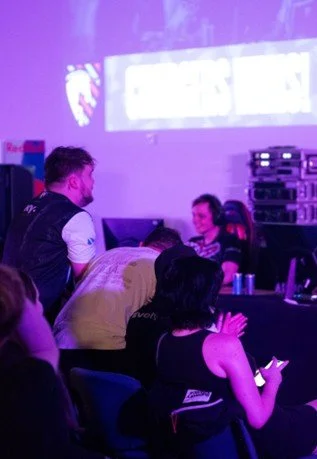
The event has steadily grown from a competitive student tournament into one of Scotland’s largest and most ambitious student-led esports productions. This year marks a significant turning point for Battle for Glasgow, with new leadership stepping in for 2026 while overseeing the event’s largest expansion to date, featuring seven games across the weekend. One of the students leading that responsibility is Elise Cunningham, President of the Glasgow Caledonian esports society, who, alongside a volunteer team working behind the scenes, has taken on the challenge of pushing Battle for Glasgow into its next chapter.
“None of us have ever organised an event to this scale.” Elise noted, “I found myself wearing lots of different hats; event organiser, tech support, graphic designer, marketer, despite walking into this completely new. It was a lot to learn, especially juggling a nursing degree and placements, but I'm incredibly passionate about this, and working with passionate people really drives this along - there's just something really special about BFG in bringing folk together like that.”
With growing audiences, increased production demands, and expectations attached to an already established identity, the pressure surrounding this year’s event is impossible to ignore. Speaking on this pressure, Elise explained that Battle for Glasgow has shaped much of the year surrounding their role within the esports society. “Everything leading up to this has had BFG written all over it,” they said. “Any fundraising we’ve done, team composition, the connections we’ve made throughout the university — it’s all led up to this.”
Despite the pressure attached to inheriting an already established event, the organising team also saw an opportunity within the transition. “We had the benefit of starting from the ground up,” they said. “That was quite a freeing feeling — we were able to shape this event into something we could really be proud to call our own.”
The importance of getting this right isn't lost on the Battle for Glasgow team either. And as the event scales in size, so does the emotional investment.
“Other societies have balls and parties at the end of the year, and this is ours.”
Taking over an event already with years of history and expectation from players and fans comes with its own challenges. For the new Battle for Glasgow team, maintaining the identity and community previous organisers worked hard to establish became just as important as expanding the scale of the production itself. While growth remains a major focus for 2026, preserving the atmosphere surrounding the event and futureproofing it for the next generation of student volunteers was something the team repeatedly emphasised throughout planning.
“The heart of Battle for Glasgow lies in its grassroots nature,” Elise explained when discussing the priorities surrounding this year’s planning. “We wanted it to represent the students, being run by and for all of us. That’s a huge priority for me and influences all of the decision making.”
Maintaining that student-led identity remained at the heart of the transition into new leadership. “There were a few key aspects we wanted to remain the same,” they said. “We wanted it to remain by students, for students, and revolve around the needs of our teams and esports societies as a whole. We encouraged volunteers to lend their skills (or learn new ones) for the sole purpose of making our students feel more confident, self-sufficient, and to build portfolios to benefit them in the future.”
The organising team also viewed this year’s event as an opportunity to strengthen the future of student esports within Glasgow. “We’re constantly thinking of ways to improve and innovate,” they explained. “We’ve been able to cruise through setbacks and build something more futureproof.”