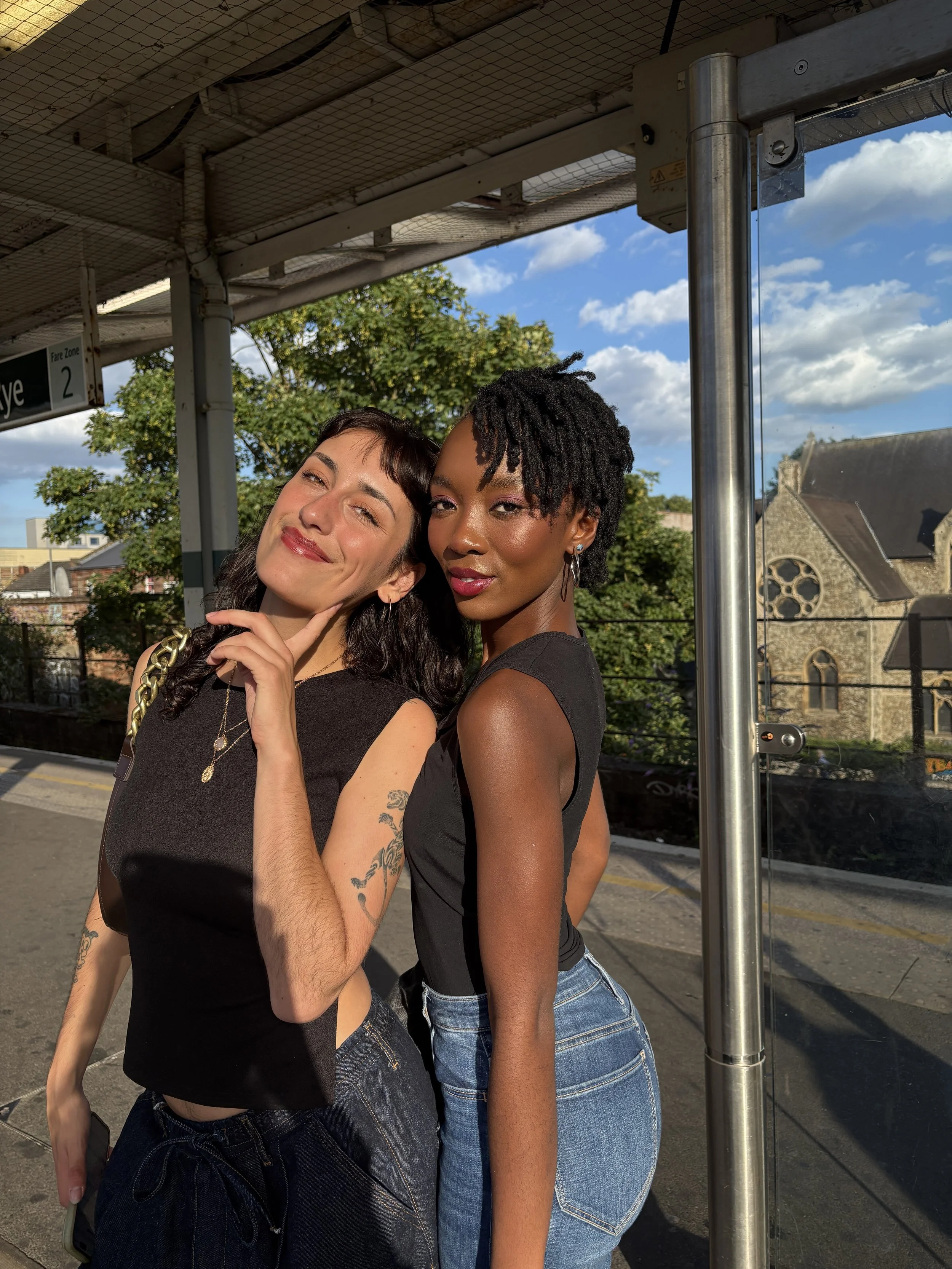
Hey, Afua!: Making a Culture Out of Your City
Written and Interviewed by Charlotte Lewis
Antagonizine usually likes to keep things Northern. We love the strange little pockets of creativity happening across Glasgow, Manchester, Sheffield and everywhere in between. But every now and then, someone comes along with such a ridiculously bubbly personality that we simply cannot resist. And, well, who doesn't love a free, or at least cheap, cute and cultural thing to do in their city?
Meet Afua Owusu-Ansah, the woman behind @heyafua, a London-based platform dedicated to finding the best free events, exhibitions, workshops, community spaces and cultural happenings across the capital. If you've ever thought London was too expensive to actually enjoy, Afua would like a word.
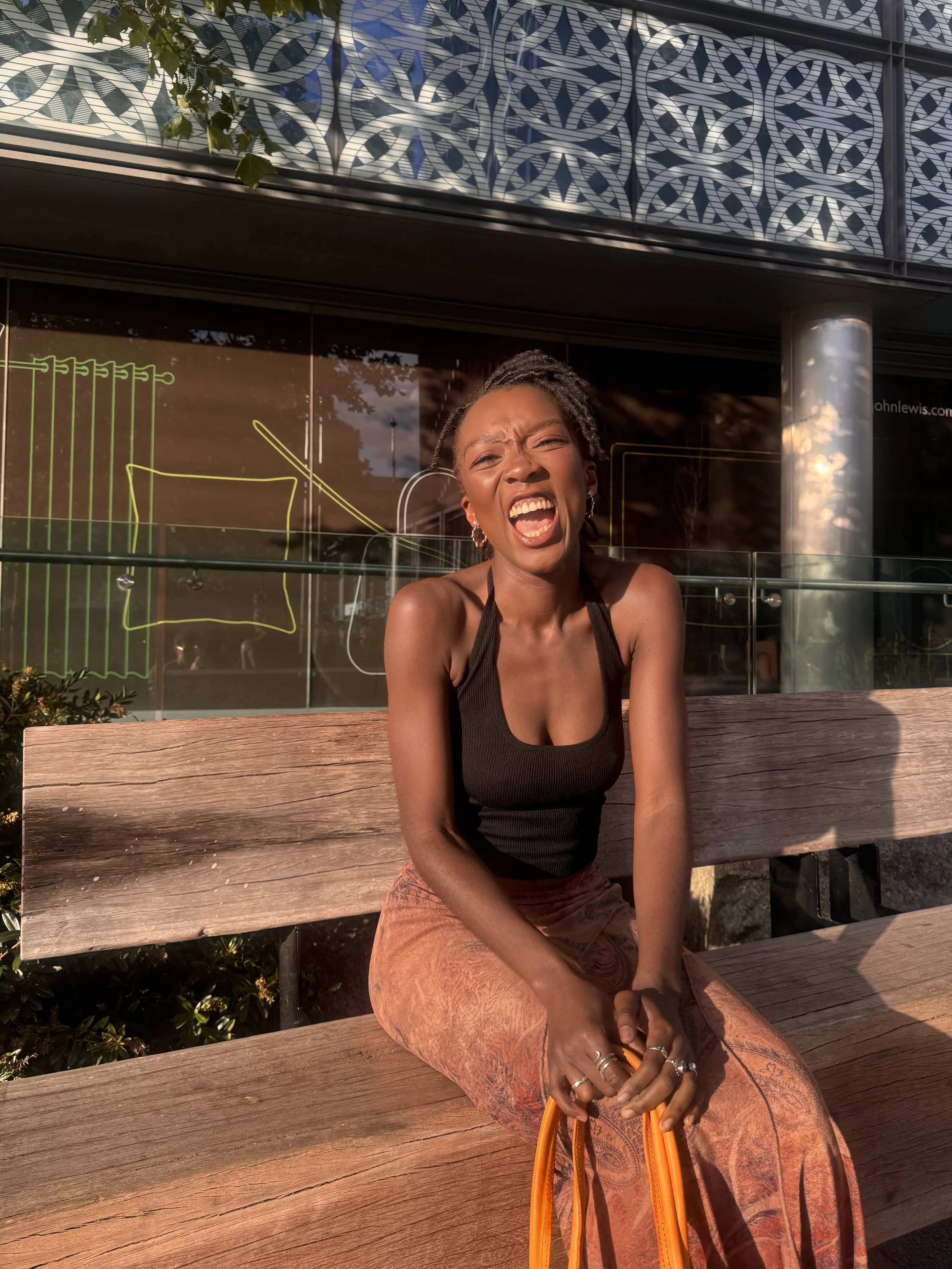
At first glance, @heyafua might look like a very useful Instagram account: somewhere to find the exhibition you've been meaning to go to, the free workshop you didn't know existed, or the tiny community event that somehow slipped through the cracks of London's cultural calendar. But sitting down with Afua, it becomes clear that what she is doing is much bigger than compiling a list of things to do. Her work is about access, curiosity and the belief that culture should not be something you only experience if you can afford a £40 ticket.
Afua, 26, was born and raised in Southeast London before leaving for Bristol at 18 to study sociology. Growing up without loads of money, museums, exhibitions and other cultural spaces became one of the ways she could explore the city around her. Her mum, she explains, wasn't particularly strict, but as a Ghanaian mum there were limits to where she could go, and cultural outings gave her a rare kind of independence.
"I've been doing it since I was about 14," she tells me. "It made me feel like a part of something. It gave me an identity really, and it nourished my brain."
That feeling stayed with her. She began to notice that she was constantly finding interesting things that other people didn't know about. Friends and followers would ask how she had discovered them, and the answer was usually quite simple: she knew how to research. Her sociology degree only sharpened that instinct. "I did a sociology degree, which is mainly just research," she laughs. "You're literally just researching things."
After graduating in 2021, Afua stayed in Bristol and worked freelance in television before eventually finding herself back in London in 2023. Her route back was almost as accidental as the career she has now built. She sent a LinkedIn message to the managing director of a talent management agency because she thought their work looked interesting. Somehow, that turned into an interview, a job offer and a move back to London.
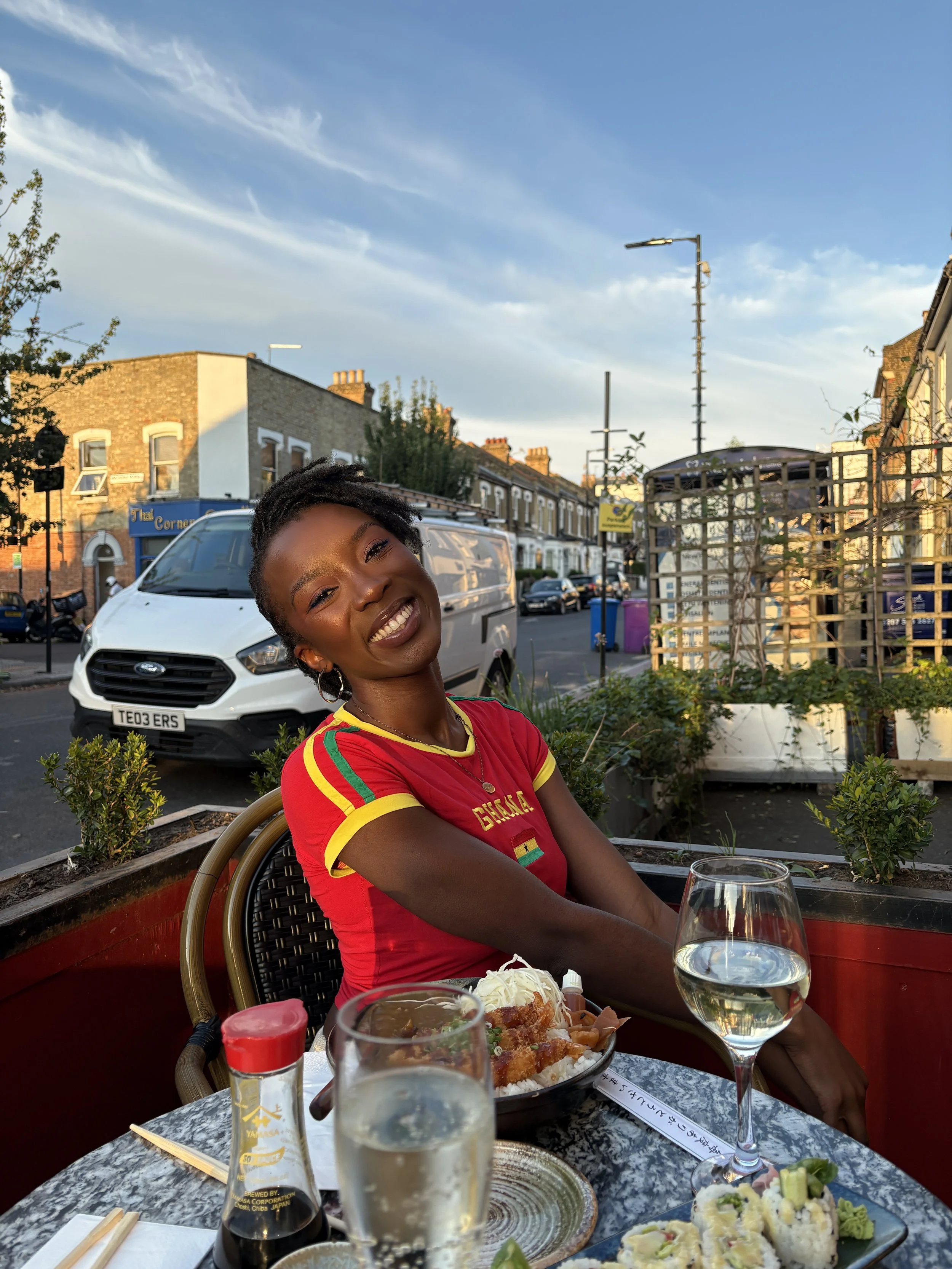
She spent around two and a half years working in talent management, but eventually became disillusioned with the industry. "I was in one of the most capitalist jobs," she says. "Just churning out money, doing the exact same thing to make rich people even richer." After leaving, she moved between a few different jobs, including working as a PA, before finding herself alongside a content creator and beginning to consider creating content herself.
It was something she had been told she should do her entire life. People had always told her she should be on television, that she should be a presenter, but working behind the scenes had made the idea of stepping in front of the camera feel strangely embarrassing. Eventually, she had something of an epiphany.
"I worked in TV. I worked in production companies. Why don't I just become my own one-woman production company, bitch?"
So she did.
What started as a way of finally giving herself permission to be on camera has become a platform built around one of the simplest ideas imaginable: making the most of where you are.
"I want to show people that you can find things no matter where you are," she says. "London-maxxing to me is just making the most out of where you are." And she doesn't mean that exclusively in a London sense. Bristol, Birmingham, Portsmouth, Afua insists there must be something interesting happening somewhere nearby. There is a library. There is an exhibition. There is somebody running a class in a park. You just have to know where to look.
That idea feels particularly relevant now. For a generation growing up in a cost-of-living crisis, cultural participation can easily become another thing that feels inaccessible. Afua's emphasis on free and affordable experiences is therefore less about finding a bargain and more about challenging the idea that culture is something reserved for people with disposable income.

"We've been royally screwed over by the government," she says, reflecting on the economic reality facing her generation. She talks about the widening gap between those who have the most and those who have the least, and how even the middle class is becoming increasingly squeezed.
This is where her sociology background becomes particularly apparent. Afua talks about economic, social and cultural capital, and the ways in which people can build the latter even when they don't have much of the former. You can go somewhere new. You can volunteer. You can learn something. You can find a community.
"You can invest in your own cultural capital," she says.
And sometimes, spending money can be part of that too. Afua isn't interested in pretending everything needs to be free. When she recommends something expensive, she wants it to be worth it. She tells me about promoting an exhibition The Music is Black Exhibition at the V&A East, that cost around £21, not exactly a free recommendation, but one she genuinely believed was worth the price. "I want to make sure that you're getting your bang for your buck."
It is this distinction that makes @heyafua feel less like a bargain-hunting account and more like a form of cultural curation. She isn't telling people what they can afford to do; she's helping them understand what might actually be worth their time and money.
When we talk about what makes London culturally exciting, Afua immediately points to its people. She speaks proudly about Peckham, where she lives, and the diversity of the area. London, to her, is exciting because it is impossible to experience it from one single cultural perspective. She loves walking down the street and hearing a language she doesn't understand. "Good for you," she laughs.
Her love for London is also inseparable from its history. London was the centre of an empire that extracted wealth and resources from across the world, and Afua is interested in what happens when the people whose families were shaped by that history build lives, communities and culture in the city itself.
"Britain came to us and we came to Britain," she says. "We invested dreams into the city as well."
For Afua, the multiculturalism of London isn't an aesthetic. It is something that has been built by generations of people who have poured their lives into the city, and she wants to celebrate that rather than the sanitised version of London often presented elsewhere.
That same thinking extends to her interest in community spaces, particularly the increasingly elusive "third space", somewhere outside home and work where people can simply exist without having to spend a fortune. Gen Z is constantly told that we need more community, but Afua is wary of the way the word can sometimes be used online.
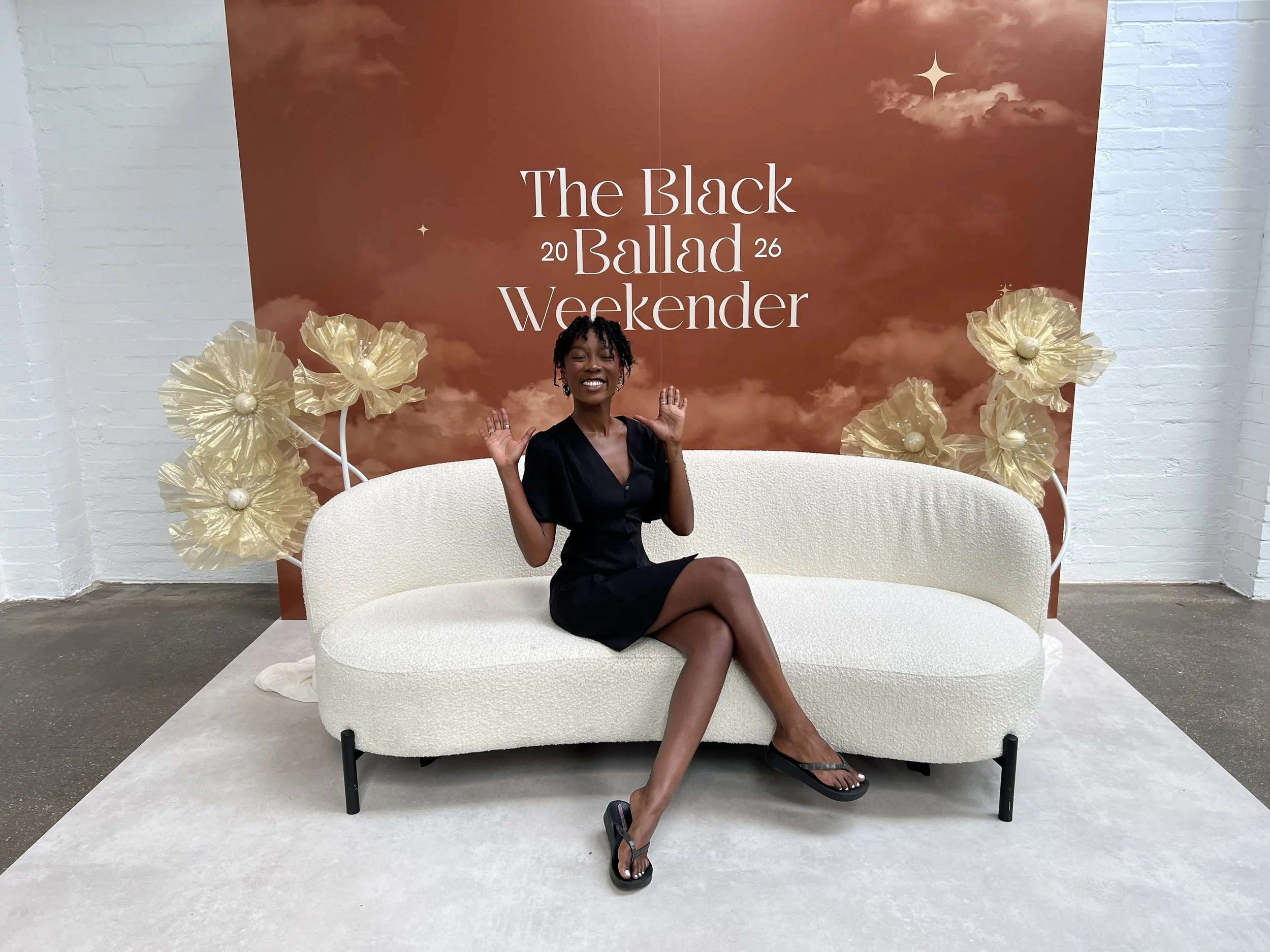
She cites community leaders as the new influencers, and it made her question whether everyone who calls themselves a community leader is actually interested in building one. "Are you building a community because you actually want to influence that community, or are you building a community because you want another you’re your Instagram bio?"
For Afua, genuine community requires something much less glamorous: inconvenience. A real community leader is someone willing to carry the equipment, spend their own money and put themselves out for other people. She gives the example of a woman she previously worked with who ran a netball community. She wasn't simply hosting events and taking photographs; she was physically carrying the balls to and from sessions and investing her own money into making the space work.
"She's the one that's got the most to lose," Afua says. "So to be fair, you're like, I'm stamping my name on this because I'm the one putting in the work."
Her favourite example or a community she is herself a part of is the Southeast London Queer Choir. The choir operates a tiered payment system, where people who can afford to pay more subsidise those who can't. When Afua was struggling financially earlier this year, she told the organiser she wasn't sure she could afford to continue attending.
There was a pot of money for people who couldn't pay.
That, for her, is what a community space should be. Not another networking event where everyone is quietly calculating what they can get out of the room, but somewhere you can simply exist alongside other people. Sometimes you should just be able to hang out.
It is an idea that feels increasingly important in a generation whose social lives have been filtered through algorithms and personal brands. Afua is conscious of the fact that social media has created a heightened sense of self-importance. "We were literally raised on the internet where image and self-importance is everything," she says. "You are the main character."
But she doesn't think that means we're doomed. Instead, she wants people to rediscover the value of doing things without turning every experience into content.
That philosophy is also reflected in the way she thinks about her own taste. Growing up on a council estate while attending a school where many of her classmates were considerably wealthier, Afua often felt like an outsider. She describes being caught between different worlds, never quite feeling as though she belonged to either.
Eventually, she stopped trying to fit in.
"I kind of just learned to dance to the beat of my own drum."
That independence has become central to how she approaches culture. Rather than assuming she should like something because everyone else does, Afua tries to ask herself why she likes it. "Have I been told I need to like that, or do I actually like it?"
Her definition of taste is therefore less about knowing the correct names and more about paying attention to how something makes you feel. She tells me about finding a Liz Claiborne jacket at a car boot sale for £3, and the joy wasn't simply that she liked the jacket. It was the thrill of finding it herself, of discovering something that felt like it was meant to be hers.
When I ask who inspires her, she immediately names Keke Palmer. She admires Palmer's charisma and, most importantly, her refusal to apologise for being herself. "She's herself all the time," Afua says. It's easy to see why she resonates with her. Afua's own personality is central to @heyafua; she is enthusiastic, loud, funny and genuinely excited about the things she recommends. There is no attempt to make culture feel intimidating or overly intellectual.
That doesn't mean she hasn't experienced the darker side of putting yourself online. Afua has received plenty of hate, particularly after posting a documentary she made with friend, Amber-Rose Gill, about LGBTQ+ rights in Trinidad and Tobago. The video attracted more than a thousand comments, with people arguing fiercely in the replies.
Her attitude to online criticism is remarkably matter-of-fact.
"Anybody's opinion of me is really not any of my business."
She has also had to learn how to protect herself from the pressure to constantly create. She knows she can become obsessive, particularly when she is learning something new. For a while, she worried that taking a break would mean she was going to "fall off". Now, she deliberately gives herself periods where she doesn't film, edit or post.
"I need to have time when I switch off," she says.
It is perhaps one of the most sensible things a content creator can admit. When your personality is part of your job, the distinction between work and rest becomes incredibly difficult to maintain. Afua has learned that the work she's already made cannot simply disappear because she stops posting for a week.
Looking ahead, she isn't particularly interested in giving me a polished five-year plan. She wants to be doing this full-time, making enough money to live comfortably and sustainably. She'd love to work with bigger cultural institutions, perhaps developing resources or courses that help make culture more accessible to people who might not traditionally see themselves reflected in those spaces. And maybe there will be a little presenting job somewhere in there too.
Mostly, though, she wants to keep trying.
"I just want to be able to say there's so much you can get out of life, but it doesn't come from work. There are cultural things that you can do. And it's actually not that hard to start."
That, ultimately, is what makes @heyafua so compelling. It isn't really about finding free things to do. It's about refusing to believe that the city around you is inaccessible. It's about curiosity, cultural capital, community and the simple act of looking up from your phone and noticing what is happening around you.
There is probably something happening nearby. There is probably someone doing something interesting. There is probably a community you haven't discovered yet.
You just have to look.
And if Afua has anything to do with it, you might as well go.