

“Get Naked Infront of the Mirror”: Nyasha Saree on dressing a midsize body, finding confidence and building Tsitsi Studios
Written by Charlotte Lewis
There is something wonderfully confrontational about getting dressed when you refuse to dress for the body you are supposedly meant to have.
For Nyasha Saree, fashion has never been about making herself smaller, quieter or more palatable. If anything, her approach is the opposite. Zebra print becomes a neutral. Colour is never something to be apologetic about. A skirt can be loud, a heel can be ridiculous, and an outfit does not need to fit neatly into one aesthetic, or one version of womanhood, to work.
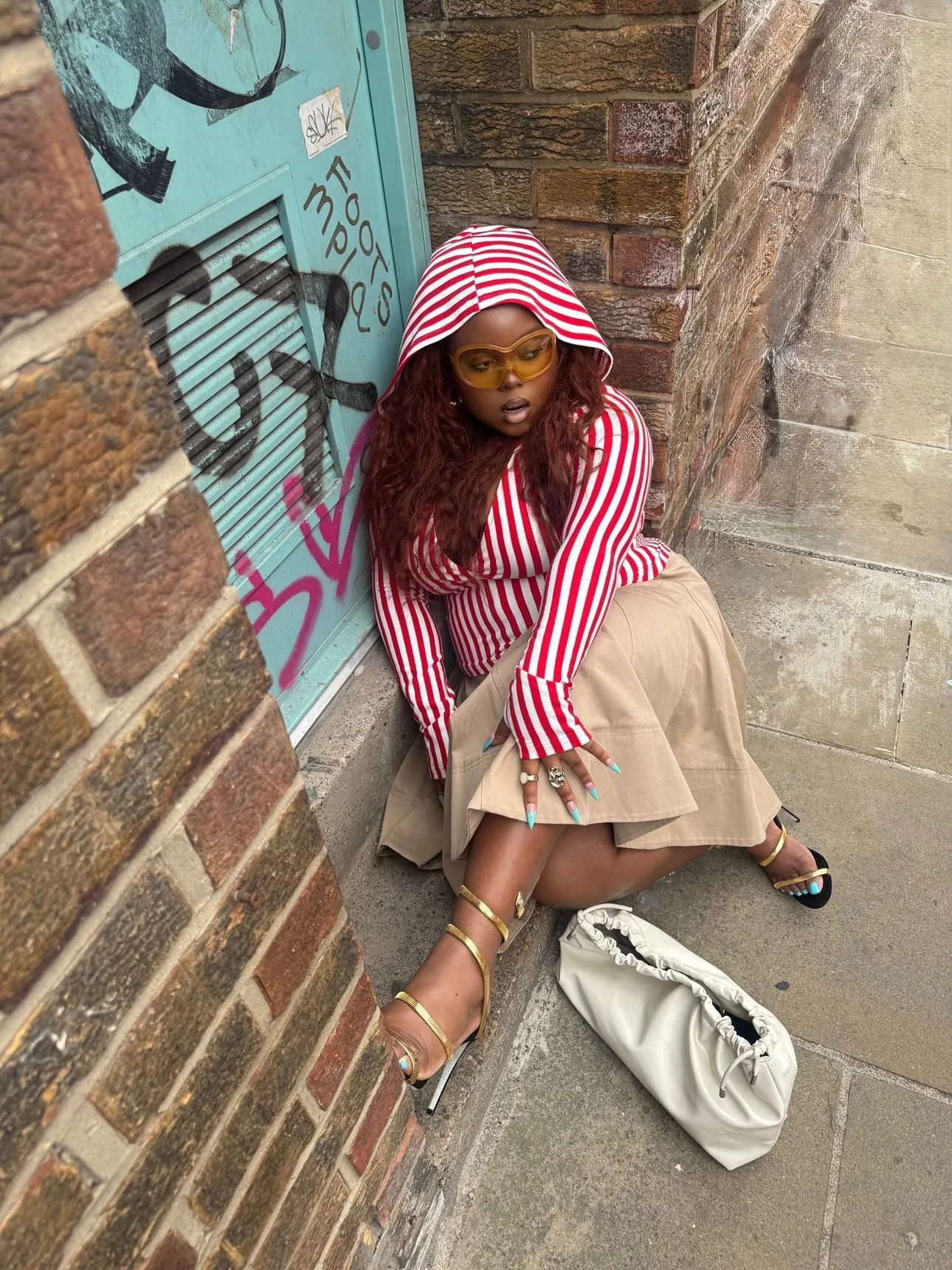
At 24, Nyasha occupies an interesting space within British fashion. She is a biomedical science graduate, content creator, designer and the founder of Tsitsi Studios, a clothing brand named after her maternal grandmother, who owned her own atelier. She is also a British Zimbabwean woman whose approach to fashion is deeply informed by her heritage, her family and her experience of navigating fashion in a body that has historically been underrepresented by the industry.
“I've always had a very science background,” she tells me. “But in terms of my family history, I come from a long line of people who are seamstresses, dressmakers. Fashion is very much ingrained in my family.”
It is perhaps this collision of worlds; science and fashion, logic and instinct, heritage and experimentation, that makes Nyasha’s approach so compelling. She never really chose between the two. She simply refused to believe that she had to.
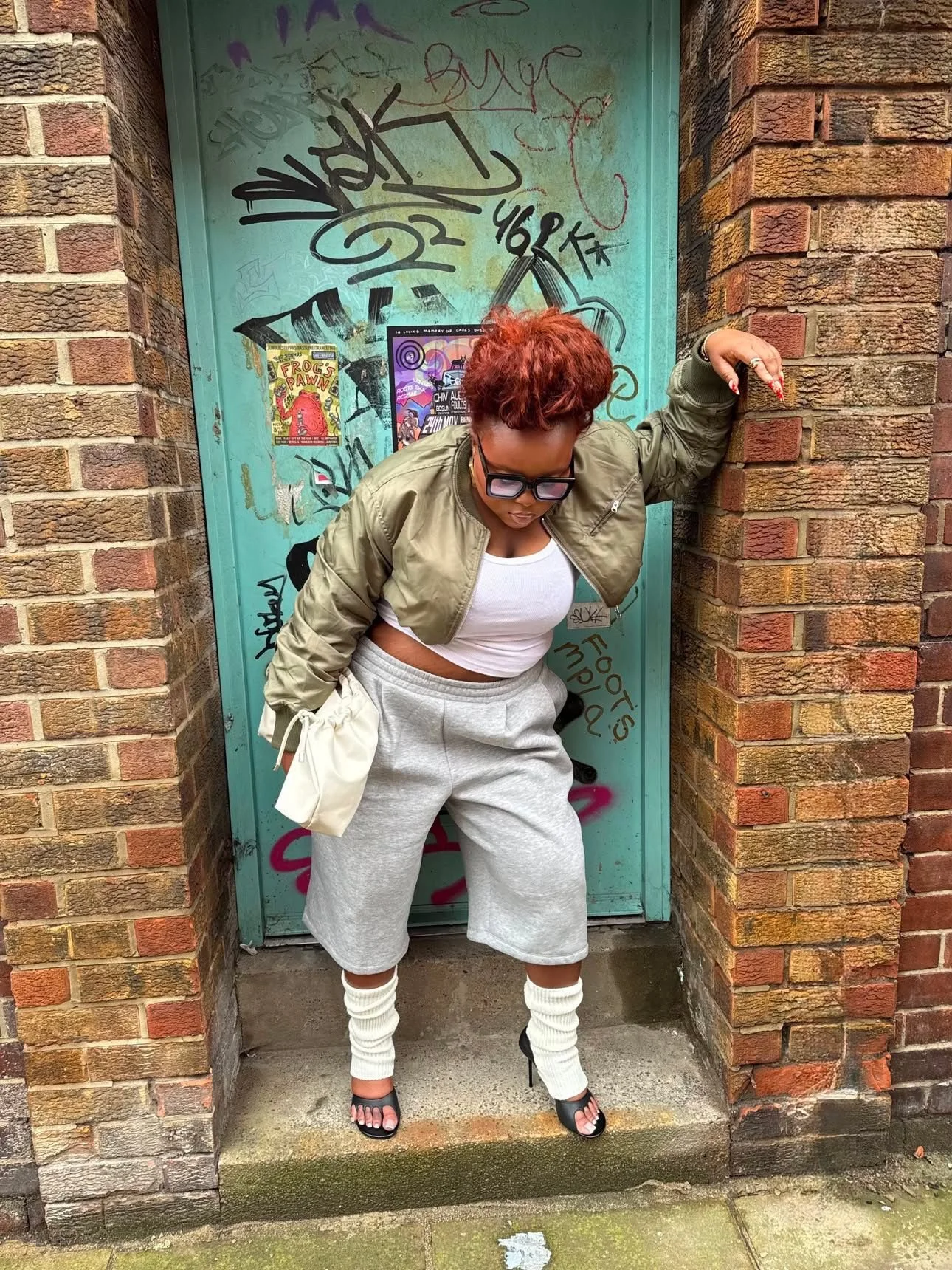
“I’m a STEM girl, but I’m also a fashion girl,” she laughs.
Fashion was something she had wanted to pursue from a young age, even though she ultimately followed the scientific route. Her mother, she says, was always encouraging her to share her style online, reminding her that her personality and love of fashion could translate into something bigger. The internet was not entirely unfamiliar territory either: when she was in Year Nine, she had her own fashion blog on WordPress. In March 2025, at 22, she finally took her mum’s advice and began creating content seriously.
What followed was, in many ways, a search for representation as much as it was a fashion career.
When Nyasha was younger, finding fashion inspiration that felt remotely reflective of herself was difficult. She remembers discovering Pinterest and realising that she could actively search for women with different body types. It sounds simple now, but at the time it was revelatory. Instead of endlessly looking at clothes on bodies that did not resemble hers and trying to imagine how they might translate, she could finally see something closer to herself.
Her cultural background offered another source of inspiration. Growing up around Southern African women, she became increasingly interested in the fashion of her heritage, particularly during her teenage years. Yet she also noticed a gap: while Zimbabwean fashion has a rich history, she felt there was space for a younger generation to put its own, more contemporary stamp on it.
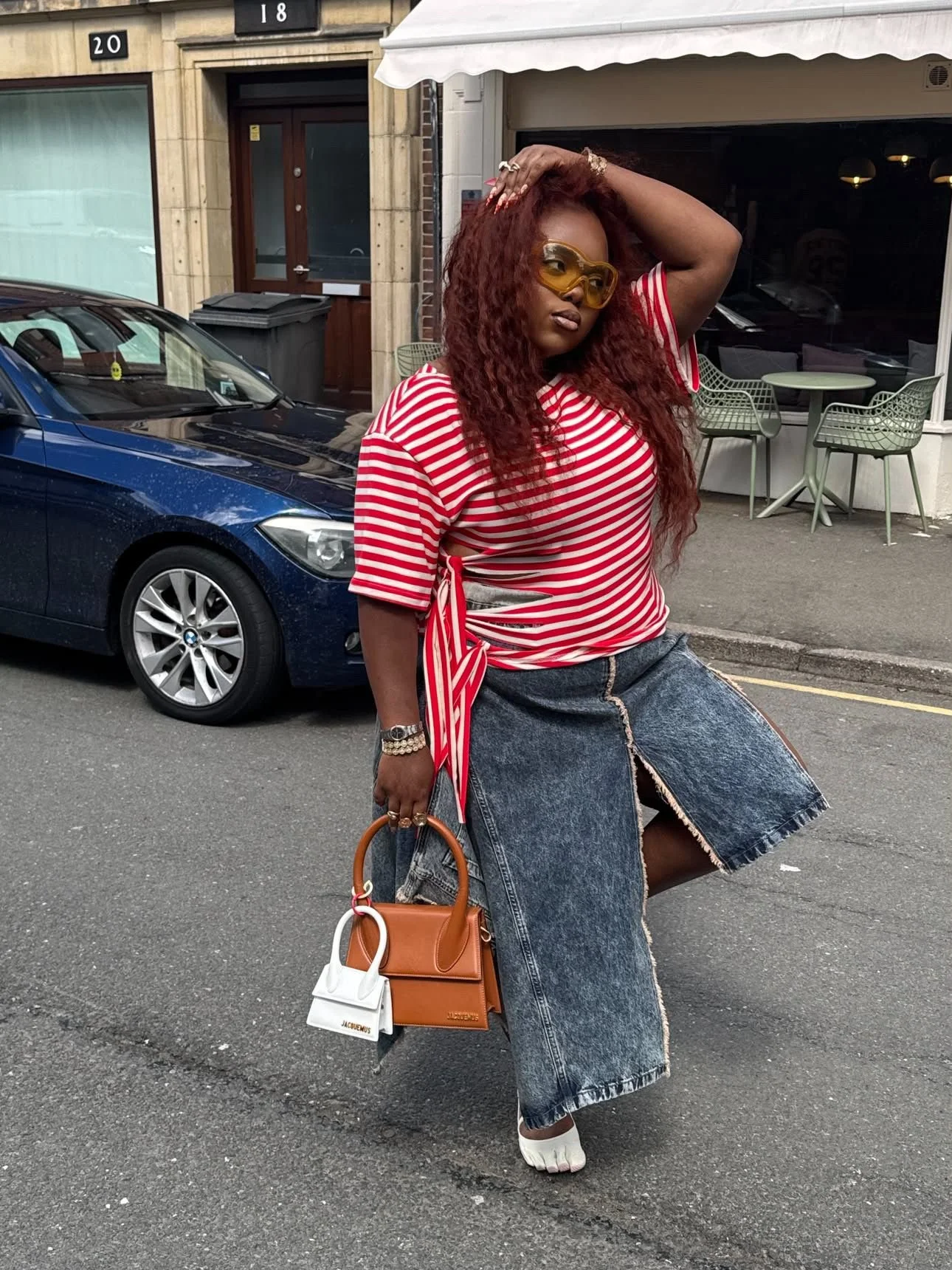
That became part of what she wanted to do herself.
“I think especially with my content creator journey, it was really important for me to showcase someone who isn't fully represented in the fashion scene,” she says. “Obviously there is a big boom on mid-sized fashion right now, but at the time when I had wanted to start, it wasn't really a thing.”
Nyasha describes being a Black, midsize woman entering the fashion-content space as “refreshing” for some people, but the significance of it goes beyond simply being able to see someone who looks like you wearing clothes. Her content actively challenges the assumption that certain clothes belong to certain bodies.
Her philosophy is refreshingly uncomplicated: try everything. She remembers being at university and wearing a blazer during a period when everyone seemed to be wearing them.
“You have to try everything to see what you hate,” she tells me. “I try everything. I wear everything. If I don't like it, then I'll be able to say, okay, at least I tried it.”

It is this instinctive experimentation that has shaped her personal style. She has moved through different aesthetics without feeling the need to settle permanently into one. Blazers have come and gone. Her style has become more relaxed, more elevated, but never particularly interested in being defined by a single category.
And perhaps that is the point. Nyasha does not seem particularly interested in the idea that a woman should have one aesthetic, one personality or even one way of presenting herself.
The same philosophy sits at the heart of Tsitsi Studios.
Named after her maternal grandmother, Tsitsi Studios is both a tribute to family history and an attempt to build something distinctly contemporary. Nyasha describes the brand as a homage to her grandmother and to the women who came before her, while simultaneously imagining what modern Zimbabwean fashion could look like in the hands of a younger generation.
“I want it to be the trailblazer for modern Zimbabwean fashion,” she says.
The clothes themselves are an extension of Nyasha’s own wardrobe: colourful, sexy, playful and deliberately un-basic. Animal print features heavily. Colour is embraced rather than toned down. Even when she does create something that could be considered a wardrobe staple, she wants there to be something unconventional about it.
“For me, animal print is a neutral,” she says.
It is a sentence that could probably double as a manifesto.
Tsitsi Studios is designed for women who do not want to choose between being cool and being sexy, between going out with their friends and going wine tasting, between being taken seriously and having fun with clothes. Nyasha sees no reason why all of these versions of a woman cannot coexist.
“I don't have to be one type of woman. I can be all women. I am every woman.”
That sense of duality feels particularly relevant when considering the way women are often encouraged to dress according to a set of unwritten rules. Certain clothes are supposedly flattering. Certain silhouettes are apparently more appropriate for certain bodies. Trends move in and out, and with them come shifting expectations about what the “ideal” body should look like.
Nyasha is conscious of how absurd that cycle can be.
“Skinny's in, sometimes skinny's in, sometimes it's not. Sometimes the BBL is in, sometimes it's not,” she says. “Different body standards and different ways of looking come in and out.”
The answer, for her, is not to chase whichever body happens to be fashionable at the time. It is to understand your own.
That is something she returns to repeatedly when we talk about confidence. Fashion can influence how we see ourselves, particularly when the imagery surrounding us is overwhelmingly dominated by bodies that look nothing like our own. But, she argues, confidence ultimately has to come from somewhere deeper than a trend cycle.
“The clothes aren't wearing you, you're wearing the clothes.”
It sounds like a simple distinction, but it gets to the heart of what Nyasha is doing online. Her styling videos are not simply outfit inspiration. They are an attempt to give women permission to stop treating their bodies as obstacles to fashion.
Her advice is surprisingly direct: get naked and stand in front of the mirror.
Look at yourself. Understand yourself. Stop judging your body against the woman on the Zara website and start considering what actually works for you.
“I feel like in fashion, we're always looking at other people,” she says. “We're pulling up the screen and we're looking at what other people look like, and we're hardly spending enough time in front of the mirror and looking at what we look like.”
For Nyasha, this is not about discovering a list of clothes that women with certain bodies are “allowed” to wear. It is almost the opposite. It is about removing the idea that clothes have inherent rules at all.
A garment does not look bad because it looks different on your body than it did on the model. It simply looks different.
“That doesn't mean it's ugly,” she explains. “This is just how it looks on your body.”
That attitude has become central to the content she creates. She describes herself as a “strict fashionable big sis”, sharing the styling knowledge she has accumulated along the way, from the practical tricks that women are rarely taught to the confidence required to actually experiment with clothes.
One of her aims is simply for someone watching her to think: If she can wear it, I can wear it too.
Representation is the first priority, but education comes alongside it. She wants people to take something away from her videos, whether that is a styling trick, a new way of wearing jeans or simply the confidence to try something they previously thought was not for them.
It is perhaps why the internet has accelerated her own relationship with fashion, too. Being constantly exposed to runway shows, trends, magazines and other creators has allowed her to develop her personal style much more quickly than she might have otherwise. But unlike many creators who can become trapped by the pressure to produce whatever performs best, Nyasha says she has been fortunate that the things she genuinely wants to make tend to resonate.
And although being visible online inevitably comes with criticism, she refuses to let other people's opinions dictate her style. Up North, particularly, she has noticed that louder fashion can still attract attention. She remembers wearing a birthday outfit consisting of a zebra-print skirt, purple top and yellow heels and noticing people staring.
But the attention does not necessarily feel negative. More often, she is complimented. There is something slightly unfamiliar about seeing someone dressed with that much enthusiasm, particularly in places where fashion is not always treated with the same cultural importance as it is in London.
That distinction matters to Nyasha.
Having lived between Manchester and Sheffield, and having studied in Manchester, she has seen first-hand the creativity happening outside the capital. Manchester in particular has shaped her style, exposing her to a mix of people, aesthetics and influences. She believes the North deserves far more attention as a fashion ecosystem in its own right.
“There’s a lot of underground designers,” she says. “There's a lot of people that are doing amazing things up North and in terms of fashion, and I don't think the light is really shed on them.”
For inspiration, she points towards Manchester's thriving vintage scene, particularly when she wants to find something completely outside of her usual wardrobe. It feels fitting for someone whose approach to dressing is fundamentally about experimentation.
Ask Nyasha who she would most like to style, however, and the answer comes quickly: Rihanna.
Not because Rihanna is a predictable fashion icon, but because Nyasha sees something familiar in her approach, the willingness to try everything.
Her hypothetical Rihanna look is suitably chaotic in the best possible way: oversized Adidas track bottoms, a very sexy Dsquared2 heel and a white tank top with a ripped, stringy hem revealing her stomach. It is the kind of outfit that only really makes sense when you stop asking whether individual pieces are supposed to go together and start asking whether the person wearing them feels good.
That, ultimately, seems to be the philosophy running through Nyasha's work. She is not trying to create another set of rules for women to follow. She is trying to dismantle the ones that already exist.
Tsitsi Studios is the physical extension of that idea. Nyasha wants it to grow into a recognised name in fashion, eventually occupying stores and reaching women far beyond her current audience. But more importantly, she wants it to become synonymous with a particular feeling: the knowledge that the designer has considered women like her.
And when she talks about the future of her content, she is less interested in becoming simply another large influencer than in becoming a point of reference.
She wants women to know that if they do not know what to wear, they can go to her page. If they are unsure how to style jeans on a curvier body, they can find an answer there. If they need inspiration, practical advice or simply permission to wear the thing they have been talking themselves out of buying, she wants to be the person they think of.
A fashion big sister, essentially.
Perhaps that is why Nyasha's approach feels so refreshing. She is not telling women how to dress their bodies. She is telling them to get to know them first.
The fashion industry can keep changing its mind about what bodies, silhouettes and aesthetics are desirable. Trends will continue to arrive and disappear, and the algorithm will continue to decide what it wants to see next.
Nyasha is not interested in keeping up. She would rather try everything, decide what she loves, wear it loudly and let everyone else catch up.