

No Such Thing as “Cool”: Inside Manchester’s T4T Club Night
Written by Rachel Atinuke Odunayo, edited by Charlotte Lewis
To navigate public space as a trans person in Britain today is to carry an invisible, exhausting weight: a constant mental scan of street corners, casual misgendering at bar counters, and the oppressive static of an increasingly hostile news cycle. But cross the threshold of Islington Mill on a T4T night, and that heavy armour clatters to the floor.
Inside, the air tastes of heat, warm beer, and pure, unpretentious nostalgia. Under soft, non-strobing lights, camera lenses glint with small consent badges, and the floor shakes to an unapologetic 2000s pop anthem. There is no pretence here, no vigilant glances over shoulders, and no need to defend your right to exist. In a world that endlessly debates trans lives, this room responds with pure noise: a living sanctuary where having an uninhibited good time is the whole point.
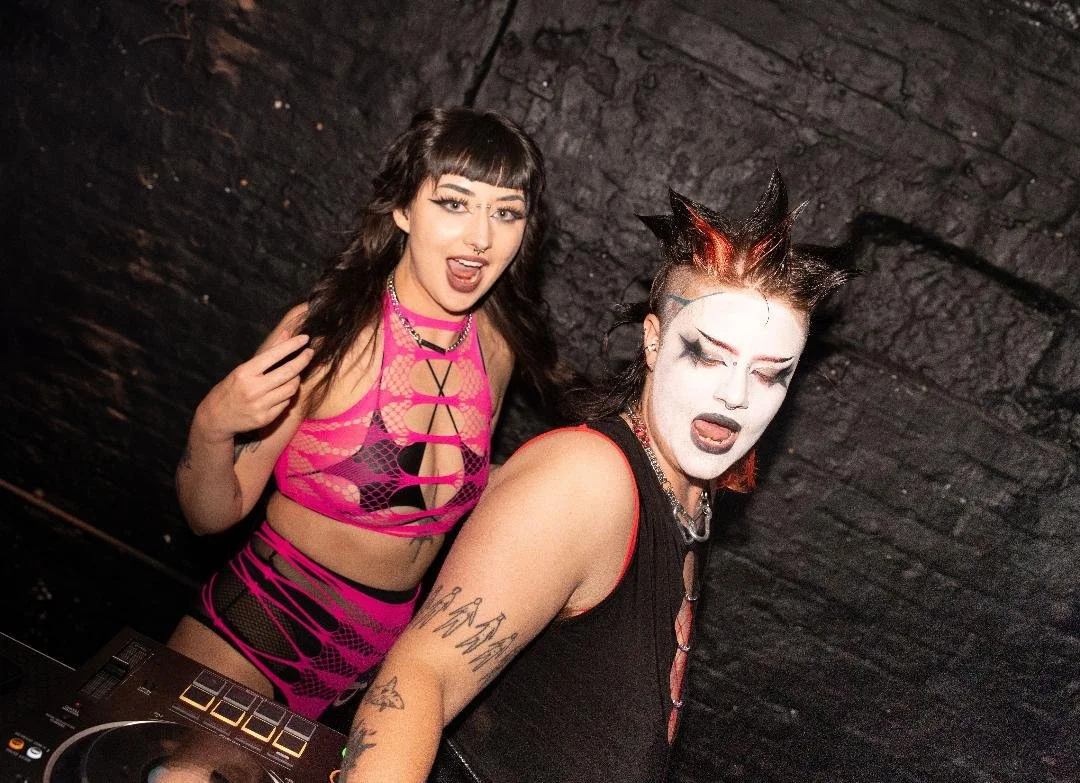
Organisers: Photos of Luna (long black hair) and Gomorrah (pink wig/liberty spikes). On the night, Gomorrah is a DJ, and Luna handles stage management and logistics (both use they/them pronouns).
T4T, a trans-centred pop club night and grassroots collective, has quietly turned Islington Mill into one of Salford’s most cherished cultural spaces.
The concept was born out of pure frustration with commercial nightlife. Even within Manchester’s famous Gay Village, organisers Gomorrah and Luna (both they/them) found themselves repeatedly misgendered by venue staff and bouncers, a demoralising reminder that mainstream queer spaces do not always guarantee safety for trans people.
“You come to the club to have a good time, and it just ended with us getting increasingly frustrated,” says Luna, who manages T4T’s operations and stage logistics. “We kept thinking, imagine if there was a trans space. Imagine if there was a club run by trans people. Then we realised: we organise events. We could do that.”
Together with Gomorrah, who acts as resident DJ, they set out to build a room that rejected both commercial hostility and the unspoken snobbery of Manchester’s broader clubbing landscape.
Building a sanctuary, however, requires far more than a playlist. Beyond the pop hits, T4T’s radical nature lies in its behind-the-scenes engineering: a deliberate response to an industry that routinely overlooks disabled and trans clubgoers.
At the entrance, attendees encounter one of the collective’s most thoughtful interventions: a photo-consent sticker system designed to prevent unwanted “digital outing”. Guests who wish to document their night without their faces ending up on public feeds can opt for a sticker, flagging their consent to the night’s dedicated photographer. It allows people to capture memories with friends while preserving their privacy in an increasingly hostile online climate.
That same meticulous care extends to the physical space at Islington Mill. Where standard venues prioritise high-glamour aesthetics, T4T prioritises physical safety. Flash lighting is stripped away in favour of static rigs, protecting attendees prone to seizures. Bar counters feature lowered access points for wheelchair users, and a stage ramp, funded by Homobloc, Manchester’s massive queer festival, ensures disabled performers can take centre stage without risk of injury.
“We would always rather value people being able to safely attend the event over the event just looking cool,” the organisers explain.
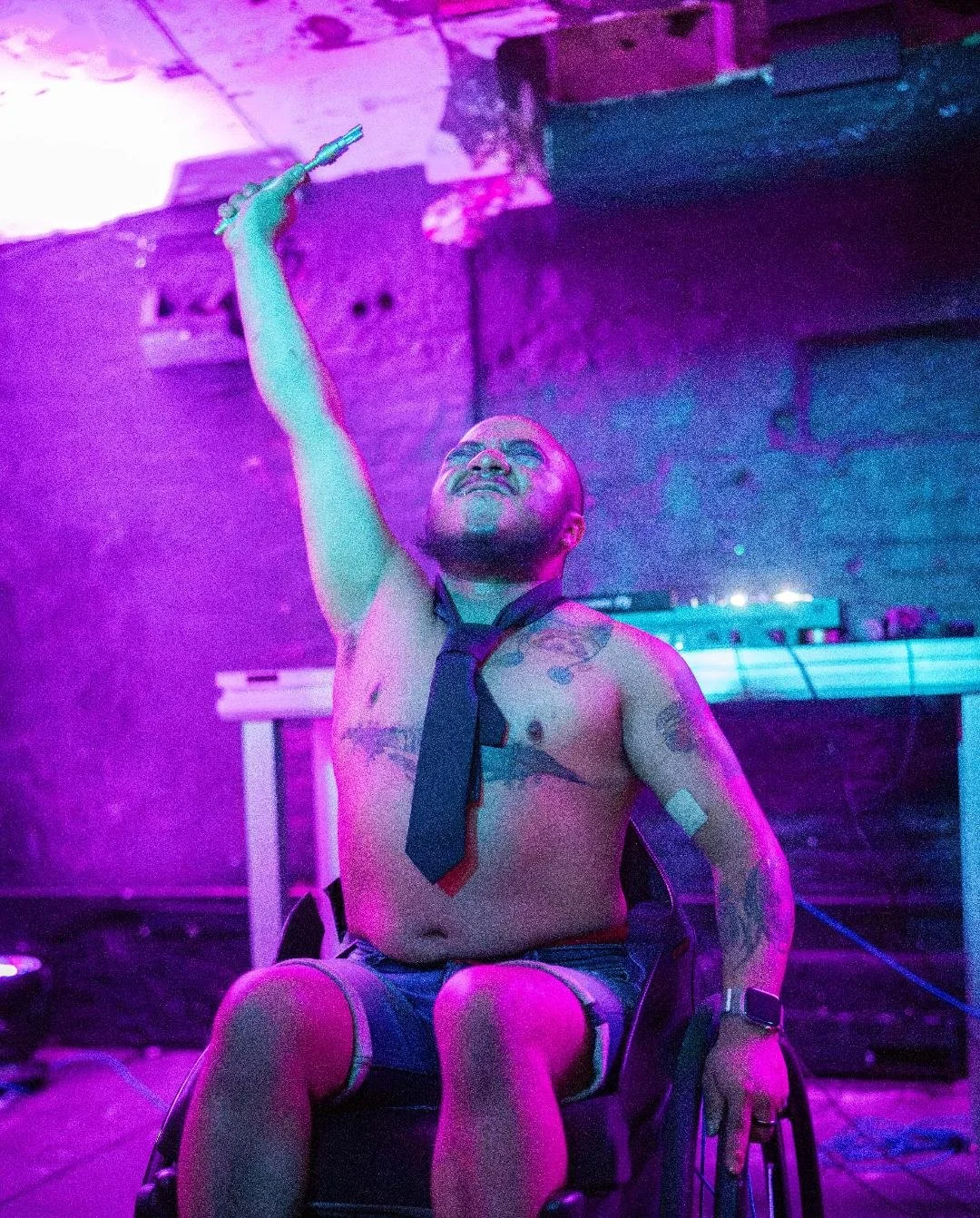
Performer: Photo of @dragvros
That ethos extends directly to the door. Rather than relying on traditional security agencies whose staff may misgender or intimidate patrons, Gomorrah and Luna actively recruit trusted trans and queer workers “in the wild”, building a team of security, door staff, and bartenders who inherently understand the room.
“They just get it,” Luna says. “They know what they would want out of that space and how to save that space.”
If the backstage logistics build the sanctuary, the soundtrack provides the liberation. In a city world-famous for its heavy techno and serious electronic subcultures, T4T charts a different course. The room is explicitly, unapologetically pop.
From 80s chart classics and 2010s nostalgia to modern anthems by Chappell Roan, the music relies on shared cultural touchstones rather than scene gatekeeping. Gomorrah and Luna frequently slip in unexpected curveballs: Vengaboys, Justin Bieber, or brief blasts of mid-2000s emo, watching the room break into collective laughter before the singalong takes over.
For the pair, stepping away from Manchester’s high-brow electronic scene was a deliberate choice.
“There’s no such thing as ‘cool’ at T4T,” they explain. “Everyone is just on the same level. We love seeing people not take themselves too seriously and just have a great time on the dancefloor.”
That lack of cynicism creates an infectious, easygoing atmosphere. One attendee remarked that dancing at T4T felt like the euphoric, idealised club scenes from childhood movies, a stark contrast to the self-conscious wall-leaning typical of mainstream nightlife. People do not stand around trying to look composed; they throw their arms up, sing until their voices crack, and lose themselves in the crowd.
That sense of collective freedom builds towards the night’s final ritual. At every T4T party, as 3:30 AM approaches and the energy in the Mill peaks, Gomorrah drops the exact same closing track: “Immaterial” by the late trans producer SOPHIE.
It is an intentional, emotionally charged choice. The track’s hyperpop production and lyrics about transcending physical form serve as both a celebration and a memorial. When the synth bassline kicks in, the barrier between the stage and the crowd disappears. The organisers step off the decks to dance directly alongside the crowd, hugging regulars and singing along with everyone who stayed until the house lights came up.
“It’s just lovely to see everyone come together to that song and celebrate our community and trans artists,” Gomorrah says. “On a less serious note, we just love seeing people not take themselves too seriously. We want people to come, let their hair down, and just have a dance.”
As the house lights dim and attendees spill out into the cool Salford night, the impact of what Luna and Gomorrah have built lingers. What started as a frustrated reaction to misgendering in traditional nightlife has grown into a recurrent refuge, one where safety is engineered into the floorboards and joy is treated as an act of resistance.
For the organisers, the true success of T4T does not belong to them alone. It lives in the pre-party group chats created by strangers, the friendships forged in the queue, and the quiet knowledge that, for one night a month, trans people in Manchester do not have to look over their shoulder to feel safe.
“We can create the space and put the night on,” Luna reflects. “But without the right people in the room, it doesn’t have that feeling. The community built T4T.”
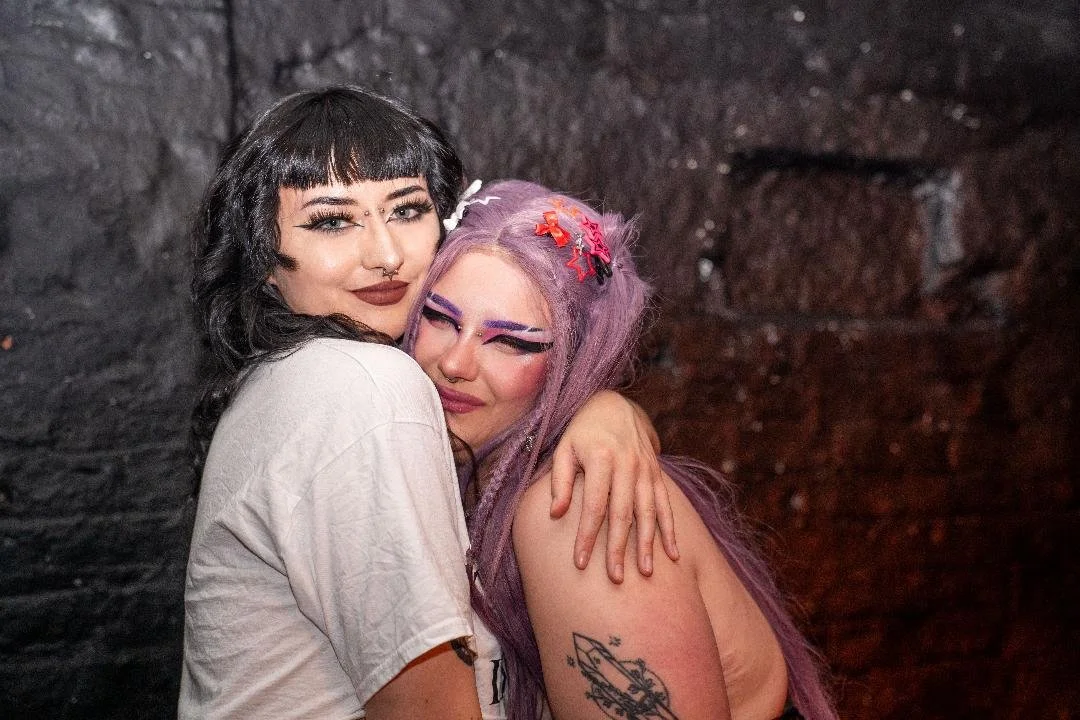
Photo Credit: Jessica Guscoth (@jessica.guscoth)