Written by Charlotte Lewis
On Claire Dederer's Monsters: A Fan's Dilemma, the myth of male genius, performative morality and the uncomfortable business of loving the work of people we should know better than to admire.
It’s particularly gutting discovering that somebody responsible for a piece of art you love is, by all accounts, a deeply unpleasant human being. We like to imagine that creativity and character are somehow connected, that the person capable of producing something beautiful must possess some understanding of beauty themselves. Unfortunately, this is not always the case.
The question of whether we can separate the art from the artist is hardly a new one. We have been having variations of this conversation for decades, from Roman Polanski and Woody Allen to Pablo Picasso, Michael Jackson and, more recently, the increasingly difficult conversations surrounding the cultural legacies of men whose reputations have been dismantled by allegations of abuse and misconduct.
It is a question that feels particularly relevant this week.
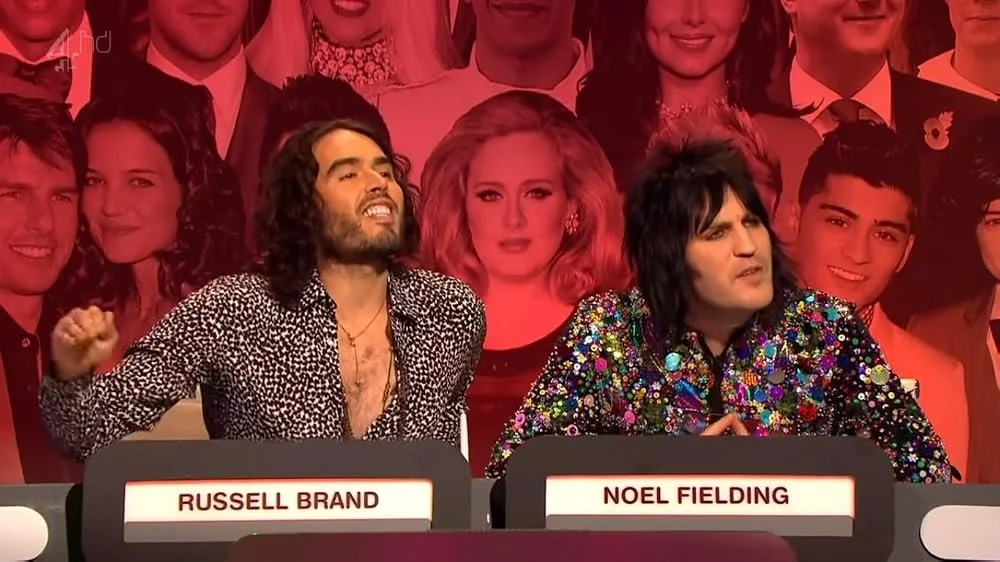
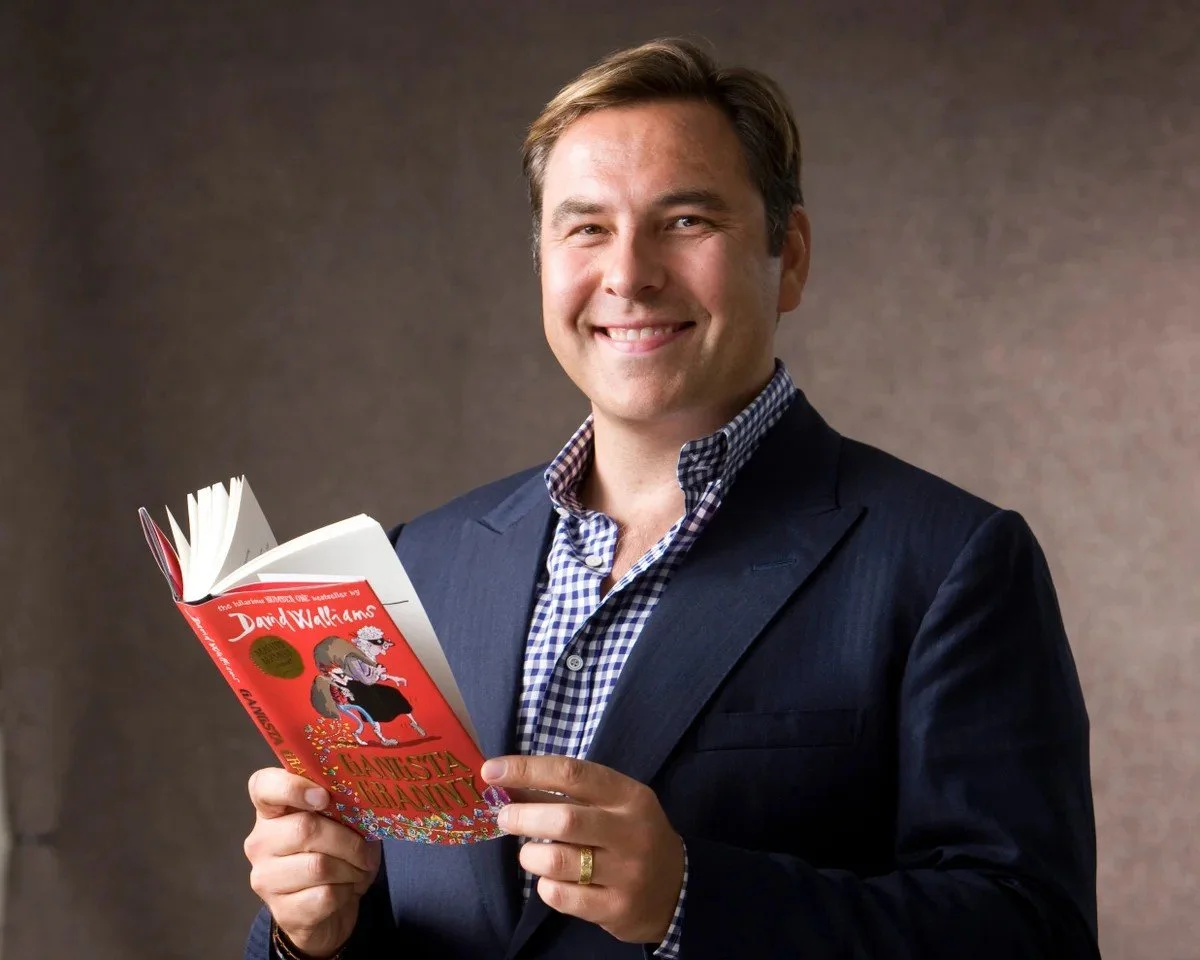
On 9th November 2026, Russell Brand was sentenced to ten years and six months in prison after being convicted of one count of rape and three counts of sexual assault against four women. Just days later, allegations against comedian and children's author David Walliams dominated the British news cycle. Multiple women have accused Walliams of sexual misconduct, including allegations of grooming when they were teenagers. Walliams denies the allegations and says he has not broken the law. These are different legal circumstances, but both cases have prompted a familiar cultural reckoning: what happens to the work, the reputation and the legacy when the man behind them is no longer someone we can comfortably admire?
It was with this question in mind that I picked up Claire Dederer's Monsters: A Fan's Dilemma.
Originally developed from her 2017 essay What Do We Do With the Art of Monstrous Men?, Dederer's book attempts to explore precisely this contradiction. Her central case studies will be familiar to anyone who has followed the conversation: Woody Allen and Roman Polanski. Both are filmmakers whose work has attracted considerable admiration, but whose personal histories make engaging with that work significantly more complicated. Dederer's premise is an interesting one. She argues that consuming art involves what she calls two biographies meeting: that of the artist, which can disrupt our experience of the work, and that of the audience, which shapes how we receive it. In other words, perhaps the question has never really been whether we can separate the two. Perhaps it is why we want to.
One of the most interesting aspects of Monsters is its examination of the cultural permission historically afforded to extraordinary men. There is a longstanding romanticisation of the difficult male artist. The genius who cannot be expected to follow ordinary rules. The tortured creative who sacrifices everything for their work. The filmmaker whose personal life is apparently irrelevant because he has given us something culturally significant. We have spent generations making excuses for men whose talent seems to grant them an alternative set of moral expectations. Dederer challenges this particular mythology, and rightly so. The idea of the monstrous genius is not simply a description of individual behaviour. It is a cultural construction that allows exceptional men to operate outside the boundaries expected of everyone else. The question is not just why these men behaved as they did, but why so many people around them were prepared to accommodate it.
Consider the machinery of Hollywood's defence of Polanski. His talent, his personal tragedies and his standing within the film industry have repeatedly complicated discussions of his criminal history. His 1977 guilty plea for unlawful sexual intercourse with a 13-year-old girl has not prevented his work from being celebrated or his reputation from being defended by influential figures. Woody Allen presents a different, equally difficult conversation. Allen has denied the allegations of abuse made by his daughter Dylan Farrow. His films, however, also invite scrutiny of the attitudes they represent. Take Manhattan, in which a 42-year-old man enters a relationship with a 17-year-old girl. The film's romantic framing of that relationship is not some irrelevant detail that can be separated from its artistic achievement. It is part of the story itself.

This is where the conversation becomes more interesting than simply deciding whether a filmmaker is a good or bad person. There is a difference between an artist behaving reprehensibly outside their work and an artwork itself reproducing, romanticising or excusing harmful attitudes. We should be able to recognise the distinction without pretending that either question is unimportant.
Where Monsters begins to lose me is in its attempt to bring the argument back to Dederer herself. In an effort to examine her own capacity for monstrosity, she reflects on her experiences as a mother and writer, including accepting residential fellowships that took her away from her family for weeks at a time. She also discusses her history with alcohol. I understand what she is attempting to do. She wants to challenge the comforting distinction between monsters and ordinary people, suggesting that we are all capable of selfishness, neglect and behaviour that causes harm. But there is a considerable difference between accepting a professional opportunity that takes you away from your family and sexually abusing someone. It is one thing to acknowledge the compromises and selfishness that can accompany ambition. It is quite another to place those experiences alongside rape, exploitation and abuse as though they belong on the same moral spectrum.
Women and men in all walks of life have historically had to navigate the demands of work and family. Those compromises can be difficult, and the unequal expectations placed on women, particularly mothers, deserve serious examination. But working away from home to pursue a career does not make someone a monster in the same way that abusing another person does. For me, this section introduces a false equivalence that weakens rather than strengthens Dederer's argument.
It also raises a more interesting question that the book never quite manages to pursue: why are women's professional ambitions so readily placed under a moral microscope while male artists have historically been permitted to sacrifice almost anything, including the wellbeing of those around them, in the name of genius?
Dederer could have done considerably more with this. Instead, the personal memoir begins to overwhelm the cultural criticism. The book occasionally feels less like an examination of how audiences understand problematic artists and more like an account of one writer trying to reconcile her own feelings.
Rachel Cooke, reviewing the book for The Guardian, was considerably harsher, describing it as so thin, so ill-researched. While I would not dismiss the book entirely, I understand the frustration. At times, Dederer introduces fascinating questions without giving them the depth or critical attention they deserve.
Perhaps the most contemporary dimension of Dederer's argument is the relationship between public identity and private behaviour. There is a conversation circulating on social media about men who perform being politically aware, progressive or particularly conscious of women's experiences. One observation that has stayed with me is that knowing the language of feminism is not necessarily the same as practising it. In fact, the ability to perform sensitivity, vulnerability and social awareness can make the contradiction between public and private behaviour all the more disturbing.
Russell Brand built a public identity around being provocative, intellectually rebellious and, at various points in his career, an outspoken critic of inequality and established power. His later transformation into a wellness and political influencer further demonstrates how much a public persona can evolve. Yet a politically articulate public image is not evidence of someone's private morality. The reporting surrounding Brand has also exposed the culture that enabled his behaviour. Before his conviction, concerns about his conduct had reportedly been raised by television production staff. A recent Guardian investigation described how junior members of a production team were asked to obtain female audience members' telephone numbers for him, and how an earlier complaint went nowhere.
The problem, then, was not simply one man's behaviour. It was the network of professional relationships, institutional decisions and cultural attitudes that allowed it to continue. Walliams presents a different public image. A familiar face on family television, a bestselling children's author and a comedian whose work has been enjoyed by millions. The allegations against him, which he strongly denies, raise uncomfortable questions about the power imbalance between established celebrities and the younger women around them.
We have become accustomed to confusing a public persona with a person's character. Charm, humour, political awareness, self-deprecation, campness or a family-friendly image can all contribute to the illusion that we know somebody. We don't. There is nothing inherently progressive about knowing the right things to say. There is nothing inherently harmless about being funny. And there is certainly nothing inherently masculine about sexual abuse. It is not an expression of masculinity; it is an expression of entitlement and an abuse of power.
Perhaps the real question is why audiences and institutions have been so willing to accept the performance as proof of character.
There is another theoretical question that I think Dederer could have explored further: what actually makes a piece of art great, and can its moral position be separated from its aesthetic value? In philosophical discussions of art, this is often framed through the debate between aesthetic autonomism and ethical criticism. Autonomism suggests that art should be assessed primarily on its artistic qualities, independently of the creator's morality. Ethical criticism argues that the moral attitudes expressed within a work can also influence its artistic value. Philosopher Berys Gaut's theory of ethicism, for example, proposes that an ethically relevant flaw within an artwork can count against its aesthetic merit. This is an important because it moves the discussion beyond the biography of the artist.
A film can be technically brilliant and still have a deeply troubling worldview. A novel can be beautifully written while asking its reader to sympathise with someone whose actions deserve scrutiny. An artwork does not become morally neutral simply because its creator has successfully mastered their craft. This is particularly relevant to Allen's Manhattan. The issue is not solely what we know about the filmmaker. It is also what the film itself asks us to accept as romantic, sophisticated or amusing.
Equally, we must distinguish between depicting something and endorsing it. Vladimir Nabokov's Lolita is a useful example. Its subject matter does not make Nabokov a perpetrator of the crimes committed by his narrator. Literature can interrogate disturbing subjects without celebrating them. This is where criticism becomes essential. A critic should be capable of identifying the difference between artistic representation, endorsement and the personal history of the creator. Simply declaring a work untouchable does not constitute particularly sophisticated criticism. Neither does declaring it untouchable by morality.
The recent David Walliams controversy has made this question particularly tangible. Some schools have already begun removing his books from their libraries, while others are asking for clearer guidance. It is an understandable dilemma. His books have encouraged millions of children to read, but the allegations against their author have forced educators to reconsider what they are choosing to put in front of young readers. Removing a book does not erase its cultural history. Equally, keeping it on a library shelf does not have to mean ignoring the allegations surrounding its creator.
There are questions of context, access, money and institutional responsibility that deserve more attention than the binary language of banning or defending an artist allows.
The same applies to the wider entertainment industry. Streaming a film, buying a book, attending an exhibition and discussing an artist's work are not necessarily equivalent acts. A decision to revisit an older work is different from financially supporting a living artist or giving them another platform.
And this is where capitalism enters the conversation. The circulation of art is not separate from the circulation of money, influence and opportunity. Who continues to profit? Who controls the back catalogue? Who receives the cultural recognition? Who gets another platform while the people harmed by their behaviour are expected to move on?
Dederer touches on these questions, but I wanted her to take them further. Ultimately, I do not think the problem with Monsters is that Dederer fails to produce a universal rule for what we should do with problematic art. Such a rule probably does not exist. Different creators, different works, different offences and different relationships with audiences demand different considerations.
Some readers will agree that the answer is to remain uncomfortable. That loving a film while condemning its director is an inherently contradictory experience, and that perhaps learning to sit with that contradiction is the only honest response.
There is something to be said for this. Dederer is right that our relationships with art are emotional, personal and often deeply tied to our own histories. We do not necessarily stop loving a piece of music because we discover something awful about its creator. Nostalgia, memory and the circumstances in which we first encountered a work do not simply disappear. But I would argue that accepting complexity should not mean abandoning judgement.
The responsibility of the critic is not to produce a neat moral verdict or tell audiences what they are allowed to enjoy. It is to provide the context, ask the difficult questions and examine the relationship between artistic value, personal morality and the institutions that sustain creative careers.
Dederer deserves credit for taking on a difficult subject, and there are moments when Monsters is genuinely thought-provoking. However, I found its central argument too often lost in its own introspection. I wanted a more rigorous examination of the audience, the structures that protect powerful men and the ways in which art itself can reproduce the attitudes we claim to reject. Perhaps the most useful conclusion is this: we do not need to pretend that great art stops being great when its creator turns out to be terrible. But neither should artistic greatness be used as a defence against accountability. Love the art. Hate the person. It is a convenient phrase, but it is not an adequate critical position.
The work may survive the artist. The mythology that protected them should not.