

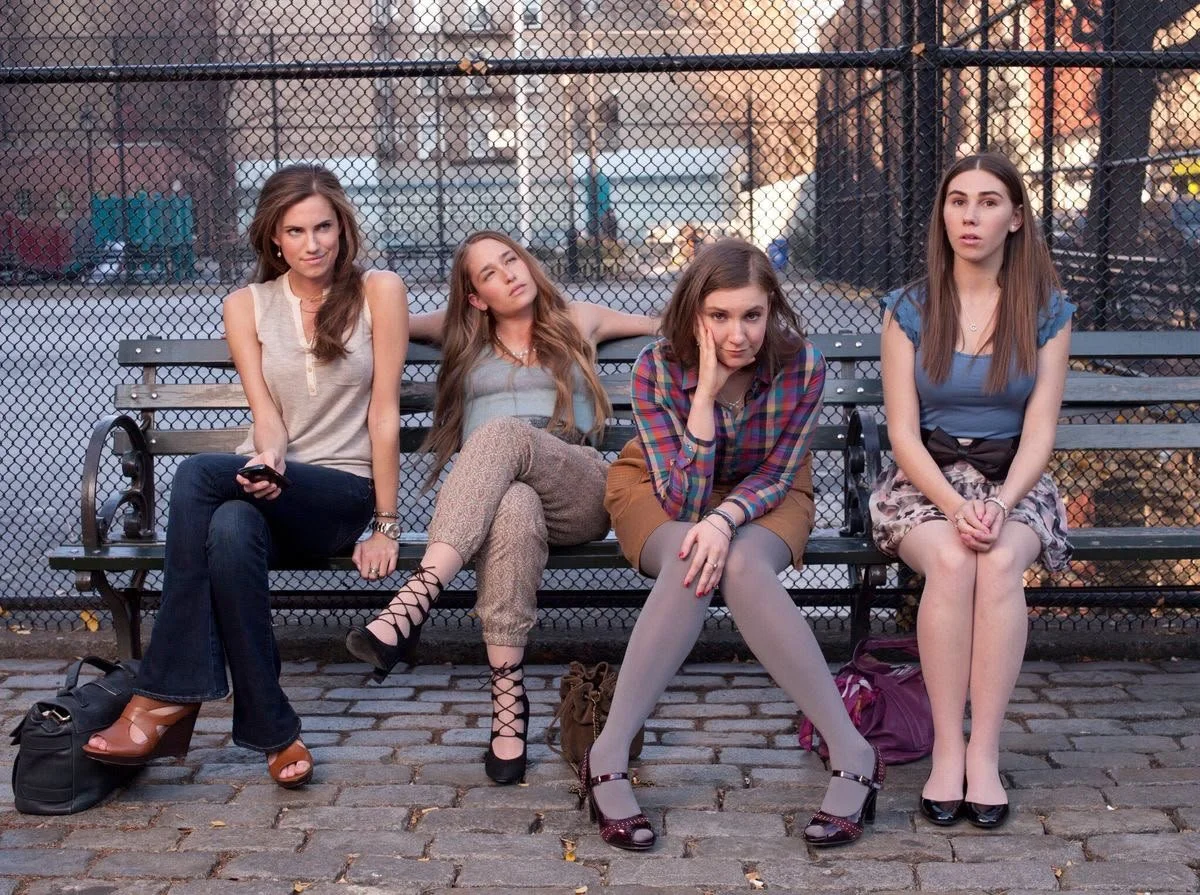
The ‘Girls’ Are Back: Do We Really Need to Revisit Our Twenties?
We seem to be experiencing a collective inability to leave the 2010s alone. Tumblr aesthetics have returned, indie sleaze has been resurrected, and television executives have discovered that almost anything can be brought back, provided audiences remember loving it the first time. Now, ten years after Girls concluded its six-season run, Lena Dunham is bringing Hannah Horvath, Marnie Michaels, Jessa Johansson and Shoshanna Shapiro back to HBO for a five-episode revival, with production scheduled to begin in 2027. But the cultural landscape they are returning to has changed considerably. As Gen Z discovers the series while its original audience prepares to revisit their twenties from the other side of thirty, a question emerges: are we nostalgic for Girls itself, or a time when being a mess did not require an explanation?
When Girls premiered in 2012, it was heralded as a portrait of millennial womanhood. Dunham, then in her twenties herself, created a series that rejected the polished fantasies of female independence popularised by shows before it. Her protagonists were not in designer wardrobes or navigating their romantic lives with the benefit of hindsight. Hannah was an aspiring writer whose confidence routinely exceeded her talent, Marnie was perpetually dissatisfied with herself and everyone around her, Jessa confused recklessness with freedom, and Shoshanna was so preoccupied with missing out that she seemed to experience adulthood as a deadline she had already failed to meet. They were selfish, insecure and frequently unbearable. Their friendships were as competitive as they were affectionate, their relationships often disastrous, and their conversations an exercise in watching people talk without listening. Hannah’s relationship with Adam Sackler, played by Adam Driver, was similarly compelling because it refused to turn romantic dysfunction into a reassuring story about finding the right person. Their attraction was not evidence of compatibility, and their repeated failures to understand a convenient declaration of love rarely resolved one another.

Stella McCartney wants to save the ocean. So why does her fashion show look like this?
Stella McCartney's Spring/Summer 2027 show arrived with an environmental message: “sea life, not seafood.” There were dolphins, sharks, waves, ocean imagery, even a David Attenborough voiceover! Along with a collection free of wool.
An incredibly strong message that, on paper, sounds exactly like what sustainable fashion should be doing. But I can't stop thinking about the setting, and how completely wrong it is. Because this is Paris Fashion Week, an international event built around flying people into one city, creating enormous spectacles, generating thousands of pieces of content, convincing people they need something new, making a mess, and leaving.
The uncomfortable question Fashion Week needs to ask itself is: how sustainable can it actually be when the spectacle itself is part of the problem?

The Far-Right’s New Muse: Sydney Sweeney and her “great genes”
Well, so much of Sydney Sweeney’s public image as it existed before was her straddling herself between the two camps. She has had several appearances on the left-wing comedy show SNL, while a surprise party she threw for her mum's 60th birthday drew attention when photos were shared of guests wearing MAGA-style hats and “Blue Lives Matter” shirts. Whenever her public appearances garner attention from the right wing, she never comments on where she stands or condemns the attention.

Love Island 2025: Society on Steroids - Power, Race, and Gender Dynamics
UK Love Island Season 12 is a revealing microcosm of society’s persistent tensions around patriarchy, misogyny, and racial bias. As the contestants navigate love, friendship, and conflict under the relentless spotlight, we witness a condensed performance of social codes and power struggles that shape everyday life. The Majorcan villa becomes a pressure cooker, intensifying the complex intersections of gender, race, and power in ways that are uncomfortable, captivating, and all too familiar.

From Underdogs to Icons: The Lionesses and the Rise of Women’s Football
With another victory under their belt, England’s Lionesses have once again captured the nation’s attention, highlighting the continued rise of women’s football.
What was once a side-lined sport is now firmly in the spotlight, with growing audiences, increased investment, and a new generation of fans. The momentum behind women’s football reflects a wider cultural shift: attitudes are evolving, representation is expanding, and young women are seeing new possibilities, both on and off the pitch. A game long dominated by a male narrative is finally opening up to new voices, and they’re making themselves heard.

Kids in America: How Motherhood Became Political Under Trump

Let's Get the Girls Behind the Decks Please!
There’s a pandemic of straight, cis, white male DJs flooding club and festival line-ups.
In 2019, research from the University of Portsmouth estimated that in the UK, only ten percent of DJs were female. Even within the music industry itself, only 18% of women stated that they worked in dance music, according to the 2023 music census. Logically, it makes sense; as a woman it’s of course difficult to break into a male dominated field, but how do we invigorate more women into trying DJing?

The Social Class Satire: How the Ultra-Rich Lost Their Allure
Poking fun at those in positions of power or privilege is nothing new; in fact, it’s the very foundation of satire. Yet, the 21st century has introduced a new generation of the rich and famous, complete with a fresh set of mannerisms and stereotypes for those on the outside to laugh at. Films such as Triangle of Sadness – a scathing satire centred on models, influencers, and oligarchs – and TV series such as The White Lotus – a darkly comedic take on luxury resorts – suggest that being inordinately wealthy has lost its chic, if fact, it’s actually quite embarrassing.

How the Grinch Stole Christmas: Commercialism and Cynicism
Christmas is a time we typically overspend and overstress. In the run-up to Christmas, stressed-out shoppers run riot. And to that end, the overworked staff in these retail spaces, who rarely get to spend meaningful time with their own family and friends at Christmas, get abused by customers daily. While shopping this year - keep that in mind!