Written by Niamh O’Neil; edited by Shabeeh Asim
We seem to be experiencing a collective inability to leave the 2010s alone. Tumblr aesthetics have returned, indie sleaze has been resurrected, and television executives have discovered that almost anything can be brought back, provided audiences remember loving it the first time. Now, ten years after Girls concluded its six-season run, Lena Dunham is bringing Hannah Horvath, Marnie Michaels, Jessa Johansson and Shoshanna Shapiro back to HBO for a five-episode revival, with production scheduled to begin in 2027. But the cultural landscape they are returning to has changed considerably. As Gen Z discovers the series while its original audience prepares to revisit their twenties from the other side of thirty, a question emerges: are we nostalgic for Girls itself, or a time when being a mess did not require an explanation?
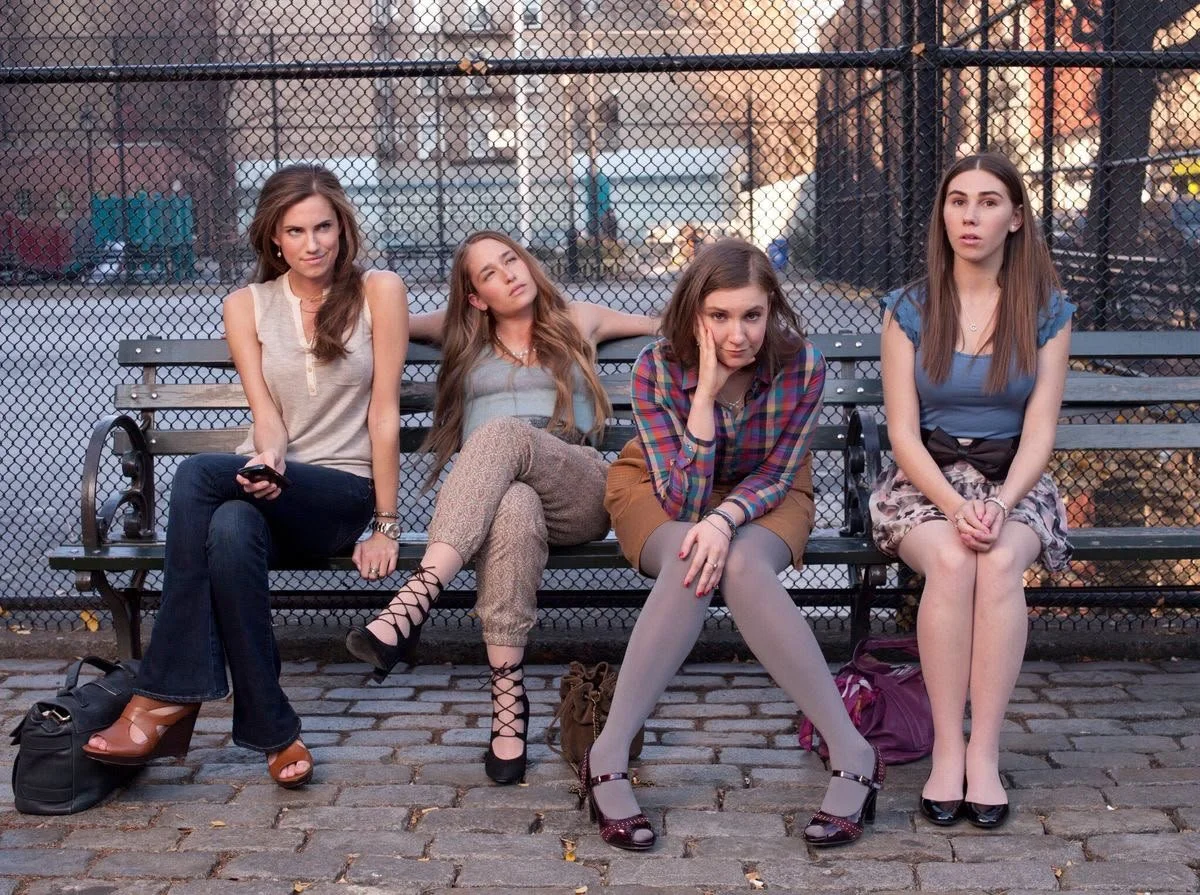
Image NY Times
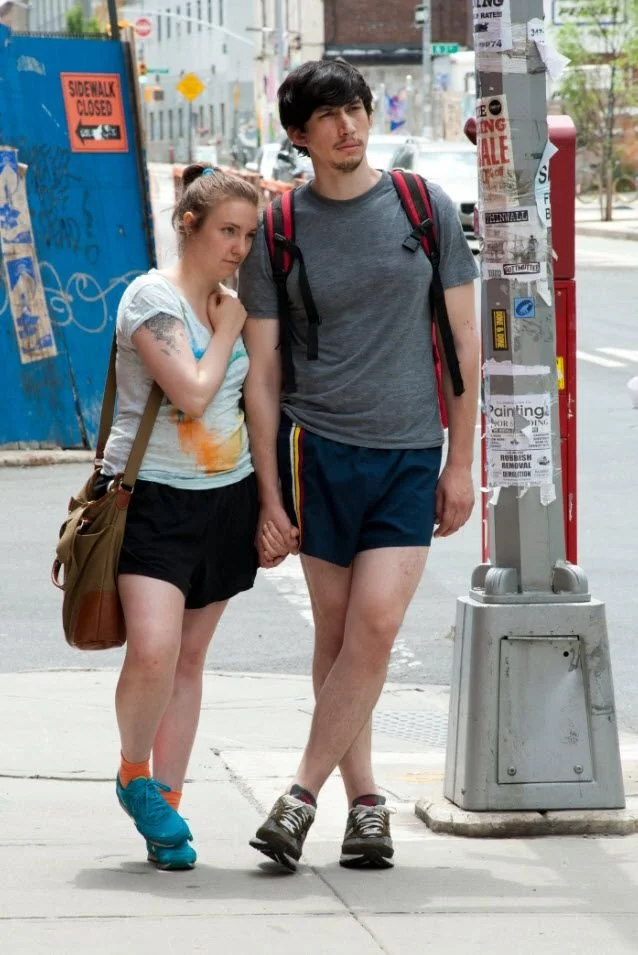
When Girls premiered in 2012, it was heralded as a portrait of millennial womanhood. Dunham, then in her twenties herself, created a series that rejected the polished fantasies of female independence popularised by shows before it. Her protagonists were not in designer wardrobes or navigating their romantic lives with the benefit of hindsight. Hannah was an aspiring writer whose confidence routinely exceeded her talent, Marnie was perpetually dissatisfied with herself and everyone around her, Jessa confused recklessness with freedom, and Shoshanna was so preoccupied with missing out that she seemed to experience adulthood as a deadline she had already failed to meet. They were selfish, insecure and frequently unbearable. Their friendships were as competitive as they were affectionate, their relationships often disastrous, and their conversations an exercise in watching people talk without listening. Hannah’s relationship with Adam Sackler, played by Adam Driver, was similarly compelling because it refused to turn romantic dysfunction into a reassuring story about finding the right person. Their attraction was not evidence of compatibility, and their repeated failures to understand a convenient declaration of love rarely resolved one another.
But this is the main attraction to the show, a programme that refreshingly did not insist its female characters be particularly likeable. For all its faults, Girls allowed women to be vain, sexually complicated and emotionally immature without punishing them for failing to embody an ideal of respectable femininity. Its comedy emerged from the distance between how these women imagined themselves and how everybody else experienced them; they wanted to be exceptional but spent much of their time demonstrating just how ordinary their shortcomings were.
The problem was that a show about four women was repeatedly positioned as a show about an entire generation. The world of Girls was overwhelmingly white, relatively affluent and insulated by the safety nets that made pursuing creative careers in New York possible. Hannah's parents could threaten to withdraw their financial support, but the series rarely had to confront what artistic ambition looked like without the possibility of falling back on family money. Its characters' struggles were recognisable, but their circumstances were far from universal. Criticism of the show's lack of racial diversity emerged almost immediately. The issue was not that every television programme needed to represent every experience, but that Girls was celebrated as a generational manifesto while remaining remarkably narrow in its perspective. Dunham's insistence on depicting her own social world could be defended as a commitment to specificity, but that defence became less convincing when the show was repeatedly treated as a definitive account of young womanhood. Who was expected to recognise themselves in a story that rarely acknowledged their existence?
Dunham herself became almost as central to these debates as the characters she created. Her public image was built around confessional honesty and her willingness to discuss sex, insecurity and the female body challenged the sanitised expectations traditionally placed on women in television. But there is a difference between exposing your own imperfections and understanding the consequences of your actions.
At times, Dunham appeared to embody the self-absorption that made Hannah. Her public controversies complicated that image further. In 2016, Dunham apologised after describing an imagined interaction with American football player Odell Beckham Jr. at the Met Gala, acknowledging that she had projected her own insecurities onto him and made assumptions about his attitudes towards women. The following year, she faced substantial criticism for publicly defending Girls writer Murray Miller against an allegation of sexual assault made by actor Aurora Perrineau, who said she had been assaulted when she was seventeen. Dunham later apologised for her statement.
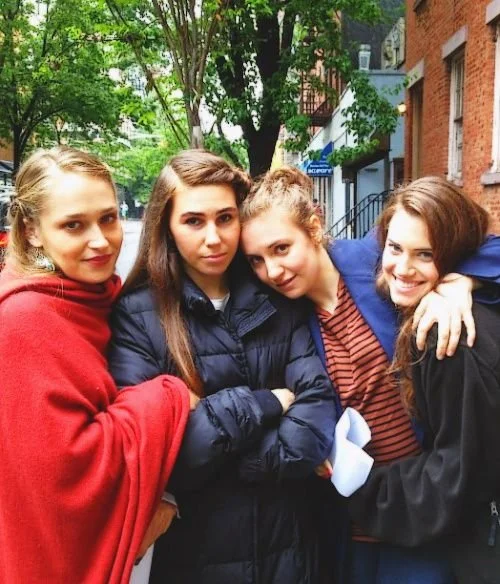
These incidents raised questions about the relationship between feminist self-expression and accountability. The contradiction was striking; Dunham had built a career examining people who constructed narratives in which they remained the protagonists, even when their behaviour hurt others. Yet her own public interventions demonstrated how easily conviction could become a defence against examining one's assumptions. Her controversies do not invalidate the achievements of Girls, but they complicate the prospect of returning to a series so closely associated with her personal perspective. Dunham now has the opportunity to revisit her most famous creation with the benefit of a decade's distance, but audiences will inevitably question whether that distance has brought a different understanding of the world she once depicted.
However, Girls no longer belongs to a single generation of viewers. The revival must contend with the fact that its original audience has grown up alongside its characters, while a younger generation is approaching the series from an entirely different perspective. For Millennials, Girls was a defining portrait of their twenties, capturing the uncertainty of navigating adulthood without having any real idea of what it was supposed to look like. The return offers the opportunity to revisit these characters with the hindsight that comes with age, questioning whether the things they once related to still resonate. For Gen Z, however, the series represents a particular moment in cultural history, before social media fundamentally altered how young people understand themselves and their relationships. The revival faces the challenge of appealing to an audience nostalgic for a period of their lives and another who may struggle to understand what made it so relatable in the first place. But this could be valuable for the revival, allowing Girls to explore how the meaning of growing up has changed between generations, particularly as the financial and social circumstances facing young adults continue to shift.
The internet has also accelerated the reinvention of self to the point where an identity can feel outdated as soon as it becomes accessible. In a culture that cannot decide whether women should be sober and self-disciplined, or chaotic and hedonistic, is there still room for the selfishness and real messy decisions on Girls? The decade since the show’s finale has been spent with audiences becoming increasingly accustomed to dissecting fictional characters through the language of online discourse, deciding who is problematic, who deserves redemption, and who is beyond forgiveness. There is a risk that, in attempting to make the revival more palatable for a contemporary audience, Dunham will soften the very qualities that made Girls so incredible. A series that once spoke to young women about the lives they were living must now balance original viewers about the lives they have left behind and relate to being an older woman in a changing world, while remaining relevant to those who are only beginning to experience life. Lean too heavily into nostalgia, and the revival risks becoming a reunion for an ageing audience rather than a meaningful continuation of the story.
Television has already demonstrated how difficult this balance can be. And Just Like That..., the sequel to Sex and the City, attempted to bring Carrie, Miranda and Charlotte into middle age while updating the original series' treatment of race, sexuality and gender. Its three-season run attracted persistent debate over awkward attempts at contemporary relevance and character developments that left some viewers questioning whether the women still resembled the people they remembered. Gilmore Girls: A Year in the Life similarly divided audiences when it returned in 2016, particularly through its portrayal of Rory's professional and romantic stagnation. By contrast, Twin Peaks: The Return used the distance between its original series and its continuation to create something formally adventurous rather than simply recreating the comfort of the past. The distinction is important: audiences may return for familiar characters, but familiarity alone cannot justify another chapter. The intervening years must mean something.
That insight should be the starting point for the revival. Hannah's transition into motherhood, established in the original series finale, offers an obvious route into her late thirties, but the interesting question is not whether she has achieved professional success or settled into a conventional version of adulthood. It is whether she has developed the capacity to see beyond herself. Their lives do not need to have turned out neatly, and their younger selves do not need to be retrospectively condemned. They simply need to have changed in ways that feel believable, even if that change remains incomplete.
There is a temptation for revivals to demonstrate their contemporary relevance by correcting the shortcomings of their predecessors. In the case of Girls, that might mean acknowledging its lack of representation, making knowing references to its former controversies and presenting its protagonists as wiser and more politically aware. But such an approach would risk turning the series into a retrospective exercise in cultural self-correction. Its characters were compelling because their contradictions remained unresolved, not because they eventually arrived at the correct conclusions. To make them more palatable is not necessarily to make them more interesting.
There is a comfort in a period of life when the future remains unwritten, even when the present is a mess. But there is a difference between looking back at that uncertainty and insisting that it was the most interesting thing about us. Girls was at its best when it exposed the absurdity of treating every youthful experience as a defining moment. Its return should resist doing precisely that. The girls are back, but the audience has changed, the culture has changed, and the creator is no longer the person she was when she first introduced them. If the revival can make those differences meaningful, there may be a reason to revisit their lives. If it cannot, it risks becoming another exercise in a culture increasingly unable to distinguish between a story worth continuing and a memory worth preserving. Perhaps the real test is whether Girls can still make us uncomfortable, rather than just nostalgic. After all, the point was never that Hannah and her friends had everything figured out. It was that watching them struggle to understand themselves made us reconsider how little we understood ourselves, too. A decade later, that will still be worth exploring, but it will require something more ambitious than asking us to fall in love with the past all over again.