

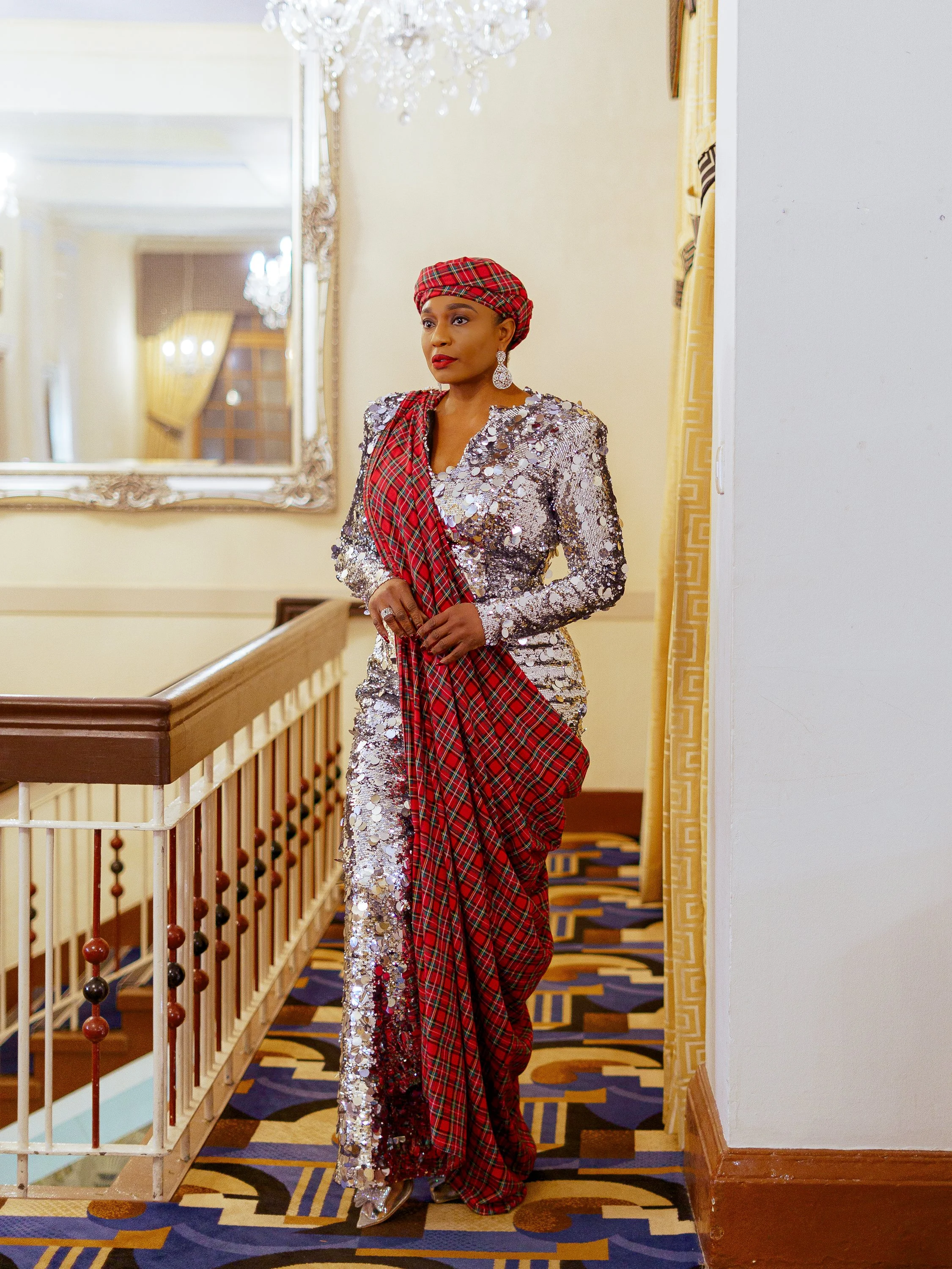
Same Fabric, New Expression: The Modernisation of Tartan
Tradition and reinvention are, for me, two words that truly underpin the identity of modernised tartan. With roots in Scottish history and clan symbolism, the patterned plaid represents a visual language of belonging and legacy. In recent decades, tartan has been reimagined by designers like Vivienne Westwood, heritage brands such as Burberry, and pop culture icons—from bands like Sex Pistols to Clueless, directed by Amy Heckerling. Together, they reshaped tartan from a ceremonial textile into a modern wardrobe staple. Few patterns hold such an ever-changing yet enduring legacy.
From the clan-scattered Scottish Highlands to the prestigious postcodes of London, the journey of tartan demonstrates its cultural power—showing that what a fabric stands for can be completely reinvented depending on who gets to tell its story.
That theme of reinvention is alive today in the work of Kelikume Fashion, where recent tartan pieces treat the pattern less like a rulebook and more like a form of creative self-expression. The brand’s founder, Keli, describes what modernising tartan means to her:
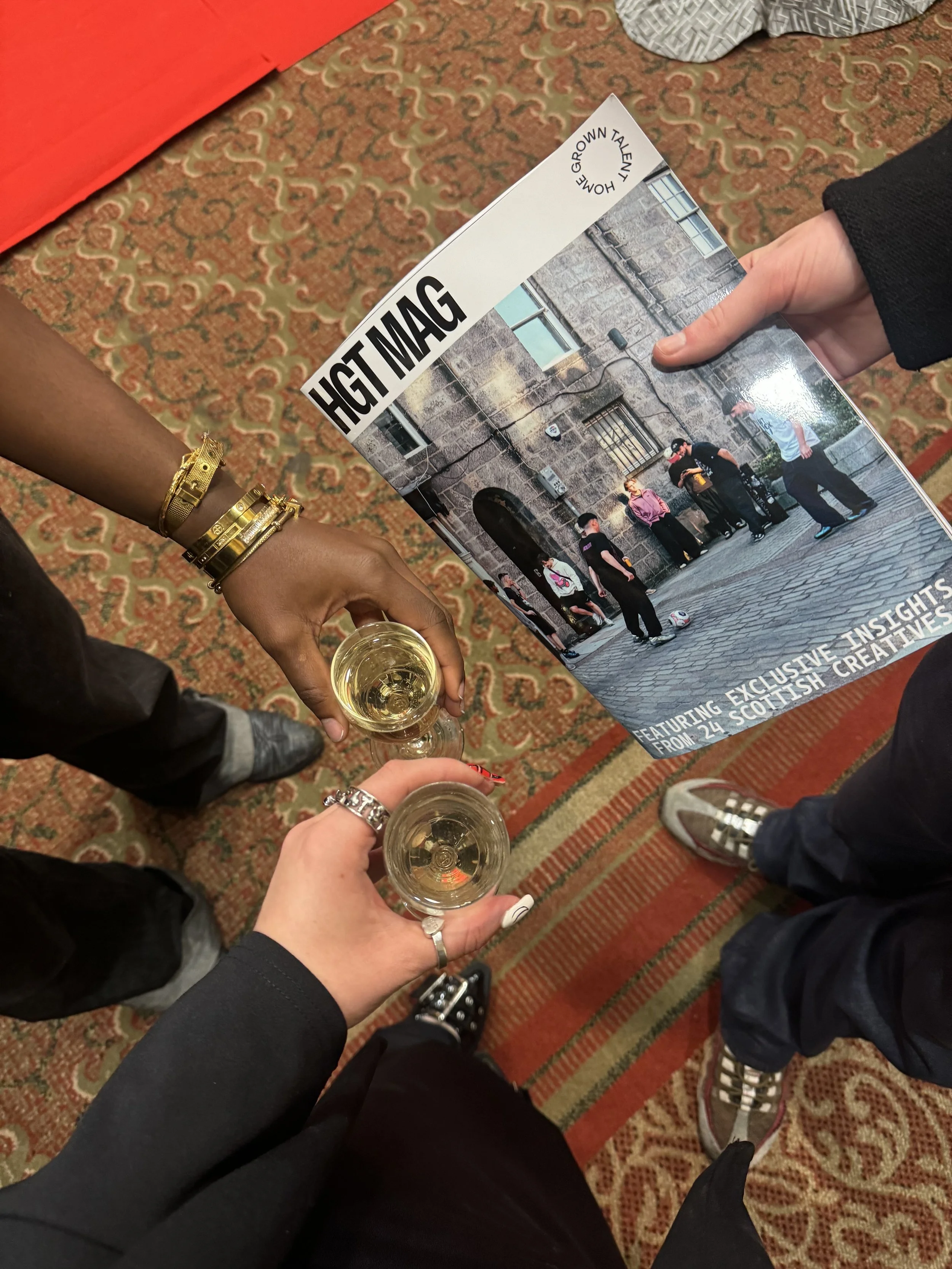
Behind The Runway: The Collective Vision Behind ‘Roots & Rebirth’ and Aberdeen’s Fashion Revival
As models paraded down the runway on Halloween night, clad in bold hues, vibrant patterns, and unique craftsmanship, October 31st marked a fashion revival for Aberdeen with the unveiling of a collection titled Roots & Rebirth. The night signalled the emergence of a dynamic, daring, and creative fashion chapter for the often creatively overlooked granite city. Nigerian-born designer Joy Kelikume Oziomaaka, the visionary behind the London Fashion Week success Kelikume Fashion and Styling, aims to bring the concept of a Fashion Week to Scotland and open opportunities for young people pursuing careers in the fashion industry—preventing them from taking their talents elsewhere.
The brand was founded by Kelly (as she is affectionately known) two years ago after working for 15 years at Chevron. Her pivot from the energy sector to fashion stemmed from a personal love for the industry, describing fashion as “the only language I enjoy speaking.”