

Same Fabric, New Expression: The Modernisation of Tartan
Written by Caragh Burke , edited by Charlotte Lewis
Tradition and reinvention are, for me, two words that truly underpin the identity of modernised tartan. With roots in Scottish history and clan symbolism, the patterned plaid represents a visual language of belonging and legacy. In recent decades, tartan has been reimagined by designers like Vivienne Westwood, heritage brands such as Burberry, and pop culture icons—from bands like Sex Pistols to Clueless, directed by Amy Heckerling. Together, they reshaped tartan from a ceremonial textile into a modern wardrobe staple. Few patterns hold such an ever-changing yet enduring legacy.
From the clan-scattered Scottish Highlands to the prestigious postcodes of London, the journey of tartan demonstrates its cultural power—showing that what a fabric stands for can be completely reinvented depending on who gets to tell its story.
That theme of reinvention is alive today in the work of Kelikume Fashion, where recent tartan pieces treat the pattern less like a rulebook and more like a form of creative self-expression. The brand’s founder, Keli, describes what modernising tartan means to her:
“Wearing tartan to Burns Supper for the second time felt deeply personal. Not a repeat, this was a reinvention. SAME FABRIC, NEW EXPRESSION. Moving from Nigeria to Scotland has reshaped how I see identity and creativity. Fashion, for me, is a bridge where cultures meet, adapt, and tell new stories together. This look reflects my belief that tradition doesn’t stand still. When embraced with respect and imagination, it evolves. Proud to advocate for cultural mix through fashion where heritage is honoured, and innovation keeps it alive.”
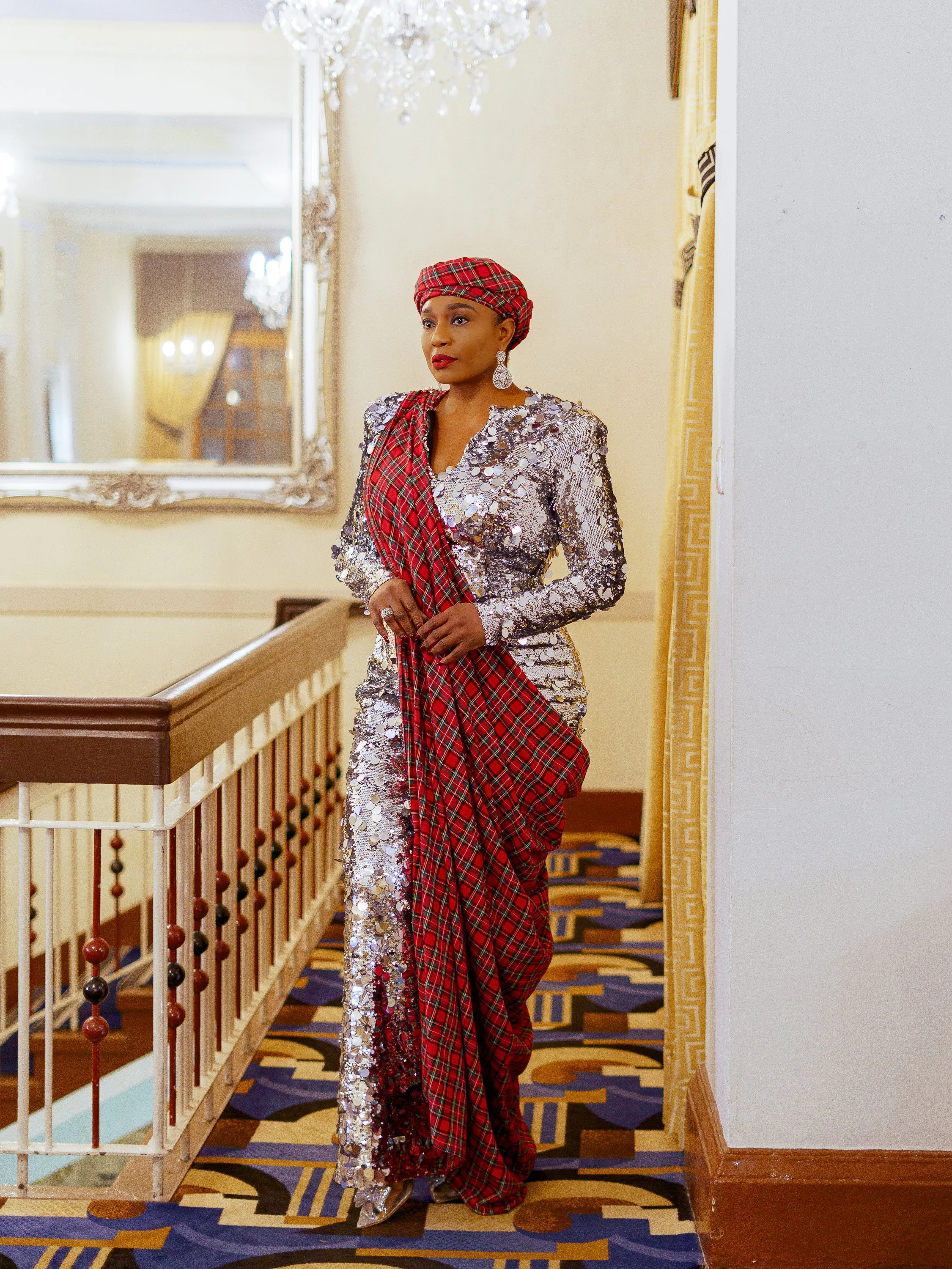
Keli’s approach to tartan is guided by curiosity rather than caution. Instead of treating it as something fixed and formal, her vision positions the fabric as a tool for expression—where heritage remains intact, but the expression shifts. Sculptural bows, fluid draping, and subtle glamour add emotional depth while still honouring tartan’s history. Tradition and individuality are balanced without feeling forced, creating a deliberate cross-cultural dialogue that blends Scottish heritage with a non-Western fashion aesthetic. The result absorbs tartan into a new fashion identity, where the same fabric is seen through a fresh, creative perspective.
Shaped by her move from Nigeria to Scotland, Keli’s designs celebrate cultural crossover and personal storytelling through contemporary reworkings of tartan. Her work proves that tradition does not lose power when it is reimagined; instead, it gains new energy, meaning, and relevance. It becomes something bigger—capable of bringing cultures together.
This reshaping of tartan is stitched into its very threads.
Long before tartan appeared on fashion runways, it was used in the Scottish Highlands as a system of clan identification, signifying belonging, loyalty, and territorial identity. Following the Battle of Culloden in 1746, the Dress Act of 1746 was passed, prohibiting the wearing of Highland dress, including tartan, in an attempt to dismantle Highland culture. This transformed tartan from an everyday garment into a politicised symbol of rebellion, survival, and resistance.
The ban was lifted in 1782, and tartan re-emerged again with a shifted meaning in 1842 when Queen Victoria romanticised Scottish culture, commissioning a royal tartan for herself and Prince Albert. This moment reframed tartan from a symbol of rebellion into one of royal adornment, effectively reviving its cultural status.
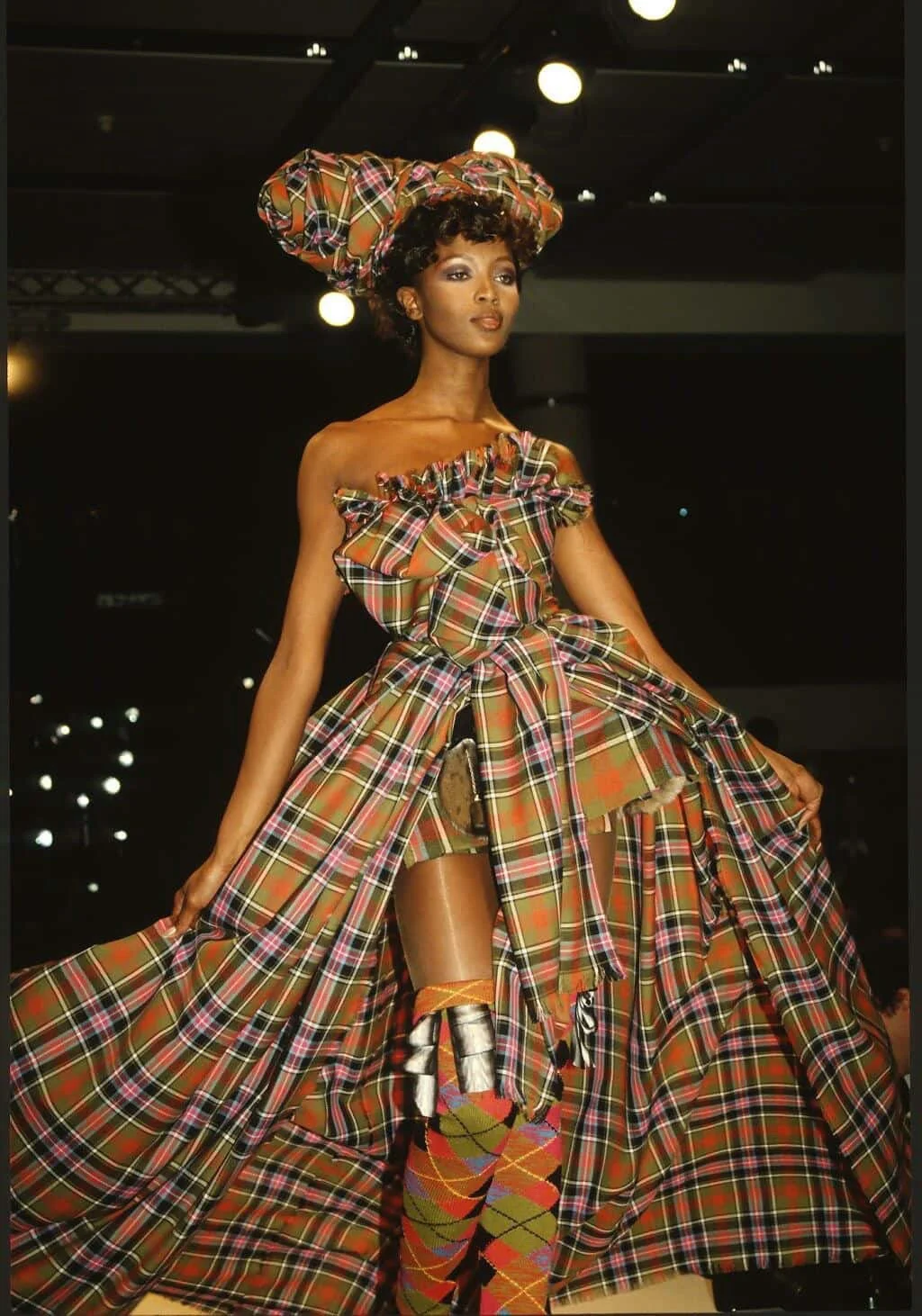
As tartan moved into twentieth-century fashion, it transformed once more—from heritage fabric to a pattern full of attitude, personality, and creative expression. Enter Vivienne Westwood. In the 1970s and 80s, she infused tartan with punk energy and maximalism, reworking it into corsets, kilts, and power suits. Her 1993 Anglomania collection layered multiple tartans into single looks and introduced her own MacAndreas tartan. Suddenly, tartan was no longer about misty Highlands—it was about smeared eyeliner, King’s Road confidence, and unapologetic self-expression. Tartan no longer belonged to history; it belonged to anyone bold enough to wear it.
Then came another reinvention with Clueless in 1996. Cher Horowitz’s yellow plaid suit became one of the most iconic looks in film history. The same pattern remained, but the aesthetic shifted entirely. Punk rebellion was replaced with Beverly Hills polish—matching blazers and skirts, knee-high socks, glossy hair, and effortless coordination. Tartan spoke less of protest and more of “as if,” capturing the aspirational, it-girl energy that audiences still crave.
That is the magic of tartan. It adapts, it shapeshifts, and it tells many stories, expressing different personalities, values, and attitudes depending on who wears it.
Most recently, Burberry’s 2025 Summer campaign, “It’s Always Burberry Weather,” reframed tartan once again. By placing quilted tartan garments into everyday British scenes—fish and chip shops, park strolls, casual conversations—the campaign rooted the pattern in working-class culture and real British life rather than polished fantasy. Tartan became practical, familiar, and quietly playful, reflecting how the meaning of heritage continues to evolve.
With tartan predicted to trend again in 2026, we are likely to see even more reinterpretations. Once a marker of clan loyalty, then royal fantasy, luxury status, and punk protest, tartan now exists as a pattern without a single narrative. Its meaning is shaped by those who choose to wear it, style it, and rework it.
Tartan’s story isn’t finished, it’s waiting to be continued.