

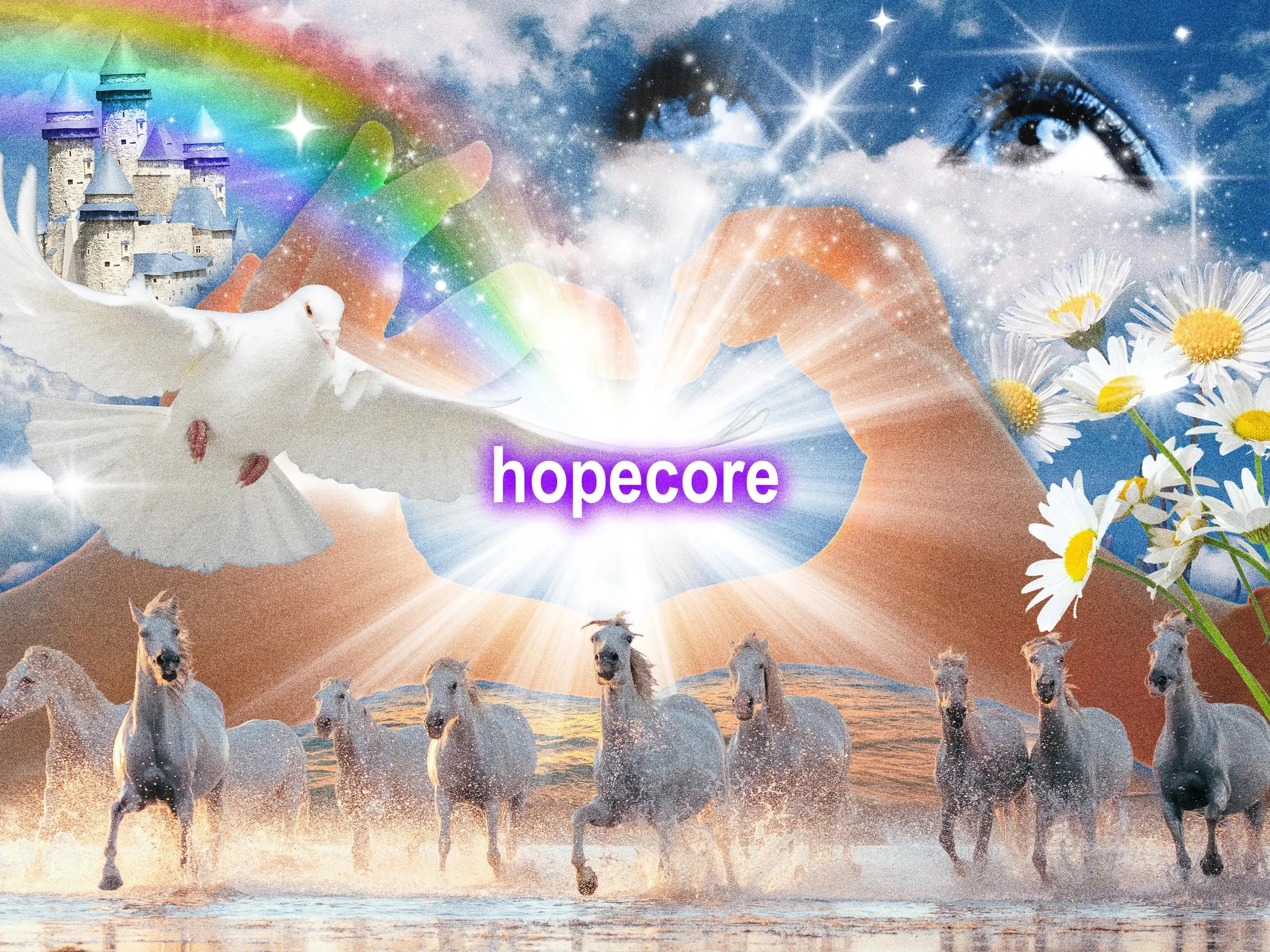
Cyberfeminism Now: Hopecore, Cyborgs, and the Platformed Self
There is something distinctly cyberfeminist about hopecore; the strange, dissonant meme format pairing low-resolution animals with WordArt affirmations and early, internet aesthetics. Its visual language recalls the surreal gloss of 1990s desktop environments, evoking a moment when the internet still felt unstable, open, and full of possibility. Yet hopecore is not utopian. It emerges from what Polyester mag describes as a “fragmented soup of life,” in which online culture mirrors a broader social drift toward disarray, and where existentialism and nihilism increasingly underpin everyday experience (Quin, 2026.).

Too Close for Comfort: Heated Rivalry and Parasocial Culture
“Parasocial” was named Cambridge University Press & Assessment’s Word of the Year in 2025. It’s a term whose relevance seeps through the cracks of the internet. According to Cambridge, it means “involving or relating to a connection that someone feels between themselves and a famous person they do not know.” If you have your finger on the pulse of social media, this definition likely feels familiar. Within fandom spaces especially, parasocial relationships are increasingly prevalent. There’s absolutely nothing wrong with feeling connected to a piece of media, its characters, or even the actors who portray them — but sometimes an invisible line is crossed. With the rise of the hit TV show Heated Rivalry, those blurred lines have become more visible. Can we consume media and love it without becoming too involved? Of course. But when does admiration become too much?