Cyberfeminism Now: Hopecore, Cyborgs, and the Platformed Self
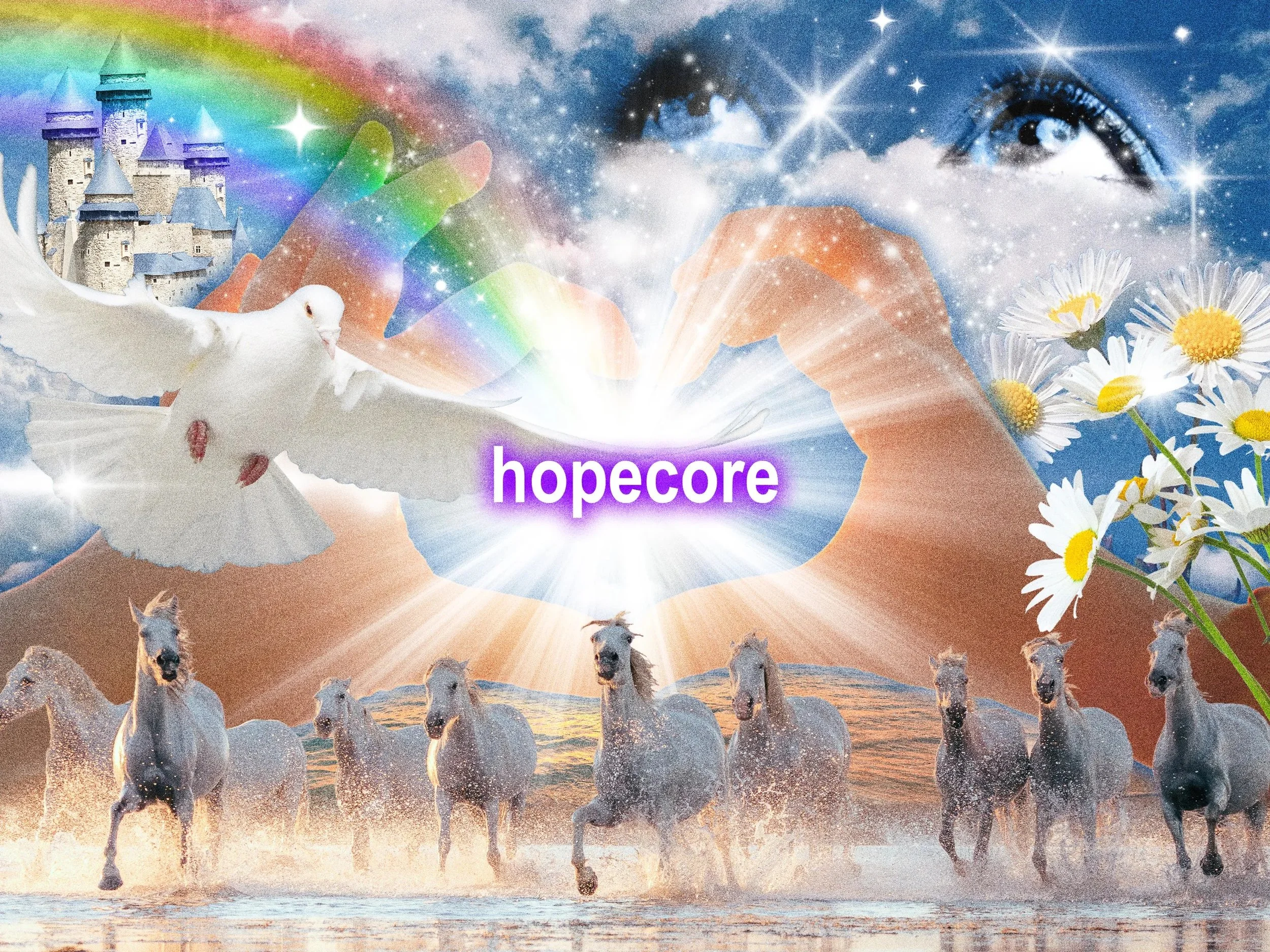
There is something distinctly cyberfeminist about hopecore; the strange, dissonant meme format pairing low-resolution animals with WordArt affirmations and early, internet aesthetics. Its visual language recalls the surreal gloss of 1990s desktop environments, evoking a moment when the internet still felt unstable, open, and full of possibility. Yet hopecore is not utopian. It emerges from what Polyester mag describes as a “fragmented soup of life,” in which online culture mirrors a broader social drift toward disarray, and where existentialism and nihilism increasingly underpin everyday experience (Quin, 2026.).
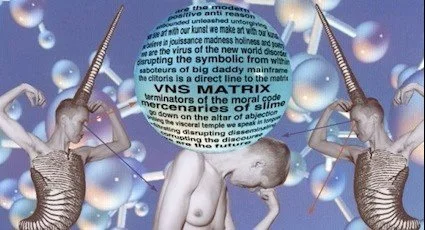
Cyberfeminism was born in a similarly transitional moment. In the early 1990s, theorists such as Sadie Plant and collectives like VNS Matrix began to articulate the relationship between gender and technology as inherently political. Rather than treating digital systems as neutral, they argued that they reproduced patriarchal structures while also offering the potential for disruption (Plant, 1997; VNS Matrix, 1991). This duality, technology as both constraint and possibility, remains central, but the conditions in which it operates have shifted dramatically.
The conceptual backbone of cyberfeminism lies in Donna Haraway’s A Cyborg Manifesto, which proposed the cyborg as a figure that collapses boundaries between human and machine, physical and digital, and male and female (Haraway, 1985). Her assertion that “the cyborg is a creature in a post-gender world” reframes identity as constructed and contingent rather than essential. Equally significant is her declaration: “I would rather be a cyborg than a goddess,” a rejection of purity in favour of hybridity, contradiction, and partiality.
To exist online today is to inhabit this cyborg condition. Identity is continuously produced through profiles, algorithms, metrics, and interactions—fragmented across platforms yet persistently surveilled and commodified. The self becomes both agent and product, echoing existentialist concerns with agency and meaning-making under constrained conditions. As contemporary cultural analysis suggests, users are increasingly drawn to existential and nihilistic frameworks, reflecting a growing inability to “fathom the world around us”.
This existential turn is particularly visible in meme culture. Formats such as hopecore, alongside more extreme iterations like “lobotomy core,” operate through irony, dissonance, and affective contradiction. They juxtapose sincerity with detachment, producing a form of digital meaning-making that mirrors existentialist thought. The Tumblr-originated practice of web weaving—collaging images, text, and music into contemplative assemblages—has evolved into these newer formats, maintaining its function as a space for subcultural expression while adapting to the accelerated temporality of contemporary platforms (Quin, 2026).
Cyberfeminism anticipated this fragmentation. The formation of the Old Boys Network (OBN) in 1997 marked an important shift from manifesto to networked practice. As articulated in its foundational reflections, cyberfeminism was deliberately expanded beyond identity politics to include “the material and sociological aspects of new digital technologies,” functioning as an “open projection field” for diverse and even contradictory interpretations (OBN, 1997). This refusal to stabilise meaning aligns closely with contemporary internet culture, where multiplicity and contradiction are structurally embedded.
However, the utopian optimism of early cyberfeminism has been complicated by the rise of platform capitalism. The internet is no longer a decentralised space of experimentation but a highly controlled environment dominated by corporate infrastructures. The “mainframe” that VNS Matrix sought to disrupt has expanded into a global system of surveillance, data extraction, and algorithmic governance (VNS Matrix, 1991). The increasing entanglement of technology companies with political power further intensifies this dynamic, raising questions not only about representation but about ownership and control of digital space.
Within this context, the resurgence of early-internet aesthetics takes on new significance. The pixelation, gradients, and hyper-saturated imagery that characterise hopecore are not merely nostalgic; they gesture toward an alternative digital imaginary. They recall a time when the internet felt less enclosed, more open to reinvention. In doing so, they function as a subtle critique of contemporary platform aesthetics, which prioritise seamlessness, efficiency, and monetisation.
This tension is also visible in contemporary popular culture. Artists such as Zara Larsson engage with hyper-digital forms of femininity that oscillate between empowerment and commodification. This ambiguity reflects the conditions of platformed existence, where visibility is both an opportunity and a constraint. Cyberfeminism does not resolve this contradiction; it exposes and inhabits it.

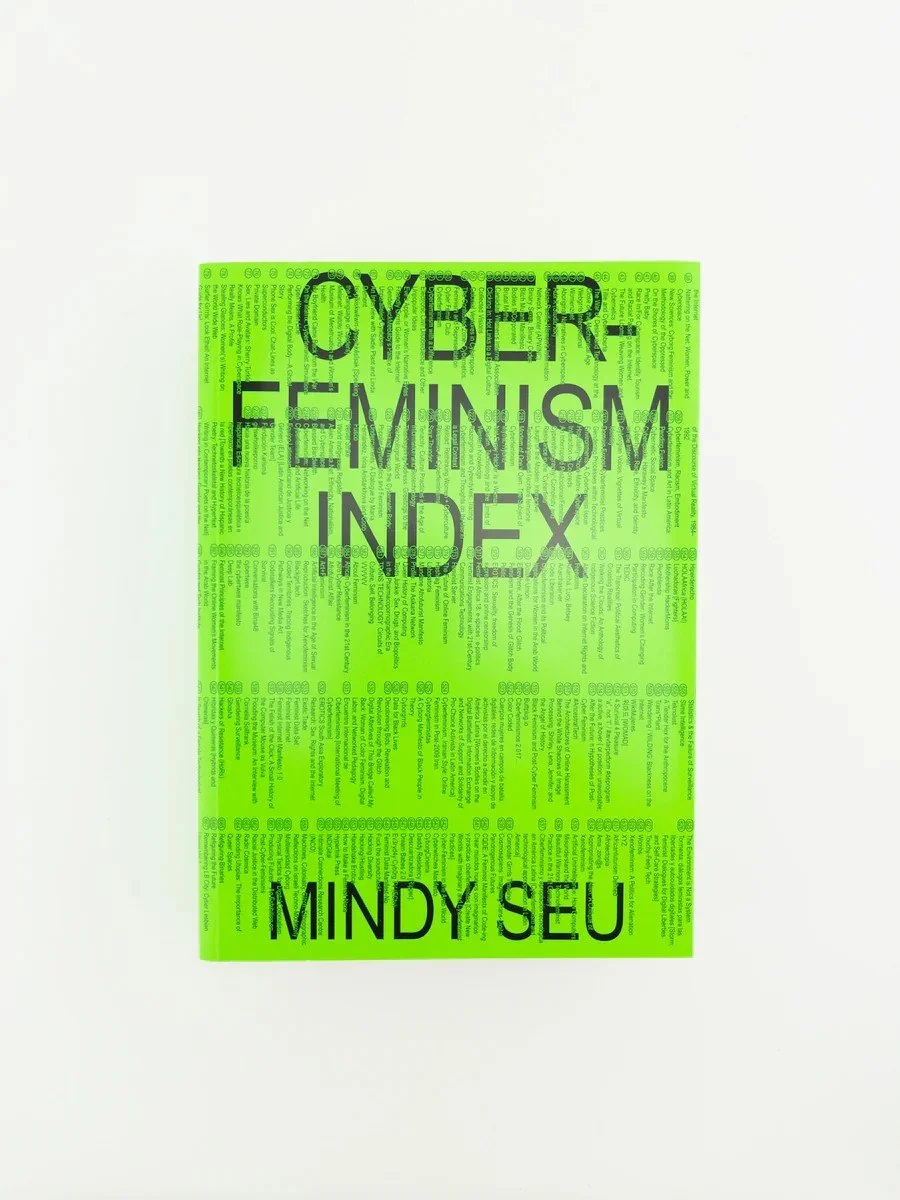
Efforts to map this evolving terrain can be found in projects such as the Cyberfeminism Index, which assembles a wide range of texts, artworks, and digital practices into a non-linear archive (Seu, 2020). Rather than offering a singular narrative, it reflects the movement’s multiplicity and its resistance to closure.
What distinguishes the present moment is the intensity of its contradictions. As global crises are increasingly mediated through digital platforms and traditional forms of community continue to erode, individuals are confronted with the instability of meaning itself. The renewed embrace of existentialism and nihilism reflects this condition, marking what has been described as an ongoing inability to fully comprehend the world (Quin, 2026). At the same time, younger generations remain politically engaged, navigating a space in which disillusionment and action coexist.
Cyberfeminism persists within this tension. It is no longer simply about reclaiming cyberspace, but about understanding how subjectivity is produced within it. It operates through interference rather than resolution, embracing glitch, irony, and contradiction as critical tools.
Hopecore, in its strange blend of sincerity and detachment, can be understood as part of this practice. It does not resolve the contradictions of contemporary life, but it renders them visible. In doing so, it continues the cyberfeminist project, not as a fixed movement, but as an ongoing method of navigating and resisting the technological conditions that shape existence in the present.
Haraway, D. (1985) A Cyborg Manifesto.
OBN (Old Boys Network) (1997) Cyberfeminist International documentation.
Plant, S. (1997) Zeros + Ones: Digital Women and the New Technoculture.
Quin, E. (2026) Hopecore: The Internetification of Existentialism. Polyester.
Seu, M. (2020) Cyberfeminism Index.
VNS Matrix (1991) A Cyberfeminist Manifesto for the 21st Century.