

Kate King, eVal, a Random Swede and the Pleasure of an Ordinary Life
There is something strangely difficult to explain about Kate King. On paper, there is very little about her that should make her an internet phenomenon. She is 27 years old, lives in Aylesbury with her parents, spends a considerable amount of time with people older than herself, has worked relatively little, has never had the conventional dating life that tends to form the backbone of contemporary social media and has built much of her online presence around things as thrilling as the weekly food shop. She is not particularly interested in performing the version of 27 that the internet has taught us to expect. There are no endless nights out, career announcements, couples holidays, gym transformations or carefully constructed declarations of having “figured it all out.” There is Costa. There is bowls. There is radio. There is her mum, Val. There is Mick. There are grocery hauls and meal plans and an extraordinary amount of conversation about what is happening next. And somehow, millions of people have found this completely captivating.
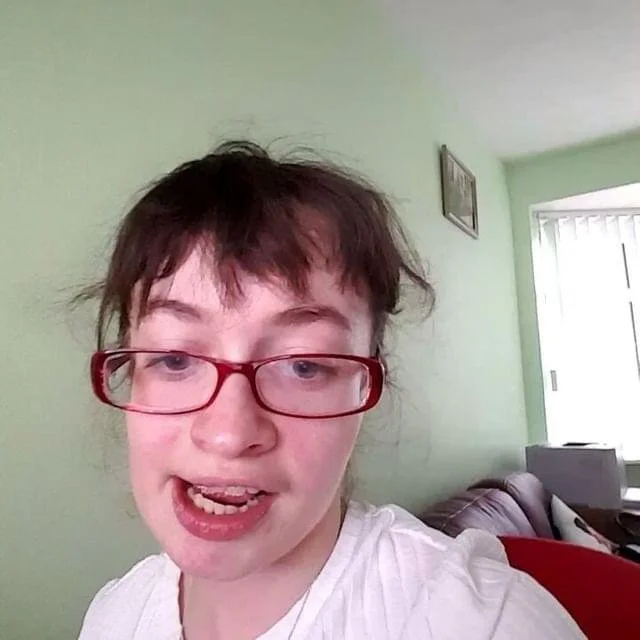
Kate's appeal is difficult to separate from the peculiar moment in which we are watching her. The contemporary internet has turned adulthood into a performance of constant movement. We are supposed to be progressing. At 27, you should be building a career, maintaining a social life, travelling, dating, exercising, decorating a flat, drinking wine in a restaurant with friends and documenting all of it in a way that suggests you are simultaneously exhausted and having the best time of your life. Even ordinariness has become aspirational. The right kind of ordinary is presented through linen bedding, farmers' markets and £7 sourdough. Kate offers something completely different: an ordinary life that has not been repackaged as a lifestyle.
That might be why watching her feels strangely nostalgic. Not necessarily nostalgic for a particular decade, but for a particular kind of British life. Her world feels local. Familiar. Slightly enclosed. The supermarket matters. The radio station matters. Costa matters. Family routines matter. People know one another. There is something almost pre-influencer about it. Kate can sometimes feel as though she has wandered into the internet from a completely different cultural ecosystem, one where being busy means having somewhere to go in the afternoon and where a trip to Costa can constitute a legitimate part of the day's itinerary.
This is also where the comedy comes from. Kate has a remarkable ability to make the mundane sound consequential. She can give the impression that she has the schedule of a cabinet minister when, from the outside, the day appears to consist of a few errands, a family meal and something happening at the bowls club. But the joke is not really that Kate has nothing going on. It is that her understanding of what constitutes a full and important life seems to operate on an entirely different scale from the people watching her. She appears to take the small things seriously. And perhaps, increasingly, we find that funny because we have forgotten how to.

There is something deeply refreshing about a person who doesn't appear to have received the memo about what a 27-year-old is supposed to be. Kate has never seemed particularly interested in convincing strangers that her life is enviable. She doesn't appear to be building a personal brand around productivity, beauty, wellness, travel or success. She isn't selling the fantasy of becoming her best self. In an environment where almost everyone online is trying to turn their existence into evidence of something, Kate often seems to be doing nothing more complicated than existing.
That is, of course, not entirely true. Kate has had ambitions. She presented hospital radio for years, became involved in bowls, appeared in amateur theatre and built a sizeable YouTube following. She has spoken openly about wanting a family and about the difficulties she has experienced navigating work and relationships while living with cerebral palsy. Her life is not empty. It simply doesn't resemble the life that contemporary culture has decided a successful young adult should have.
And that distinction matters, because some of the things that make Kate fascinating are also the things that make the internet's treatment of her uncomfortable.
Kate has become a kind of communal character. There is a vast amount of “lore” surrounding her: old videos are rediscovered, snippets circulate on TikTok, particular phrases become memes, viewers debate the meaning of old stories and entire corners of Reddit exist to catalogue the minutiae of her life. Her return to YouTube in 2026 was greeted with the enthusiasm normally reserved for a beloved television character returning after years off air. Amy Hart called it an “Easter miracle”; GK Barry joked that “Jesus rose and so did Kate King.” The absurdity of the response is precisely what makes it funny. Kate had somehow become important enough to have a resurrection narrative.
But the mythology creates a problem. At what point does affectionate fascination become cruelty?
There is an argument that the entire phenomenon resembles a particularly uncomfortable form of playground teasing: everyone is excessively nice to the strange girl because watching them is entertaining. The difference is that now the playground has millions of people in it, and the strange girl can potentially read everything everyone has said about her. Kate's disability makes the question even more complicated. It is easy to turn someone into a collection of amusing behaviours when you don't have to consider the circumstances that shaped those behaviours. A life structured by disability, older parents, limited employment opportunities and a relatively small social world is inevitably going to look different from the life of a conventionally independent 27-year-old.

Yet it would also be patronising to pretend that Kate has no agency within this dynamic. One of the things that makes her so entertaining is that she is not simply a passive object of observation. She can be remarkably blunt. She gets annoyed. She tells people off. She argues back. She can be abrasive, occasionally spectacularly so, and that is part of why people enjoy watching her. The audience may think it has the upper hand, but Kate is perfectly capable of turning around and telling the audience exactly what she thinks of it.
Perhaps that is why reducing the entire phenomenon to bullying doesn't quite work either. There are certainly people who mock Kate cruelly, and some of the material that circulates about her crosses a line. But there are also people who genuinely like her. They find her funny. They find her comforting. They enjoy the strange familiarity of her world. They aren't necessarily laughing because they think she is stupid; sometimes they are laughing because she is funny. Sometimes they are laughing because the situation is funny. Sometimes they are laughing because Kate herself has delivered the punchline.
The internet has always struggled with the difference between laughing at someone and laughing with them, particularly when the person at the centre of the joke does not fit the social conventions that make us comfortable. Kate occupies that uncomfortable middle ground. She is vulnerable, but she is also forceful. She is sheltered, but she is outspoken. She can seem extraordinarily naïve about certain aspects of the world while being surprisingly confident about others. She can be incredibly sweet and incredibly irritating within the same conversation. The contradiction is what keeps people watching.
There is also something particularly British about the fascination. Kate is not an inaccessible internet oddity. She is recognisably British in an almost painfully specific way. The Costa obsession, the local radio station, the bowls club, the family grocery shop, the amateur theatre, the church, the conversations about plans and appointments and what everyone is doing this week: it is all so ordinary that it becomes surreal when placed under the microscope of the internet.
Maybe that is the real reason people love her. Kate provides a temporary escape from a culture that is relentlessly interested in making life bigger.
We are constantly being told to optimise. Work harder. Go further. See more. Earn more. Look better. Be more interesting. Build a career. Build a brand. Build a relationship. Build a home. Build a following. Build a life worth photographing. Even rest has become something to optimise. There is a correct way to spend your Sunday, a correct way to decorate your flat and a correct way to drink coffee.
Kate seems to have opted out of the entire project.
Her life can appear small from the outside, but there is something strangely enormous about watching someone who isn't constantly trying to convince you that it isn't.
That is where the nostalgia comes from. It is the nostalgia of a life where things are allowed to be mundane without immediately becoming content about how wonderfully mundane they are. A supermarket shop is just a supermarket shop. Going for coffee is just going for coffee. Spending time with your parents is just spending time with your parents. There doesn't have to be a lesson.
Perhaps Kate's greatest cultural achievement is accidentally reminding people that a life does not have to be impressive to be interesting.
Of course, there is a darker side to that discovery. The internet is very good at turning people into characters and very bad at remembering that characters are people. Kate's life has been picked apart in ways that would be deeply uncomfortable if performed on someone who wasn't already online. Old videos become archaeological artefacts. Comments become evidence. Family members become supporting characters. Every odd interaction becomes part of the lore. The more ordinary Kate is, the more fascinating it becomes to examine her.
But perhaps that is the paradox at the centre of the Kate King phenomenon. We are fascinated because she seems so unlike the people we are accustomed to watching online. And then, by watching her obsessively, we risk turning her into exactly what the internet always turns people into: a consumable personality.
Kate is not fascinating because she is perfect. She isn't. She can be strange. She can be frustrating. She can be blunt. She can be unintentionally funny. She can be incredibly endearing. She can also make decisions that leave an audience wondering what on earth she is doing. That is precisely the point. She feels less like an influencer than a person you might actually meet.
And perhaps that is why her return felt so disproportionately exciting. We had missed her. Not because she had been producing anything particularly important. Not because she had been changing the world. Not because she had disappeared from the public eye while secretly becoming more successful. We had missed watching Kate be Kate.
In a culture where everyone is trying to become more interesting, Kate has somehow become interesting by being ordinary. In a culture where everyone is performing adulthood, she seems to simply inhabit hers. In a culture obsessed with youth, she has somehow become a nostalgia object while still being only 27.
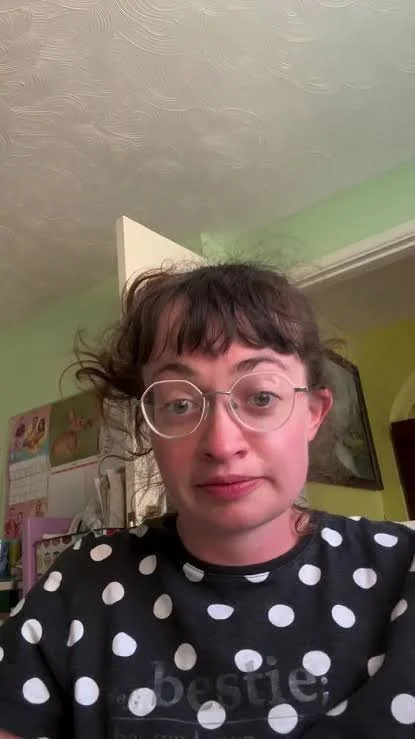
There is something almost beautiful about that. The internet may have made Kate King into a meme, a character, a piece of lore and a running joke. But beneath all of that is a woman living an unusually small, unusually public and unusually complicated life. Maybe we don't watch because we think her life is ridiculous. Maybe we watch because, for once, it isn't trying to be anything.
And after spending all day trying to keep up with the world, there is something incredibly comforting about watching someone worry about the weekly shop.