

Reclaiming the Monster: How Black Magpie Productions is Redefining Scottish Horror
Samuel J Mitchell @earl__sweatshirt
Written by Charlotte Lewis
There is something fitting about speaking to Holly Lawrenson Evans and Chantel Hiden-Livingstone while discussing Scotland's landscapes. Every hill, loch and stretch of woodland seems to hold a story, and for the founders of Black Magpie Productions, those stories have become the foundation of a new kind of horror. Their work isn't interested in cheap scares or shock value. Instead, they use Scottish folklore to explore violence against women, misogyny and female survival, proving that horror can be as emotionally resonant as it is unsettling.
Founded by director Holly Lawrenson Evans and writer Chantel Hiden-Livingstone, Black Magpie Productions grew from Holly's desire to challenge how women have historically been portrayed within horror. After completing a Master's in Experimental Filmmaking at the University of Glasgow, she became fascinated by feminist body horror, Barbara Creed's The Monstrous-Feminine and Julia Kristeva's theory of abjection. Rather than accepting the familiar horror archetypes of women as helpless victims or terrifying monsters, Holly wanted to dismantle them.
"I was just fed up with seeing horror films where women were either the victims or the monsters," she explains. "There was never any space for women to simply exist as complicated people."
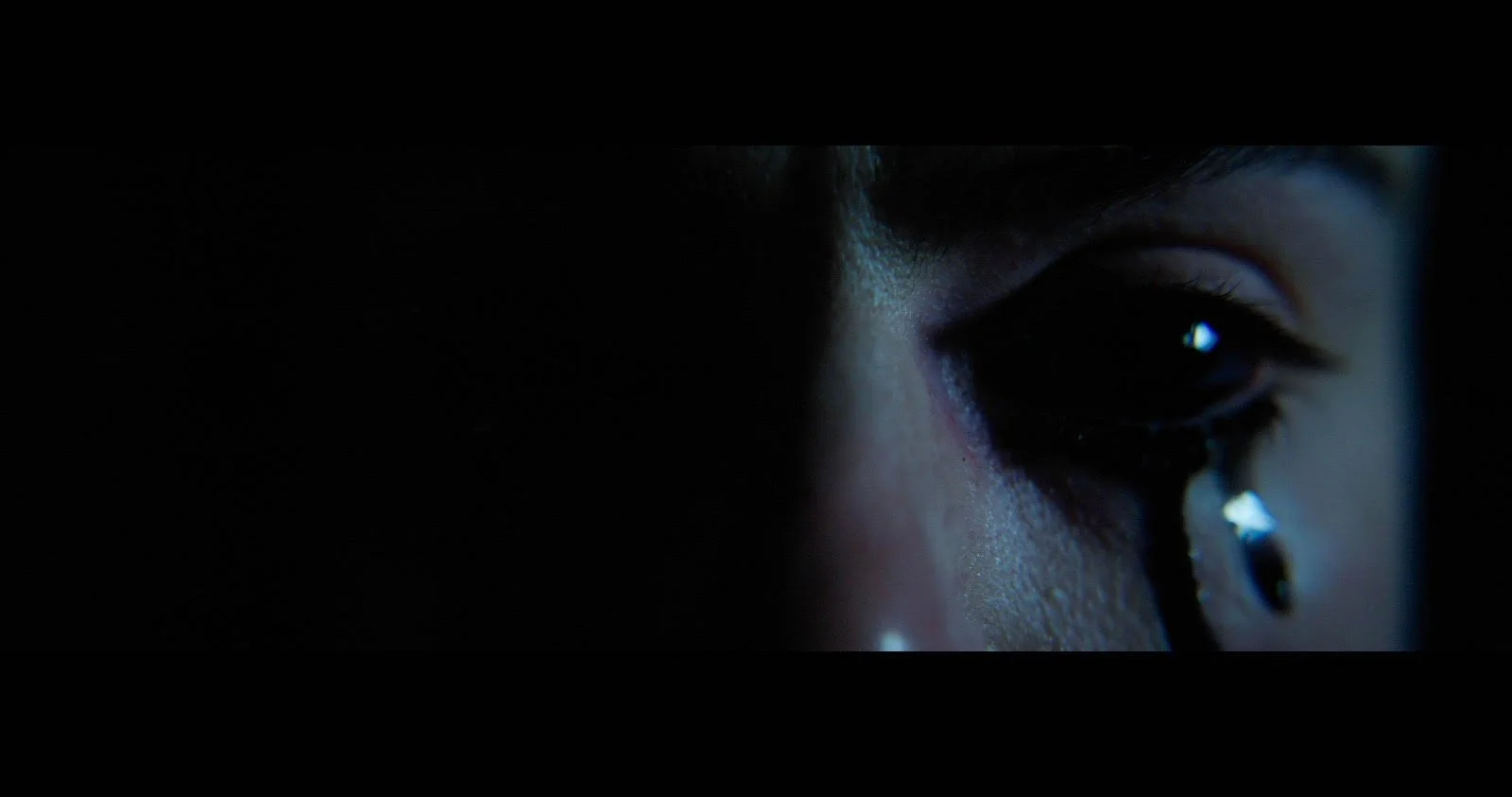
That exploration began with The Descent, Holly's experimental feminist body horror short made during her Master's. Inspired by her academic research, the film examined the female body in ways rarely seen on screen. One sequence deliberately filmed skin, scars, hair and bone in such extreme close-up that the body became almost unrecognisable. Holly recalls a professor describing the imagery as "borderline pornographic" simply because it depicted a naked female body outside of a sexual context. Rather than discouraging her, the comment fuelled her determination.
"I was so incensed that another woman could look at a naked female body and call it porn," she says. "So I filmed it so close that you couldn't even tell what you were looking at."
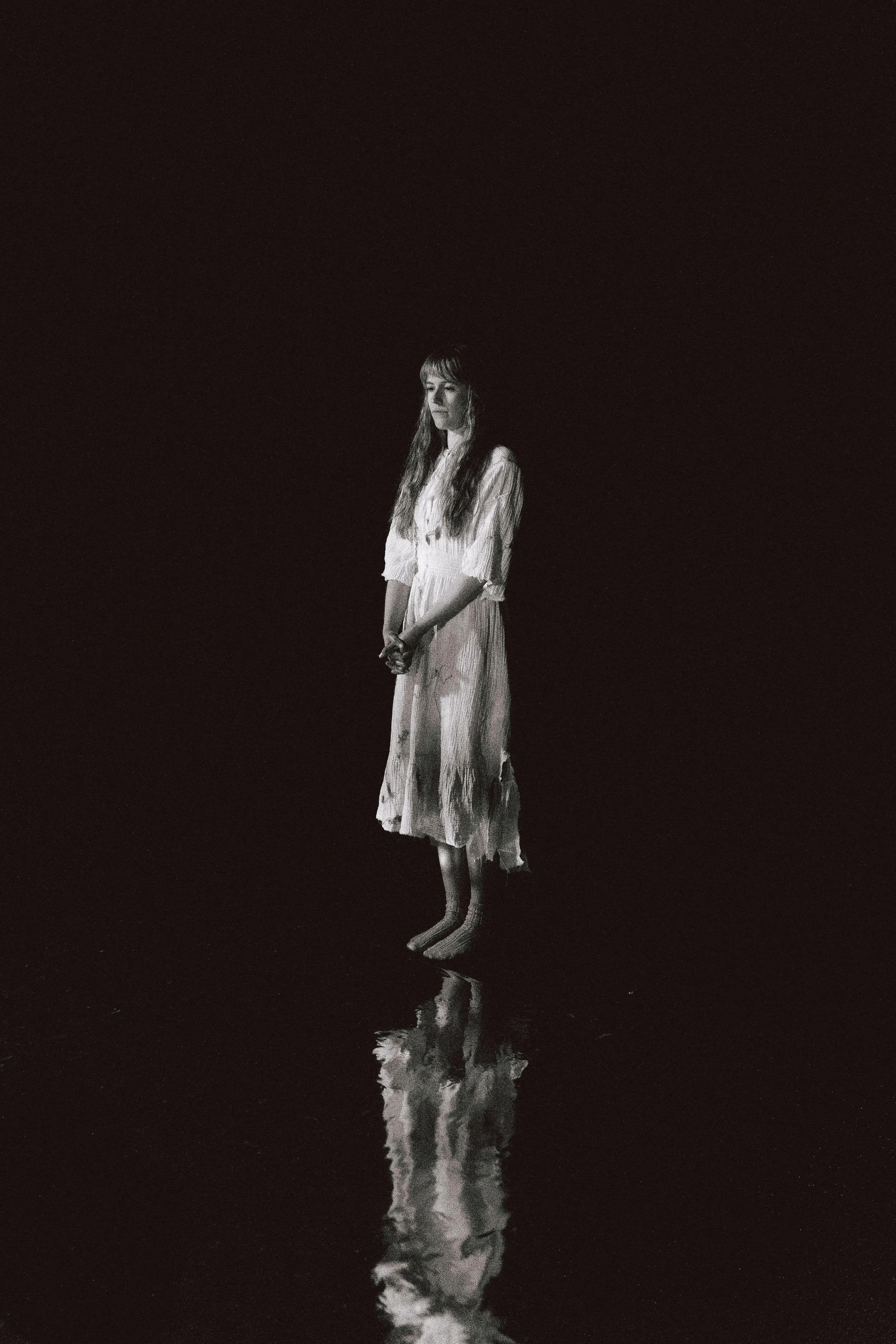
For Holly, that moment perfectly encapsulated why Black Magpie Productions needed to exist. That same desire to challenge expectations runs throughout the company's first narrative film, Where Angels Fear To Tread. Written by Chantel, the story reimagines Scottish Kelpie mythology through an unapologetically feminist lens. Rather than asking audiences to fear the supernatural creature, the film questions why women have so often been cast as monsters in stories shaped through a male perspective.
The idea first came to Chantel while living in the Highlands in 2022. Surrounded by Perthshire's landscapes, local storytellers and centuries of Scottish folklore, she became fascinated by the contrast between the idyllic image of rural Scotland and the realities experienced by those who live there.
"It's one of the most beautiful places I've ever been," she says. "But when the tourists leave, people forget what goes on."
Living in small Highland communities exposed her to conversations about isolation, underfunded rural areas, and the violence and misogyny that often remain hidden beneath postcard-perfect scenery. Combined with growing conversations around femicide and violence against women, those experiences gradually merged with the folklore she encountered while working in a museum, where she immersed herself in stories surrounding the Kelpie.
"I didn't want to just half-do it," she explains. "I wanted to respect the mythology while translating it into something contemporary."
Samuel J Mitchell @earl__sweatshirt
The result is a story where folklore becomes metaphor.
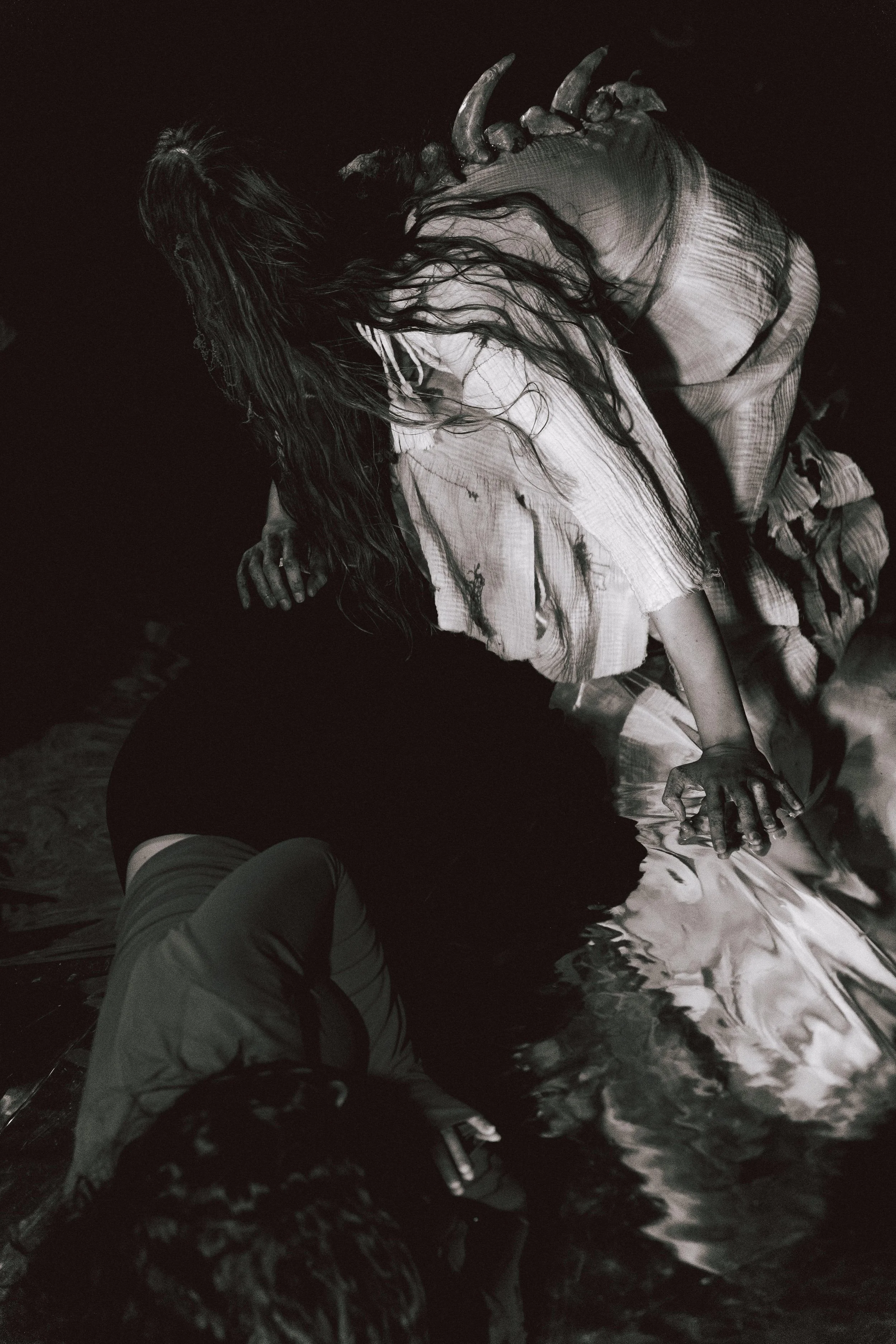
Throughout Where Angels Fear To Tread, horses repeatedly symbolise the ways women have historically been controlled. Holly points out that even the language used to describe women is rooted in equine imagery: women are called "fillies", "old nags" and expected to be "broken in". The Kelpie's bridle becomes a visual representation of control, while subtle costume and makeup details, including scars resembling burns left by iron bridles, suggest generations of abuse without ever needing explicit explanation.
Every creative decision, no matter how small, reinforces the film's central themes.
The men within the story embody different forms of misogyny. One represents an older generation whose behaviour is normalised and disguised as harmless tradition, while the younger character reflects a more overt, possessive masculinity shaped by contemporary online culture. Rather than depicting these men as isolated villains, the film presents them as different expressions of the same system.
Despite tackling violence against women, Holly and Chantel were determined not to recreate the exploitative imagery that has often characterised horror cinema.
Instead, Where Angels Fear To Tread deliberately refuses to sensationalise abuse. "You never see him lay a hand on her once," Chantel explains. "The implication is enough."
For Holly, that approach was essential. The camera never abandons Roselyn, the film's protagonist, meaning audiences experience every moment entirely through her perspective rather than the perpetrator's. The violence is understood through implication, body language, silence and emotional aftermath instead of graphic imagery.
"We know it's horrible," Holly says. "Women live with this cultural wound every day. We don't need to see it to understand it."
That decision transforms the emotional core of the film. Rather than centring violence, Where Angels Fear To Tread ultimately becomes a story about survival.
One of Holly's favourite moments occurs when Roselyn finally encounters Iona, the Kelpie, in human form. Instead of framing the scene as a confrontation between woman and monster, it becomes a meeting between two women who recognise one another's experiences of abuse. Across different timelines, and even different species, they see each other simply as survivors.
For Holly, this is where the original Kelpie mythology and Black Magpie Productions' reinterpretation finally converge. Traditional folklore warns that Kelpies only become dangerous when people attempt to control them. Leave them alone and they leave you alone. The violence comes not from the creature itself but from human attempts to dominate it. That same philosophy underpins the relationship between Roselyn and Iona, who ultimately choose understanding over control.
For both filmmakers, horror is uniquely equipped to explore these conversations.
"Horror is feelings first," Holly explains. "Fear is one of the most primal instincts."
While dramas often rely on dialogue to unpack social issues, horror allows audiences to experience them emotionally before intellectually. Holly and Chantel believe this makes the genre uniquely capable of examining misogyny, trauma and the taboos society often avoids discussing openly.
The pair also see themselves as part of a growing wave of women reshaping horror cinema. They reference recent films that have begun interrogating female experiences but argue there is still work to be done, particularly in moving away from stories where women remain defined solely by victimhood.
Instead, Black Magpie Productions hopes to tell stories in which women reclaim agency, even within the darkest narratives.
That ambition extends beyond Where Angels Fear To Tread. Holly and Chantel are already developing their next project, Sweet Strangers (working title), inspired by the Baobhan Sith, Scotland's vampire-like fairy.
Set in the early twentieth century, the film explores another period of enormous technological change, drawing parallels between the Edwardian era and today's AI-driven world. While society prides itself on progress, they argue that many of the same power structures remain intact. Once again, Scottish folklore provides the framework through which contemporary anxieties can be explored. Like Where Angels Fear To Tread, the film inverts familiar horror conventions. Rather than fearing the women inside the house, audiences are encouraged to question the man who arrives believing he has the right to occupy their space.
Although Where Angels Fear To Tread remains in post-production, Black Magpie Productions has already established a distinctive artistic identity. Their films blend mythology with feminist storytelling, political commentary with emotional intimacy, and Scotland's landscapes with stories that feel urgently contemporary.
Black Magpie Productions isn't simply rewriting Scottish folklore; it's reclaiming it, revealing that the darkest horror has never belonged to mythical creatures, but to the realities women have lived with for centuries.
Elle O’Hara as Roselyn
Catharine Wippell as Iona / Kelpie
Sam McMeikan as Duncan
Still by Holly