

The Romance Economy: Pink Pill Culture & Dating Strategy
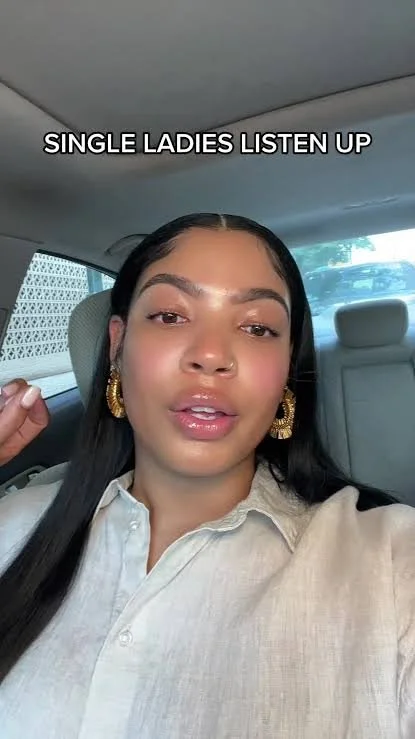
A few months ago, I realised I had become, at least in part, what the internet now calls "pink-pilled".

Not because I wanted to marry a millionaire or because I believed women should manipulate men into paying for their lifestyles, but because, after years of hearing women apologise for wanting more, something about the rhetoric felt refreshing. My TikTok feed became increasingly populated with videos about "high-value men", "provider mindsets" and Shera Seven's now infamous phrase, "sprinkle sprinkle". I found myself agreeing with more of it than I expected. After all, what was so controversial about believing women deserved better?
As I kept reading, though, I realised that was only one small part of a much bigger conversation.
Over the past year, the "pink pill" has quietly entered mainstream discourse. It has been explored on BBC Radio 4's AntiSocial, discussed in national newspapers, debated across Reddit, and more recently entered popular culture through this year's Love Island. What initially appeared to be another niche internet trend quickly revealed itself to be something far more interesting: a lens through which to examine the current state of feminism, dating and gender politics.
The term itself is surprisingly difficult to define because it does not refer to one single ideology. Instead, it sits within what researchers have begun calling the "femosphere": a broad online ecosystem made up of Female Dating Strategy, "dark feminine" influencers, femcel communities and dating coaches who encourage women to approach relationships strategically rather than romantically. Although these communities differ in significant ways, they are broadly united by the belief that modern dating disadvantages women and that, rather than attempting to change society, women should learn how to navigate that reality to their own advantage.
Perhaps the most recognisable figure associated with this movement is Shera Seven, whose catchphrase "sprinkle sprinkle" has become synonymous with a provider mindset. Her advice encourages women to seek partners who are financially generous, avoid splitting bills and prioritise relationships that materially improve their lives. To many critics, this represents little more than repackaged traditional gender roles. To many followers, however, it represents something entirely different: finally having permission to stop settling for less than they deserve.
Initially, I found myself understanding that perspective.
After years of conversations surrounding emotional labour, weaponised incompetence and the invisible workload carried by women, hearing someone suggest that women should simply expect more from the people they date did not feel particularly radical. If anything, it felt like a logical response to frustrations that had been building for years. What I thought I was buying into was not financial dependency, but the idea that women should stop accepting relationships in which they consistently gave more than they received.
The more I researched the movement, however, the more I realised that its popularity reflects something much larger than dating advice.
Women today are more educated than previous generations and are increasingly financially independent. Yet, according to the research discussed in the BBC's AntiSocial investigation into the pink pill, women continue to perform a disproportionate share of unpaid domestic and emotional labour, even when they earn as much as—or more than—their partners. Rather than replacing traditional expectations, equality has often appeared to add paid employment on top of existing domestic responsibilities.
That contradiction seems central to understanding why these ideas resonate.
One of the most interesting perspectives I encountered was not in an academic journal but on Reddit. One contributor argued that what is often dismissed as modern "gold digging" is, for many women, less about wanting wealth than responding to disappointment. If women expect to contribute equally financially while still carrying a disproportionate share of childcare, emotional labour and domestic work, then expecting a partner to contribute more financially begins to feel less like exploitation and more like compensation. It is, of course, one individual's opinion rather than empirical research, but it articulates a frustration that appears repeatedly throughout wider discussions surrounding modern heterosexual relationships.
Whether or not one agrees with that argument, it raises an uncomfortable question. If liberal feminism promised women they could "have it all", why do so many young women feel they are doing everything?
Researchers such as Dr Jilly Kay suggest that this question lies at the heart of the femosphere's rapid growth. Rather than interpreting these communities simply as anti-feminist, Kay argues that they emerge partly from disillusionment with what has often been described as "girlboss feminism". Instead of believing structural equality is achievable through individual ambition alone, many young women have begun questioning whether the existing model has delivered on its promises. In response, these communities increasingly advocate individual strategies for navigating inequality rather than collective efforts to dismantle it.
I think this is where the pink pill becomes genuinely fascinating.
It is easy to dismiss it as women becoming more conservative, but that explanation feels too simplistic. Many of the women engaging with this content still identify as feminists. They are not necessarily rejecting equality; they are questioning whether the version of equality they inherited has actually improved their personal lives. If relationships continue to involve unequal divisions of labour, then the appeal of more traditional provider dynamics begins to make more sense, even if those dynamics appear contradictory on the surface.
At the same time, the longer I spent reading about the pink pill, the more familiar its language began to sound.
"High-value."
"Provider."
"Market value."
"The dating marketplace."
Researchers have observed that the femosphere increasingly mirrors the manosphere, with both communities framing heterosexual relationships as competitive rather than collaborative and encouraging users to maximise their own position within the dating market. Although these communities position themselves as ideological opposites, they often rely upon remarkably similar assumptions: that men and women are fundamentally opposed to one another, that relationships are transactional, and that personal success depends upon learning how to navigate those transactions effectively.
That was probably the point at which my own thinking began to change. Initially, I thought I had bought into the pink pill. Looking back, I think I had simply bought into the belief that women deserve more than many of us have been conditioned to accept. Those are not quite the same thing.
This year's Love Island offered an interesting case study in how these conversations have entered mainstream culture. Contestant Jasmine became the subject of extensive online debate, with some viewers accusing her of embodying pink pill ideals while others argued that she was simply being criticised for behaviours routinely accepted in male contestants. Much of the discussion centred on perceived contradictions between identifying as a feminist while also expressing more traditional expectations around dating and relationships. I found myself sympathising with both sides.

It is perfectly reasonable to question whether certain expectations reproduce the same gender stereotypes feminism has historically challenged. Equally, feminist women are frequently expected to represent an entire political movement with a consistency that male contestants are rarely asked to demonstrate. The public conversation surrounding Jasmine seemed to reveal less about one reality television contestant than about the increasingly complex expectations placed upon women navigating contemporary feminism.
Perhaps that is why I no longer think the most interesting question is whether the pink pill is "good" or "bad". The movement undoubtedly contains ideas I find empowering alongside others I find deeply uncomfortable. Encouraging women to leave unhealthy relationships, establish boundaries and expect respect feels entirely different from encouraging them to evaluate partners primarily through financial provision. One speaks to self-worth; the other risks reducing intimacy to economics.
If I am completely honest, I would still like a man to pay for the first date.
Not because I believe men should always provide financially, nor because I think women are incapable of paying, but because I still find generosity attractive. Yet generosity is not measured solely through money. It is measured through kindness, emotional maturity, reliability and the willingness to contribute equally to a shared life. Those qualities are considerably harder to package into a viral TikTok than a luxury handbag or an expensive dinner, but I suspect they are ultimately what most people are searching for.
The rise of the pink pill does not convince me that feminism has failed, nor does it persuade me that young women are becoming increasingly conservative. Instead, it reveals a generation attempting to reconcile the gap between the promises of equality and the realities of modern relationships. It reflects genuine frustrations surrounding emotional labour, financial independence and changing gender roles while simultaneously demonstrating how easily those frustrations can become absorbed into the same market logic that increasingly shapes so much of contemporary life.
Perhaps that is why I found the pink pill so compelling before I found it troubling. It begins with a question I think many women have asked themselves: why should we continue accepting less? That is a worthwhile question. The problem is that somewhere along the way, the conversation shifts from expecting respect to expecting provision, from seeking partnership to seeking strategy.
I still believe women should expect more.
I am just no longer convinced that "high-value men" are the answer. If anything, I think the language of value has become part of the problem. The more we describe relationships in terms of markets, assets and returns, the easier it becomes to forget that love has never been an economic transaction. Perhaps the real challenge is not learning how to win the game, but imagining relationships that are not games at all.
Illouz, Eva. Why Love Hurts: A Sociological Explanation (2012)
Hochschild, Arlie. The Second Shift (1989)
Banet-Weiser, Sarah. Empowered: Popular Feminism and Popular Misogyny (2018)
Rottenberg, Catherine. The Rise of Neoliberal Feminism (2018)
Ging, Debbie. “Alphas, Betas, and Incels: Theorizing the Masculinities of the Manosphere” (2019)
BBC Radio 4, AntiSocial: The Rise of the Pink Pill