

Who Put Waitrose Beans on the Fashion Week Menu?
By Charlotte Lewis
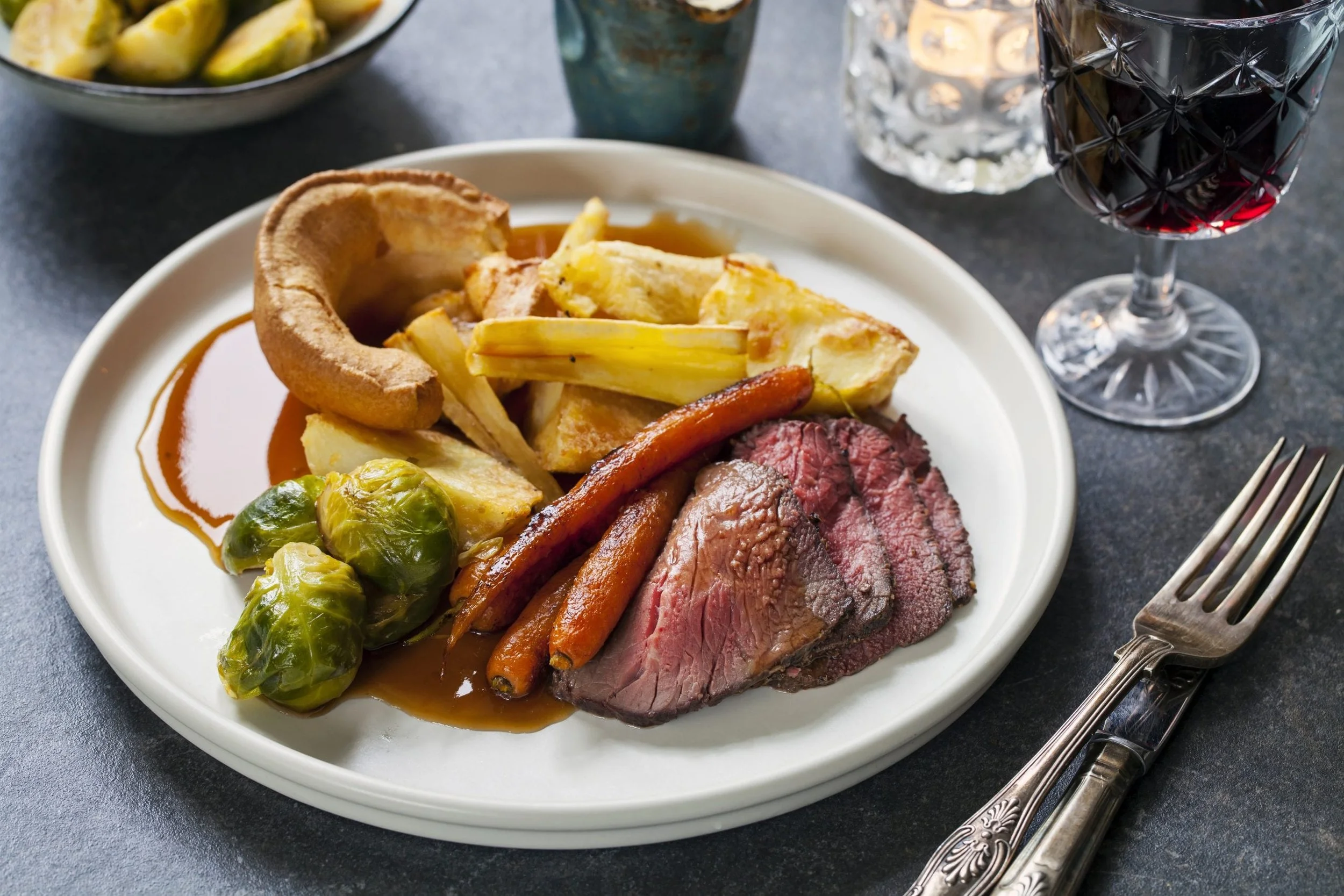
At London Fashion Week, it is apparently no longer enough to ask someone who they are wearing. We need to know what they are eating, too. Across the endless stream of street-style interviews and Fashion Week Reels, the same question keeps appearing: what is your favourite British food? The answers are remarkably consistent. A fry-up. Beans on toast. A Sunday roast. Fish and chips. Pie, occasionally, if someone wants to demonstrate a little more regional knowledge.
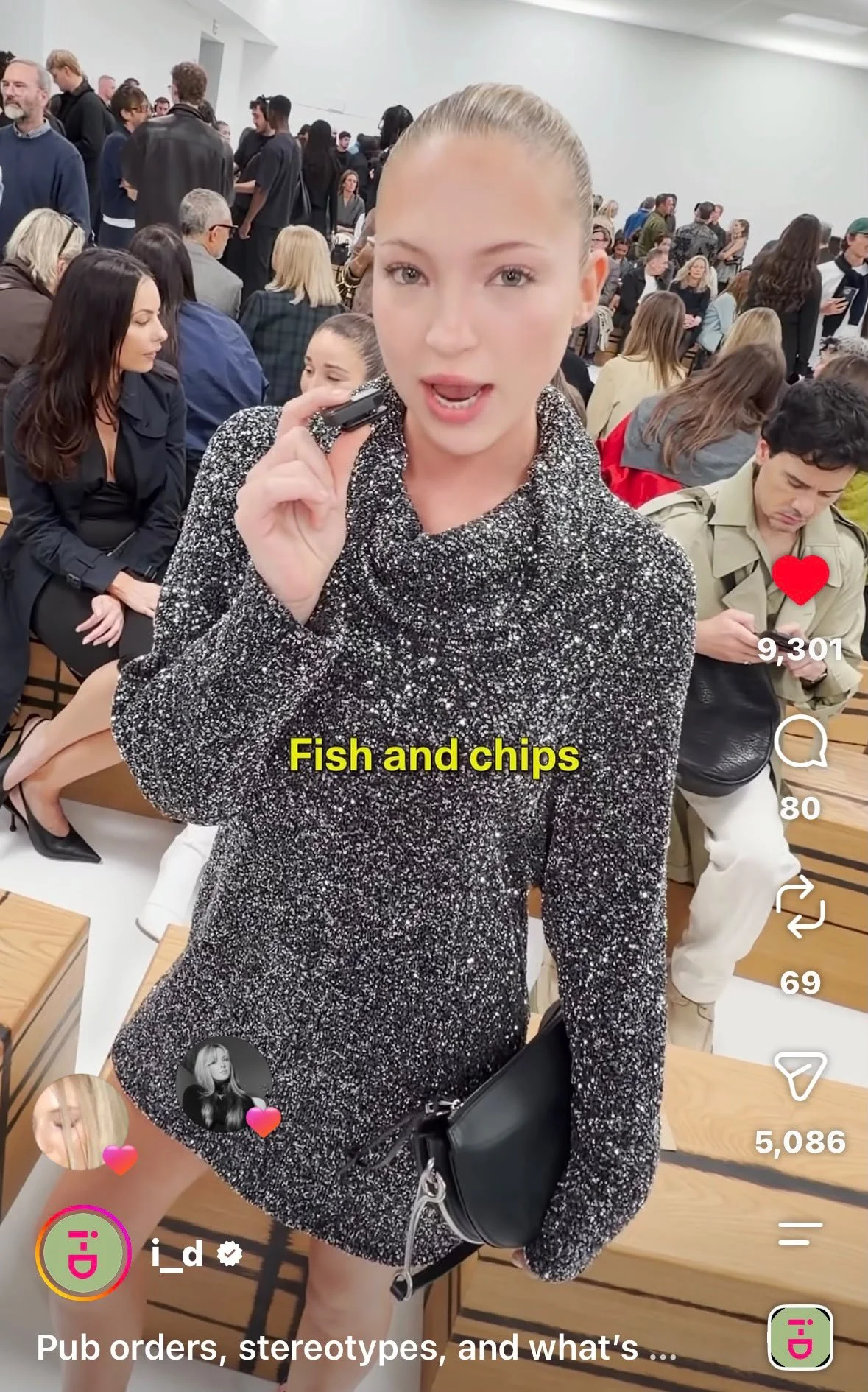
The question itself is harmless enough. So are the answers. There is nothing particularly radical about somebody liking a full English breakfast, and there is no reason that someone who works in fashion should not enjoy beans on toast. The oddity is in what these foods have come to represent. Asked outside a fashion show, surrounded by clothes that most people will never be able to afford, a fry-up becomes more than breakfast. It becomes a way of communicating Britishness, normality and relatability. The £2,000 coat might be inaccessible, but look, they like beans on toast.
It is a particularly useful trick for an industry that has become increasingly aware of how distant it can appear from ordinary life. Fashion Week is an environment built around exclusivity, luxury and taste, yet the content produced around it increasingly has to feel informal and accessible. We have moved from simply looking at the clothes to asking celebrities what is in their bags, what music they listen to, what they watch, what they eat. Food has become another route into the private life of the fashionable person, another way of making someone with access to an otherwise inaccessible world appear familiar.
The choice of food is what makes it interesting. Nobody seems particularly interested in asking what someone's favourite British restaurant is, or which regional dish they think deserves more attention. Instead, we return to the foods that carry a particular class history: the fry-up, the roast dinner, beans on toast, pie and mash, fish and chips. These are foods that can be understood instantly, without explanation. They suggest childhood, family, pubs, Sunday afternoons and the kind of domestic life that feels reassuringly ordinary.
Except that the circumstances surrounding these foods have changed.
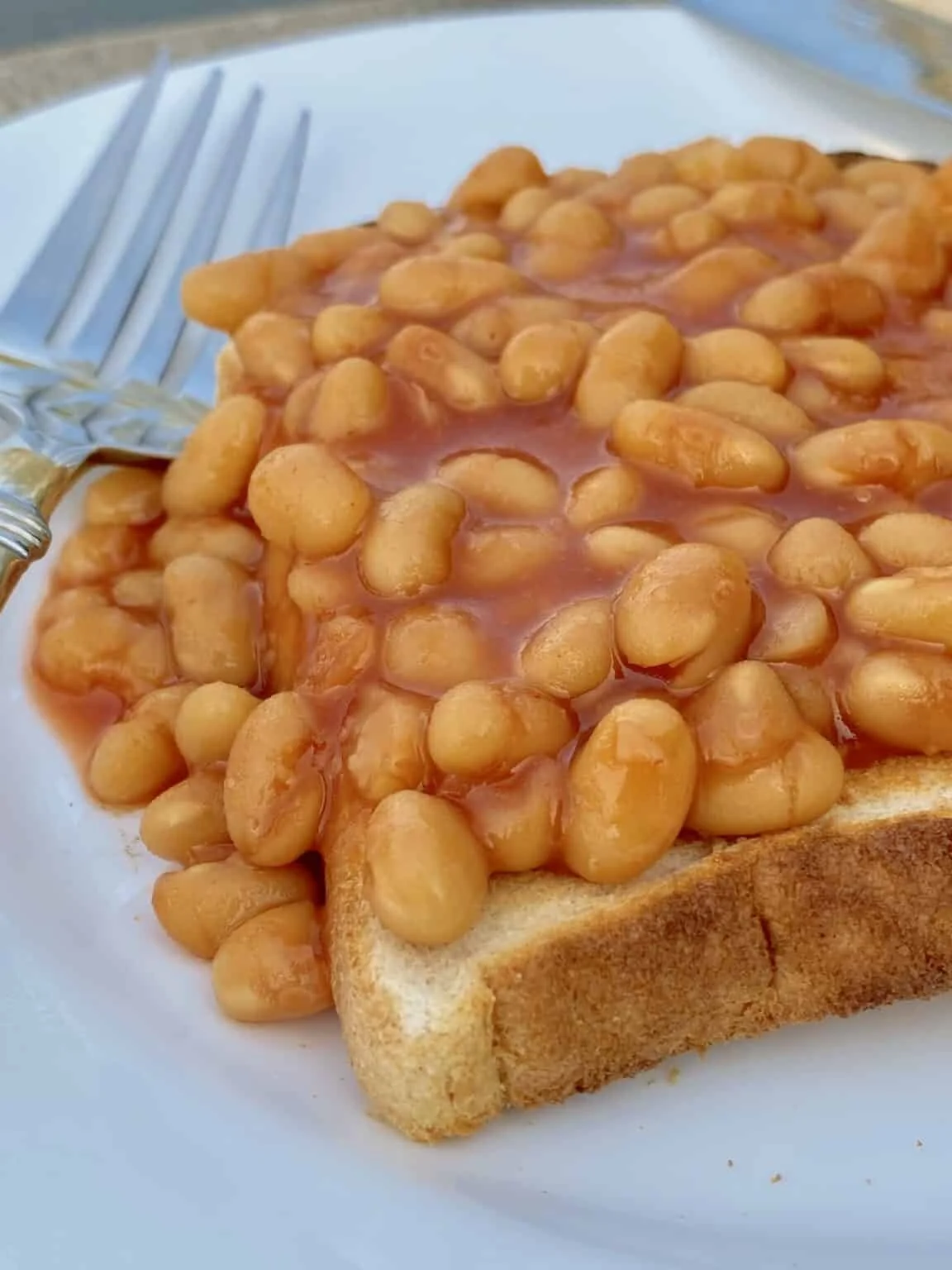
A lot of what we now describe as quintessentially British comfort food was not created as a lifestyle choice. It was cheap food. It was filling food. It was food that made sense when household budgets were tight and ingredients needed to stretch. Beans on toast is not simply a charming national dish. It is also what happens when two inexpensive cupboard staples make a perfectly functional meal. A pie can make a small amount of meat feed more people. Potatoes can feed a family. The full English, for all its later associations with hotels and greasy spoons, has its roots in a much less glamorous relationship with food.
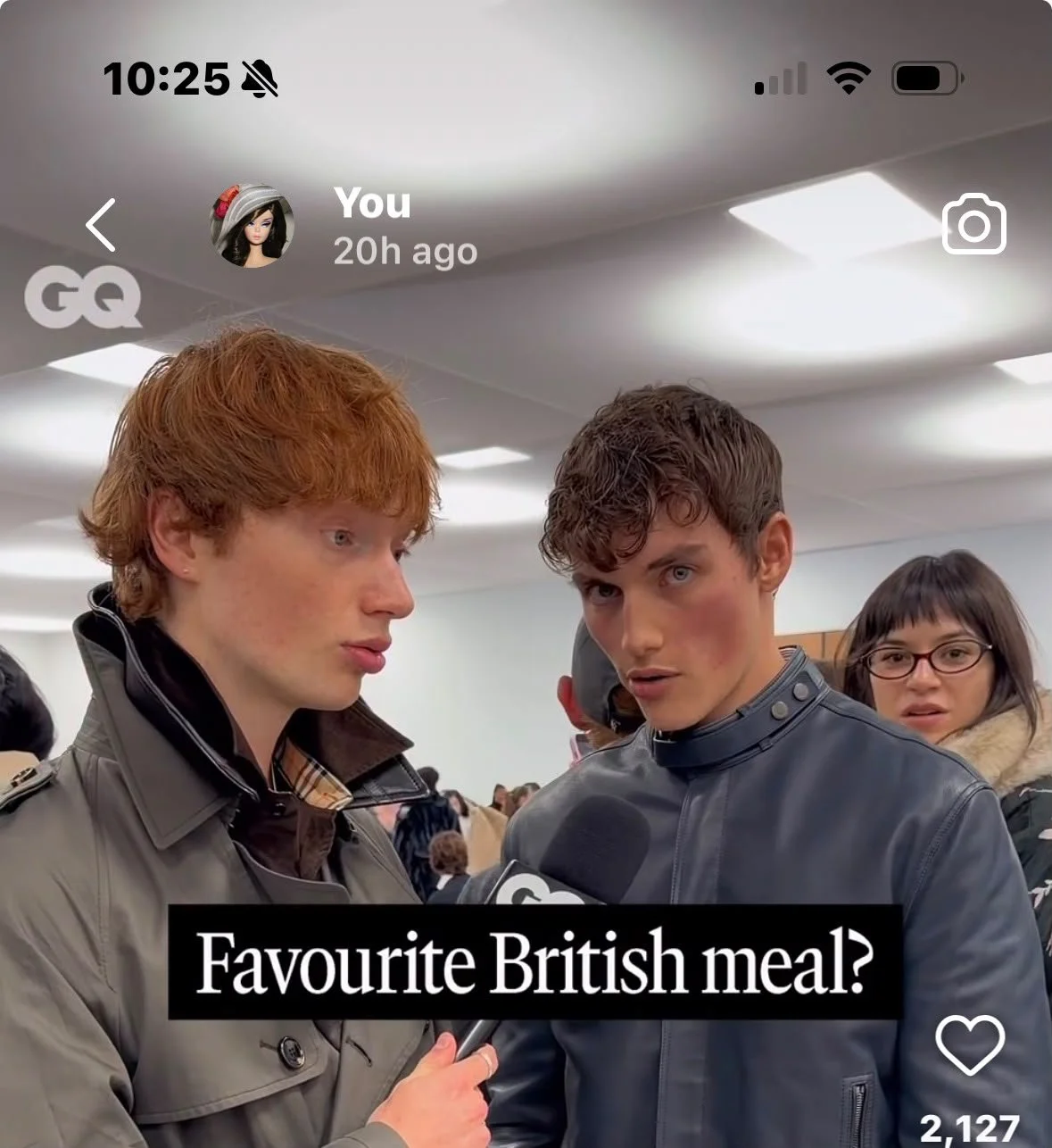
Yet fashion has a remarkable ability to remove the conditions surrounding something and retain only the aesthetic. The working-class meal becomes nostalgic. The cheap meal becomes comforting. The food of necessity becomes a marker of authenticity.
This is not unique to fashion, and Britain has been doing it with food for a very long time. In his 2021 Guardian essay, food writer Jonathan Nunn argues that Britain has an unusually intense relationship with the class meanings attached to what people eat. "It is perhaps in the domain of food that Britain’s sentinels of class stand guard the most sternly," he writes, describing a culture in which people are constantly being sorted according to their food choices and even their supermarkets.
Nunn's point is particularly useful here because he also challenges the idea that working-class British food can simply be reduced to pie and mash, gammon and ale. He writes that if we actually tried to create a list of working-class foods in contemporary Britain, it would be "less 'gammon, pie and mash and ale', and more 'ackee, pierogi and shatkora'." That distinction matters. The Britain represented by the Fashion Week food interview is not necessarily the Britain that most accurately reflects working-class food culture. It is a selective version of it, one that privileges the foods most easily recognised as traditional.
Nunn quotes the writer Huw Lemmey, who argues that "Food in England is very rarely about food, and that might be half of the problem." It is a useful sentence for understanding why these interviews feel stranger the more you think about them. The answer is rarely only about what somebody wants to eat. It tells us something about the kind of person they want to appear to be, or at least the kind of person that the format expects them to be.
The class politics of food become even more obvious when you look at what happens when supposedly working-class food enters wealthier environments. Nobody needs to pretend that rich people cannot eat beans on toast. Of course they can. A wealthy person can genuinely love the same meal they ate growing up. But there is something funny about the idea of the fashion industry's favourite "humble" meal being prepared in a kitchen stocked from Waitrose, perhaps on a loaf of expensive sourdough, before being presented as evidence that the person underneath the designer clothes is actually just like us.
The joke works because we understand the contradiction. We know that beans on toast can mean something very different depending on why you are eating it.
There is a difference between eating beans on toast because you have twelve pounds left until payday and eating beans on toast because you have decided that humble British cooking is having a cultural moment. The food itself has not changed, but the relationship to it has. One is necessity. The other is aesthetic.
This is where fashion's relationship with food begins to resemble its relationship with so many other aspects of working-class culture. It is interested in the visual and emotional qualities of something while often leaving the material circumstances behind. The roughness can be made fashionable. The nostalgia can be packaged. The authenticity can be sold.
And the food itself is not necessarily the problem. In fact, British food is constantly changing, and trying to preserve it in some untouched, authentic form would be just as strange. A recent Spectator essay on the decline of traditional British food argues against precisely this kind of culinary preservationism. Discussing the threatened future of pie and mash shops, Rob Crossan writes that "slapping a TSG garland on pie and mash won’t halt the slow extinction of venues such as Manze’s and Harringtons." His broader argument is that British food should be allowed to evolve rather than being trapped by ideas about what constitutes the "correct" version of a national dish. As he puts it, "we have not attempted to preserve our culinary culture in aspic."
That is important because this is not an argument for keeping working-class food untouched or somehow returning it to its "authentic" form. Food belongs to whoever wants to cook it. The problem is what happens when the history attached to it becomes invisible.
Fashion does this particularly effectively because it has become obsessed with the idea of the authentic individual. Street-style photography has always relied on the fantasy that the people being photographed simply happened to walk into the frame looking that good. Social media has taken this further. The person with the perfect outfit also has to appear funny, casual, politically aware, culturally informed and capable of eating a sausage roll without making a big deal of it. The more obviously expensive their life appears, the more valuable these little signals of normality become.
Food is perfect for this because everybody has a relationship with it. A dress can be alienating. A roast dinner is not. That may also explain why food has become so prominent within fashion itself. Restaurants, cafés, branded menus, dinner parties and food collaborations have increasingly become extensions of the fashion experience. Food is not simply something served to guests anymore. It is part of the image, the atmosphere and, crucially, the content. A plate of food can be photographed, posted and circulated in exactly the same way as a handbag or a look from a collection.
The recent Forbes discussion of fashion's increasing fixation with food points towards this wider shift, while Glamour has also examined the way fashion and food have increasingly merged through brands, influencers and social media. Food gives fashion something that clothes cannot always provide: immediate recognition. You do not need to understand why a particular designer matters to know what chips are.
This is also why the question of British food at Fashion Week feels so connected to the wider culture of FoodTok. In Polyester, the essay "They Eat the Rich, Don't They?" looks at the way food content on social media can turn abundance into entertainment while the people watching it are dealing with very different economic realities. The writer describes the "cacophony of social media" filled with "coquette champagne flutes, ASMR kitchen restocks and the rustle of grocery bags" and argues that "the chasm between the haves and the have-nots widens" as this content proliferates.
The most useful observation comes later, when the article argues that influencers are "trying their hardest to seem relatable" while presenting luxury food and carefully arranged groceries. That is exactly what makes the Fashion Week food interview worth paying attention to. The performance of relatability is not separate from luxury culture. It is part of it.
The person in the designer outfit does not necessarily need to pretend they are poor. They just need to offer us something recognisable enough that we can momentarily forget the distance between their life and ours. Beans on toast does that very efficiently.
There is another problem with treating the fry-up or Sunday roast as the obvious definition of British working-class food, too. Britain is not a culturally uniform country, and working-class Britain has never been culturally uniform either. Nunn's examples of "ackee, pierogi and shatkora" are useful precisely because they disrupt the fantasy that the working class has one food culture. Britain's food history is inseparable from migration. The takeaway, the curry house, the Chinese restaurant, the Caribbean restaurant, the kebab shop and the supermarket aisle filled with ingredients from across the world are not foreign additions sitting outside British culture. They are part of what British food culture is now.
Yet when somebody is asked to name their favourite British food in a fashion interview, we tend to retreat to a much narrower version of Britain. It is a Britain of Sunday roasts and chip shops, of pubs and fry-ups, of nostalgia rather than migration. It is easier to package and easier to understand. It also happens to be much easier to turn into an aesthetic.
Perhaps that is why these interviews are so funny. They reveal an industry that is otherwise very interested in difference, innovation and individuality repeatedly reaching for the same handful of foods whenever it wants to communicate something authentic.
There is nothing wrong with loving a fancy roast dinner. There is nothing wrong with buying Waitrose beans. There is nothing wrong with putting them on sourdough, adding chilli oil and photographing the whole thing in a kitchen designed by an architect. People are allowed to reinterpret food, and working-class foods do not belong exclusively to working-class people.
But if fashion wants to borrow the cultural meaning of those foods, it might also be worth acknowledging the class history that made them meaningful in the first place.
Because when somebody at London Fashion Week tells us that their favourite British food is beans on toast, we are not really learning very much about what they eat. We are learning what they think Britishness looks like. And perhaps the more interesting question is not whether they like beans on toast, but which beans they are buying, where the bread came from, who cooked it, and whether it is dinner because there was nothing else in the cupboard or because working-class food has finally become fashionable enough to order.
Sources / Further Reading
Nunn, Jonathan. “Food is a proxy for class in Britain – and it’s time we stopped pretending otherwise.” The Guardian, 2 October 2021. Read the article
“Red Wall food: serving up our class differences on a plate.” The Guardian, 8 October 2021. Read the article
“The Unpalatable Truth About British Food.” The Spectator, 24 September 2026. Read the article
“They Eat the Rich, Don’t They? Will FoodTok Spark a Modern Revolution?” Polyester. Read the article
“Why Fashion Can’t Stop Playing With Its Food.” Forbes, 22 September 2026. Read the article
“Fashion & Food KOL.” Glamour UK. Read the article
Instagram references
i-D, London Fashion Week food interview/Reel. https://www.instagram.com/reel/DdkHwT_A-xb/?stkn=MWQydHI2cjZiODA0OQ==
GQ, London Fashion Week food interview/Reel. https://www.instagram.com/reel/DdomDmQPDJw/?stkn=ZmVmYWRvZXl6enJu