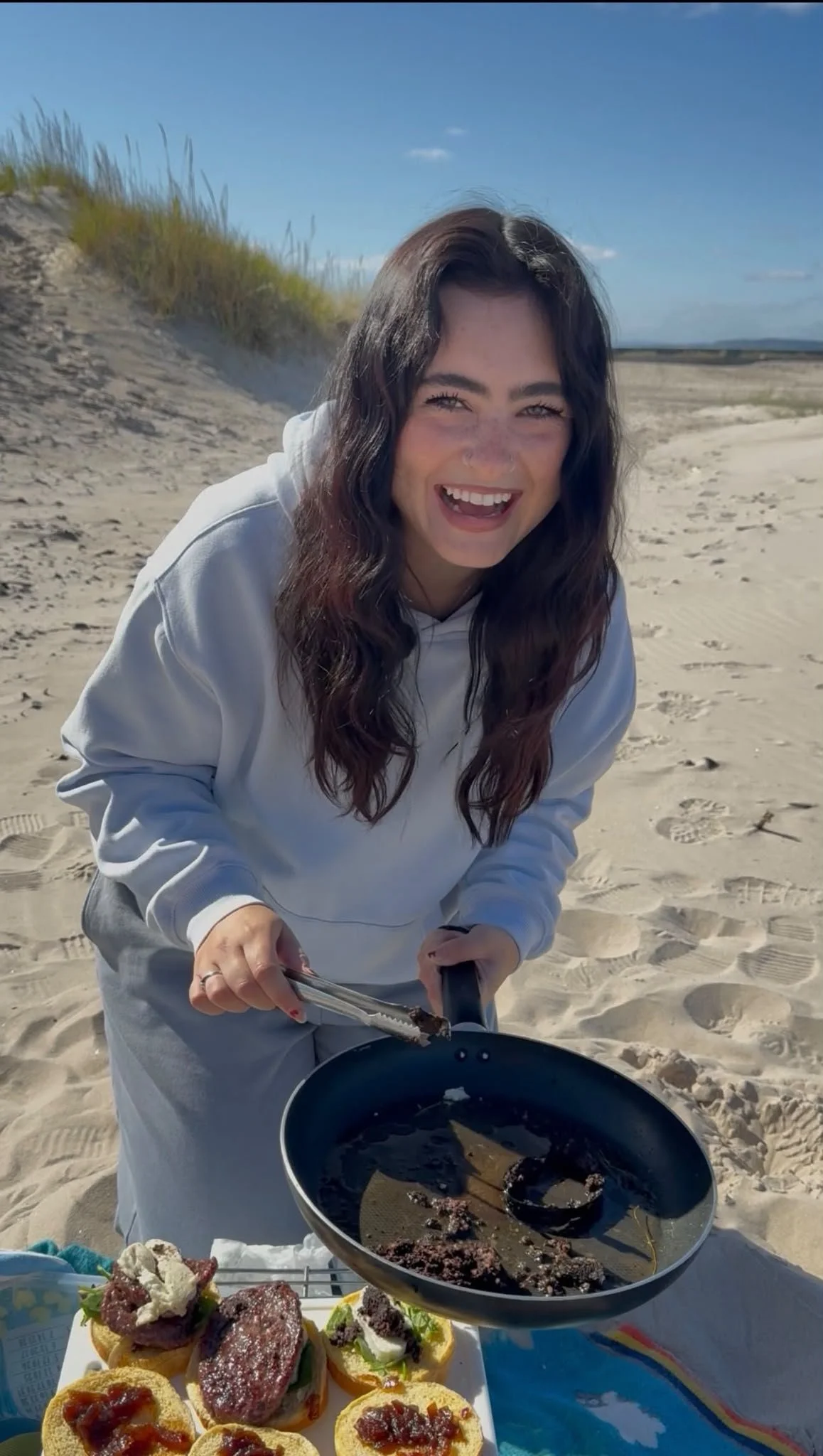
“Yeah, I’m speaking this language, listen to what I’m talking about”: Etta-May on modernising Gaelic and better opportunities for young islanders.
By Cara MacDonald edited by Charlotte Lewis
Etta-May Olley (@ettamaigh on TikTok and Instagram) is bringing the Gaelic language into mainstream content with her own social media videos, as well as special brand deals with some of Scotland’s well-known brands.
Etta-May grew up on the Isle of Harris in the Western Isles – where the population is just under 2,000. With miles of untouched landscape and rolling hills, the Isles are known to be a great place of inspiration for artists and creatives.
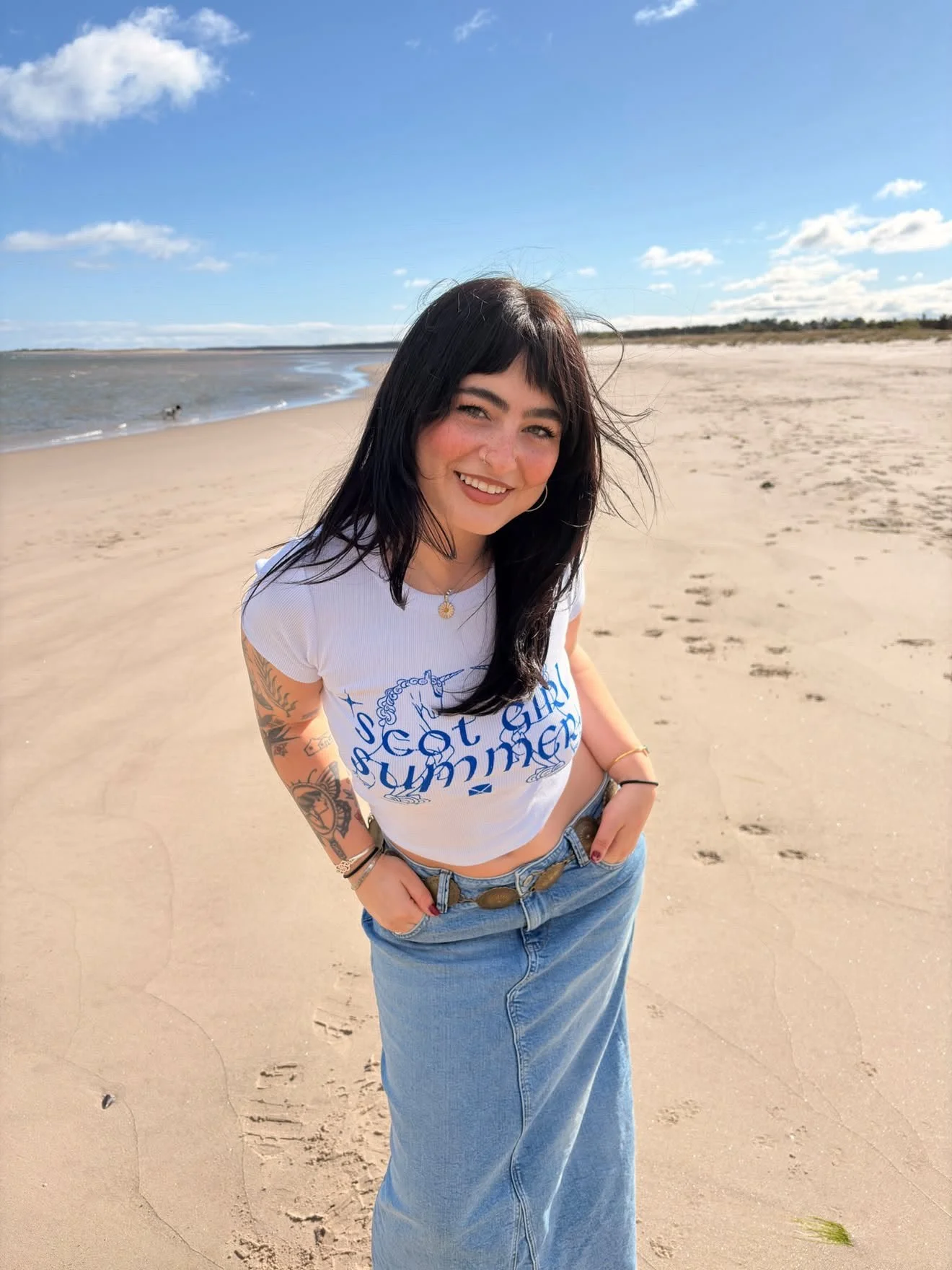
As with any remote location, opportunities can be limiting. And while some find better opportunities away, Etta-May described it as a “pull” that keeps the connection to the island so strong.
She recently shared a video to her 6.7k followers on TikTok and 9.7k followers on Instagram about how she felt disappointed that she can’t make the islands her home while also progressing in her career.
The video said: “Being a young Gael is weird because why am I having to choose between my home and my future.”
The caption explained her thoughts, writing: “Moving to Glasgow for a second time next month, sad I can’t make the life I want up here – more housing, more jobs, more young people in the Highlands and Islands pls.”
Most young islanders may resonate with the feeling - that feeling of being torn between prioritising career aspirations or the love for living at home.
While they had the aim of making Harris their forever home, Etta-May persuaded her Glaswegian boyfriend to try life in the islands. “Because you know, why wouldn’t you do that?” she says.
“I was just a bit homesick,” she said. “Cianalas as they call it.”
‘Cianalas’ – Gaelic for homesickness – is the feeling of a deep longing to return home. Something Etta-May felt after her first move to Glasgow a few years ago.
Moving back to Harris and living with her parents, her sister, brother, and their family dog, was “a bit overwhelming”, as she puts it.
“We did get to a point where we felt like we needed our own space,” she said. “So we stayed there for a year and three months in total. But around the year mark, we were, you know, going crazy.
“We were like, we need to have our own house, our own flat, anything at all. So we went on the hunt for rentals, which didn’t last very long because there were absolutely zero in Harris, they were non-existent.”
On top of the housing struggle, job opportunities were few and far between – leading to their eventual move away from the islands.
The couple moved to Nairn as they thought the Highlands would be the next best move, “because then it’s not straight back into the hustle and bustle”. But they’ve now discovered that it’s either all or nothing and that moving back to the central belt is the better option for them both at this point.
Going back to the point she made in her video, she shared about the frustration of some upset viewers not understanding her point of view.
Etta-May said: “There was a lot of arguments on the post about housing. ‘Is housing the problem or is the job market the problem?’, But it’s both, they come hand in hand.
“If you can’t get a job, you can’t get somewhere to live. And if you can’t get somewhere to live, then you can’t get a job. So like, they come hand in hand, which I think some people were quite confused about.”
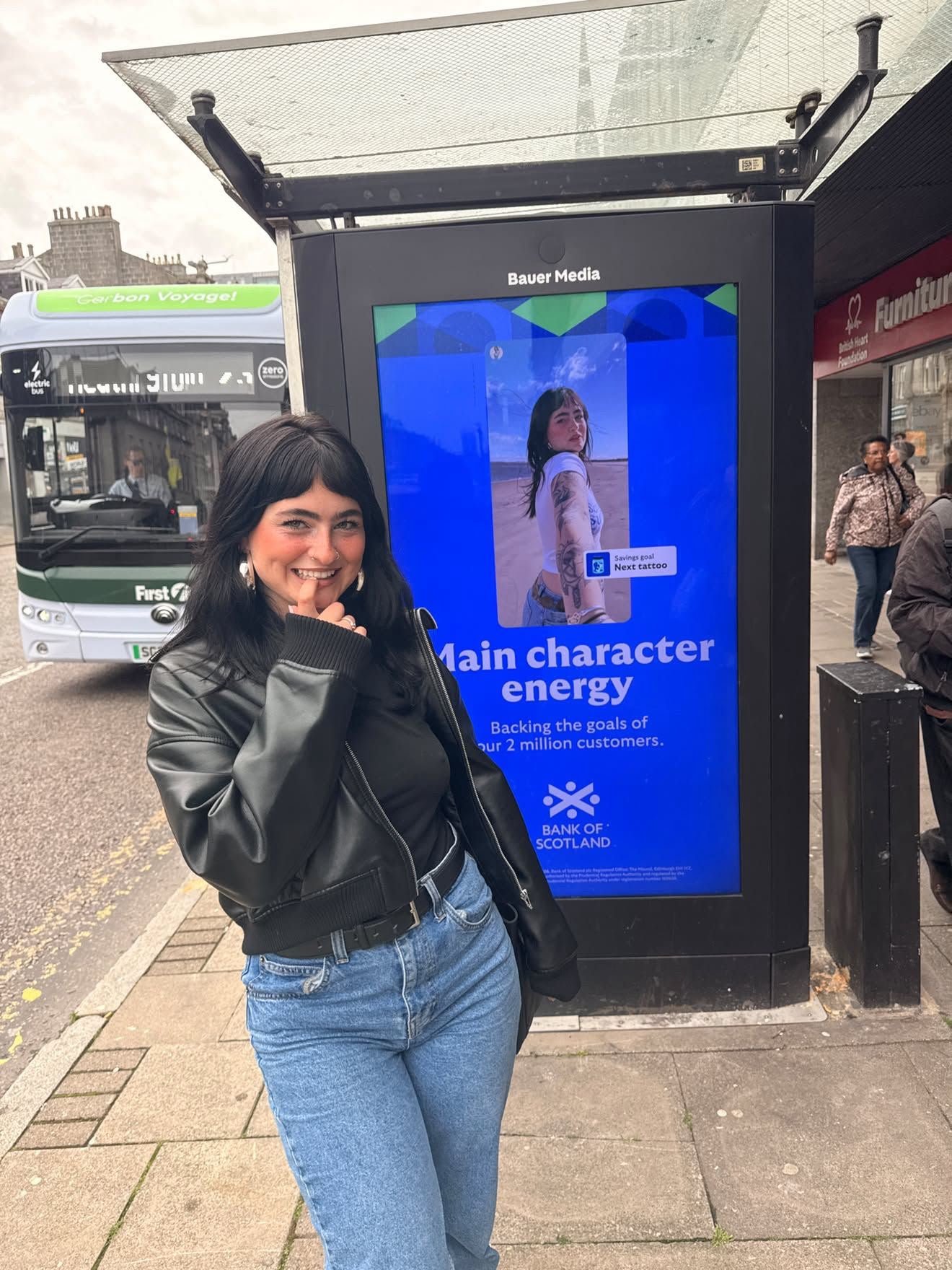
The 26-year-old has ambitions to progress with her social media and content creating career. Having already bagged big brand campaigns, including with the lifeline service operator linking Scotland’s island communities CalMac, as well Bank of Scotland, it’s her island origins and modern Gaelic videos that give her content an edge.
Although, that being said, her content doesn’t revolve around the islands, nor does it fully focus on Gaelic as a language either.
Her videos show her everyday life. In some videos, it can feel like you’re on a FaceTime call with a friend just talking about your day, while in other videos she’s engaging with her audience and asking questions.
“I think we just need to be seeing more of people talking about their day in Gaelic,” she added. “Just normal content but in Gaelic, to show that it’s just a normal thing. Like, this is just like English to us.”

“Just normalise it, make it less ‘about’ Gaelic and more ‘in’ Gaelic. Make it less about “Look at this weird language I’m speaking”, and instead like, “Yeah, I’m speaking Gaelic, listen to what I’m talking about though.”
Etta-May praises the Gaelic online community, saying how supportive it is as a group. From her own experience, she said she’s had little opportunity to use her Gaelic in Nairn, so having that online space has brought her more opportunities in not just networking, but also for meeting people with similar interests and ambitions. Although, this does add another reason for their move to a more central location where the Gaelic scene is bursting across the arts and creative industries, compared to where they were based now.
“It’s been a good way for people to find each other, and now there’s a community of us online where we’re all pals and we all support each other and such, so it’s been fab.”
While speaking on Gaelic in the online space, Etta-May also said that while it’s “amazing” to see people share what they learn about the language every day, “it would be great if we had more of the general everyday content, instead of having Gaelic just be an educational thing.”
It was clear when speaking with Etta-May that she didn’t see success as only being achievable in central Scotland. But, she’s looking forward to exploring these opportunities with an open mind.
She wants to see aspects of the islands utilised more in the creative industries – both Gaelic and mainstream media - as well as the people who are living there.
“The talent is out there, outside of the central belt,” she said. “It’s just whether or not they want to take that chance in remote working.”
“I think it doesn’t just come down to jobs, it also comes down to housing, places to socialise, events, and opportunities to meet other people.”
“I don’t think success would mean nobody ever leaving. I feel like people should move away and try something different, and then move back if they want to,” she said. “But the important thing is that staying or returning feels like a genuine option. Which, at the moment, it doesn’t feel like an option at all. Like we don’t even have that choice to do that if we wanted to.”
She stressed that the islands have so much to offer, in terms of the skills and talents of people living there as well as the overall stunning landscape and scenery. But, to see people, like herself, feel they need to leave their home in order to achieve their dreams – when it could be capable from the islands – it’s disappointing to see people feel limited or made to make a choice.
She added: “I’ve spoken to people about it before, some of them are in their 30s with a well-paying jobs and they would love to move home, but they can’t because there’s nowhere to live or their job won’t do remote, or there’s no job that’s even close to what they’re doing right now.”
“Ideally, young people growing up on the islands should just be able to ask themselves “What do I want to do?”, rather than “What can I do from here?”. Most people on the mainland don’t have that, they don’t have that problem of feeling limited in the jobs they can do.”
While feeling compelled to move away from home now, Etta-May shared that she hopes one day it will be more of a genuine choice for people to stay and fulfil their desires in their career ambitions.